


September is an important month for raising awareness about prostate health and cancer among men. Prostate Cancer Awareness Month encourages men to understand their risk factors, recognize possible warning signs and have informed conversations with healthcare professionals about screening and early detection.
Prostate cancer is one of the most common cancers affecting men. In its early stages, it may not cause noticeable symptoms, which makes awareness and appropriate medical evaluation particularly important. At Kannappa Memorial Hospital, we encourage men to take their prostate health seriously and seek medical advice when they notice persistent changes in urinary or reproductive health.
What Is Prostate Cancer?
The prostate is a small gland that forms part of the male reproductive system. It is located below the urinary bladder and in front of the rectum, surrounding part of the urethra. The prostate produces fluid that contributes to semen.
Prostate cancer develops when abnormal cells in the prostate begin to grow uncontrollably. Most prostate cancers are adenocarcinomas. Some prostate cancers grow slowly and may remain confined to the prostate for a long time, while others can grow more aggressively and spread to other parts of the body.
The appropriate approach to prostate cancer depends on several factors, including the cancer’s characteristics, stage, grade, PSA level, overall health and individual preferences.
Why Is Prostate Cancer Awareness Important?
Why Is Prostate Cancer Awareness Month Important?
Prostate Cancer Awareness Month provides an opportunity to educate men about prostate cancer and encourage them to understand their individual risk.
One of the challenges associated with prostate cancer is that early disease may not cause obvious symptoms. A person may feel healthy even when cancer is present.
Urinary problems can also be caused by conditions such as benign prostatic hyperplasia (BPH), urinary infections and other prostate conditions. Therefore, experiencing urinary symptoms does not necessarily mean that a person has cancer. However, persistent or unusual symptoms should be assessed by a healthcare professional.
Awareness can encourage men to seek timely medical advice rather than ignoring changes in their health.
Common Symptoms of Prostate Cancer
Early prostate cancer may not produce any symptoms. As the disease progresses, some men may experience:
- Difficulty starting urination
- Weak or interrupted urine flow
- Frequent urination
- Increased need to urinate at night
- Difficulty completely emptying the bladder
- Blood in the urine or semen
- Erectile difficulties
- Persistent pain in the back, hips or pelvis
- Unexplained weight loss or tiredness in advanced disease
It is important to remember that these symptoms do not necessarily indicate prostate cancer. Conditions such as benign prostatic hyperplasia, urinary infections and other prostate or urinary problems can produce similar symptoms.
A doctor can recommend appropriate tests to identify the cause.
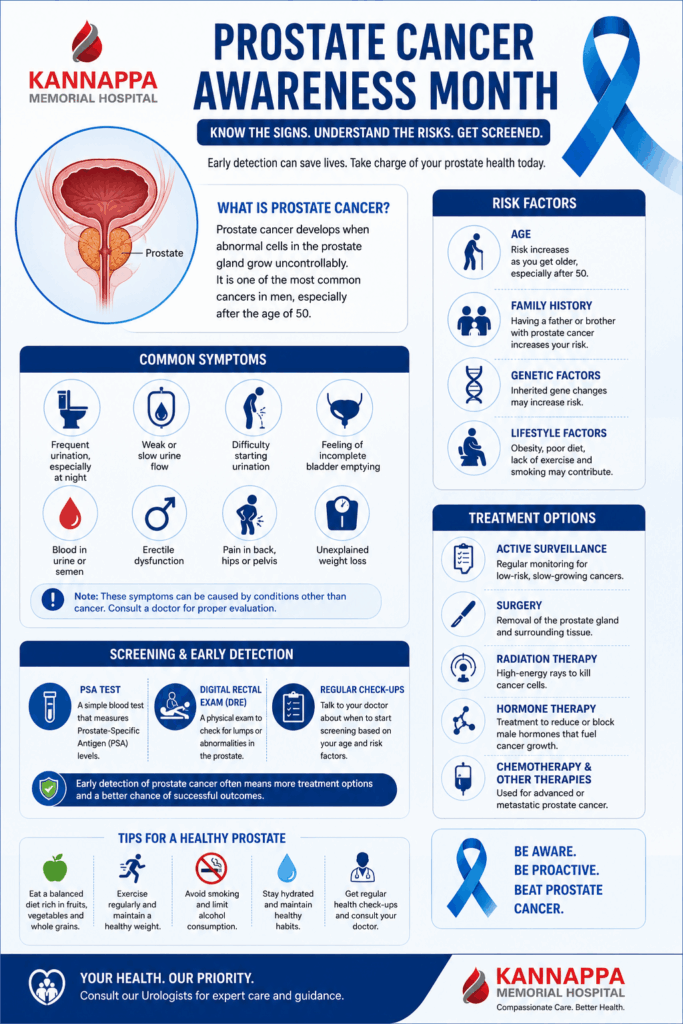
Who Is at Higher Risk of Prostate Cancer?
Several factors may increase a man’s risk of developing prostate cancer.
Age
Age is one of the most important risk factors. Prostate cancer becomes more common as men grow older.
Family History
Men with a close family member who has had prostate cancer may have an increased risk. A strong family history should be discussed with a healthcare professional because it may influence when and how a man should consider screening.
Genetic Factors
Certain inherited genetic changes can increase the risk of prostate cancer. Men with a significant family history of prostate, breast, ovarian or related cancers may benefit from discussing their family history with their doctor.
Lifestyle and Overall Health
A healthy lifestyle is important for overall wellbeing. Maintaining a healthy weight, eating a balanced diet, exercising regularly, avoiding tobacco and limiting unhealthy habits can support general health.
However, no lifestyle measure can completely eliminate the risk of prostate cancer.
Prostate Cancer Screening
Screening aims to identify prostate cancer before symptoms appear.
Two commonly discussed methods are:
PSA Blood Test
The prostate-specific antigen (PSA) test measures the level of PSA in the blood. PSA is produced by the prostate.
A raised PSA level does not automatically mean that a man has prostate cancer. PSA can also increase because of benign prostate enlargement, inflammation, infection or other factors.
Digital Rectal Examination
A digital rectal examination (DRE) may be used by a healthcare professional to assess the prostate for abnormalities.
PSA testing and DRE have limitations, and screening decisions should be made after discussing individual risk factors and the potential benefits and limitations with a qualified healthcare professional.
How Is Prostate Cancer Diagnosed?
If a doctor suspects prostate cancer, additional investigations may be recommended.
Depending on the individual’s situation, evaluation may include:
- Medical history and physical examination
- PSA blood testing
- Digital rectal examination
- Urine or other laboratory tests when appropriate
- Imaging investigations
- Prostate biopsy when required
- Pathological examination of biopsy tissue
A biopsy can help confirm whether cancer cells are present. The cancer can then be assessed based on characteristics such as its grade and stage.
Understanding the Gleason Score
The Gleason score is used to help assess the aggressiveness of prostate cancer. It is based on how prostate cancer cells appear under a microscope.
Doctors may combine the Gleason score or Grade Group with PSA levels, tumour stage and other findings to estimate the risk associated with the cancer and help determine an appropriate treatment plan.
Not every prostate cancer requires immediate surgery or radiation. For selected men with slow-growing, low-risk disease, active surveillance may be an appropriate option. This involves careful monitoring with regular medical assessments and investigations rather than immediate treatment.
Treatment Options for Prostate Cancer
Treatment depends on the individual patient’s condition. Options may include:
Active Surveillance
For selected low-risk cancers, doctors may recommend monitoring the cancer closely rather than treating it immediately.
Surgery
Surgery may be recommended for selected patients when the cancer is localized and treatment is appropriate.
Radiation Therapy
Radiation therapy uses high-energy radiation to target cancer cells and may be used for localized or certain advanced prostate cancers.
Hormone Therapy
Some prostate cancers depend on male hormones, particularly androgens, to grow. Hormone-based treatment can reduce or block these hormonal effects and may be used in appropriate cases.
Chemotherapy and Other Treatments
For advanced or metastatic prostate cancer, chemotherapy, targeted treatments, radiopharmaceutical approaches and other systemic therapies may be considered depending on the cancer’s characteristics and previous treatments.
The treatment plan should always be individualized by the treating medical team.
Can Prostate Cancer Be Prevented?
There is no guaranteed method to completely prevent prostate cancer.
However, men can take steps to support their overall health:
- Maintain a healthy body weight
- Exercise regularly
- Eat a balanced and varied diet
- Avoid smoking and tobacco products
- Limit unhealthy lifestyle habits
- Attend appropriate health check-ups
- Discuss family history with a doctor
- Seek medical advice for persistent urinary symptoms
Most importantly, men should understand their individual risk rather than relying only on symptoms.
When Should You See a Doctor?
You should consider medical evaluation if you experience persistent changes in urination, blood in the urine or semen, erectile difficulties, or unexplained and ongoing pain in the pelvic, hip or back region.
Men who have a strong family history or other risk factors should also discuss prostate health and appropriate screening with a healthcare professional.
Early evaluation does not necessarily mean that you have cancer. It simply helps identify the cause of symptoms and allows appropriate care when needed.
Take Action During Prostate Cancer Awareness Month
Prostate Cancer Awareness Month is a reminder that men’s health deserves attention at every stage of life.
Understanding your risk factors, recognizing possible symptoms and discussing prostate cancer screening with a qualified healthcare professional can help you make informed healthcare decisions.
At Kannappa Memorial Hospital, we are committed to promoting awareness and providing compassionate healthcare for men. If you have concerns about prostate health or persistent urinary symptoms, seeking professional medical advice is an important first step.
Know your risk. Recognize the signs. Talk to your doctor about your prostate health.
.
Final Message
Prostate Cancer Awareness Month reminds men to pay attention to their prostate health and not ignore persistent changes in their bodies.
Awareness, informed screening discussions and timely medical evaluation can help men make appropriate decisions about their health. If you have concerns about prostate cancer or urinary symptoms, speak with a qualified healthcare professional at Kannappa Memorial Hospital.