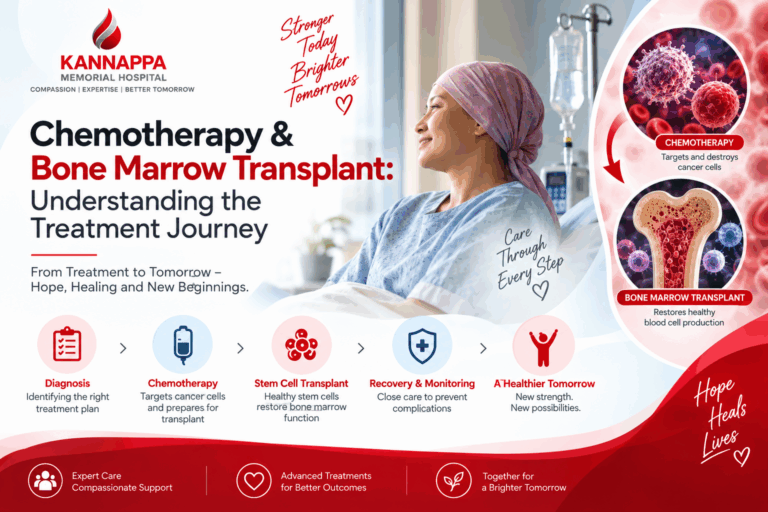
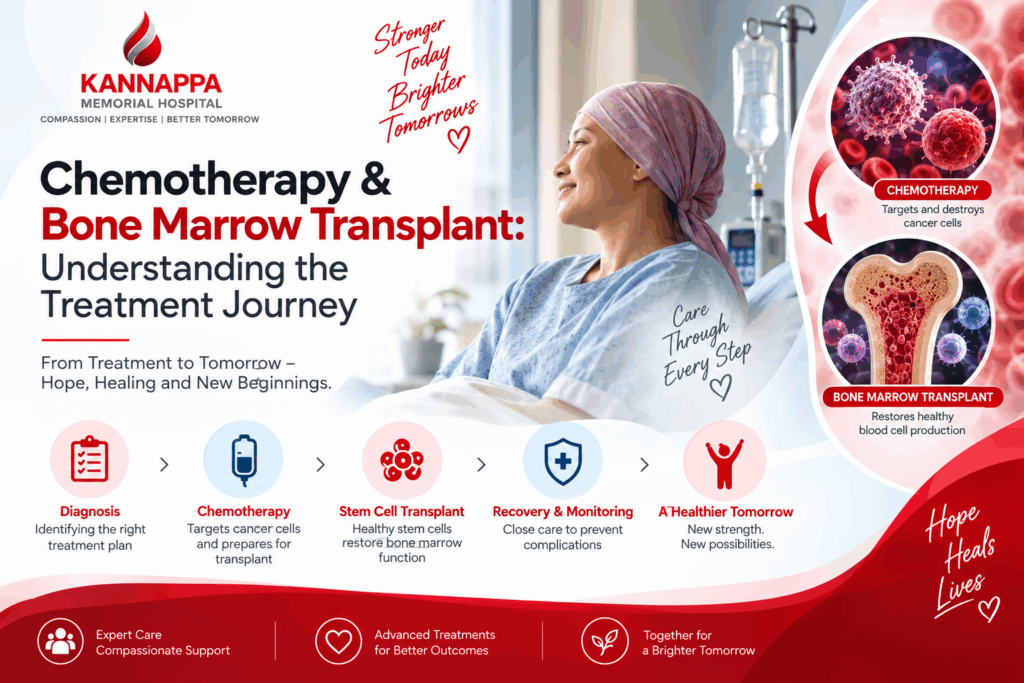
Chemotherapy and bone marrow transplant are important treatment approaches used in the management of several blood cancers, bone marrow disorders, and certain other serious diseases. While chemotherapy uses powerful medicines to destroy or control abnormal cells, a bone marrow transplant, also called a stem cell transplant, replaces damaged or diseased blood-forming stem cells with healthy stem cells.
For some patients, chemotherapy may be the main treatment. For others, chemotherapy is used before a bone marrow transplant to destroy abnormal cells and prepare the body to receive healthy stem cells. The treatment approach depends on the type of disease, its stage, the patient’s overall health, previous treatments, and the availability of a suitable donor when an allogeneic transplant is required.
This article explains the relationship between chemotherapy and bone marrow transplantation, the treatment process, recovery, possible side effects, and the importance of specialized transplant care.
What Is Chemotherapy?
Chemotherapy is a cancer treatment that uses medicines to destroy cancer cells or prevent them from multiplying. Because chemotherapy medicines can circulate throughout the body, they can target abnormal cells in different locations.
Chemotherapy may be recommended for conditions such as:
- Leukemia
- Lymphoma
- Multiple myeloma
- Certain blood and bone marrow disorders
- Some solid tumors
- Diseases requiring stem cell transplantation
The medicines, dosage, duration, and combination of drugs vary depending on the diagnosis and treatment objective.
How Does Chemotherapy Work?
Cancer cells often divide and multiply rapidly. Many chemotherapy medicines interfere with processes required for cell division and survival. However, chemotherapy can also affect some healthy cells that naturally divide quickly, including cells in the bone marrow, digestive tract, and hair follicles.
This is why patients may experience side effects such as:
- Low blood cell counts
- Nausea or vomiting
- Fatigue
- Hair loss
- Reduced appetite
- Mouth sores
- Increased risk of infection
Not every patient experiences all these effects, and supportive medicines can help manage many treatment-related symptoms.
What Is a Bone Marrow Transplant?
A bone marrow transplant, commonly referred to as a stem cell transplant, is a procedure in which healthy blood-forming stem cells are infused into a patient’s bloodstream.
These stem cells can help restore the body’s ability to produce healthy:
- Red blood cells
- White blood cells
- Platelets
Bone marrow transplantation may be considered for certain blood cancers and other diseases affecting the blood-forming system.
There are two major types of stem cell transplant.
Types of Bone Marrow Transplant
1. Autologous Stem Cell Transplant
In an autologous transplant, the patient’s own stem cells are collected and stored before high-dose chemotherapy or conditioning treatment.
After the conditioning treatment, the collected stem cells are returned to the patient’s bloodstream.
Autologous transplantation may be considered for selected diseases such as multiple myeloma and certain lymphomas.
2. Allogeneic Stem Cell Transplant
In an allogeneic transplant, stem cells come from a donor. The donor may be a matched sibling, another matched family member, or an appropriately matched unrelated donor, depending on the patient’s circumstances.
The donor’s immune system can potentially help recognize and attack remaining abnormal cells, an effect known as the graft-versus-leukemia or graft-versus-tumor effect, depending on the disease.
Allogeneic transplantation requires careful donor selection and monitoring for complications such as graft-versus-host disease.
Why Is Chemotherapy Used Before a Bone Marrow Transplant?
One of the most important connections between chemotherapy and bone marrow transplant is the conditioning phase.
Before stem cells are infused, patients may receive chemotherapy, radiation therapy, or a combination of treatments as part of a conditioning regimen.
The goals may include:
- Destroying remaining abnormal cells
- Suppressing the existing bone marrow
- Creating space for the new stem cells
- Suppressing the immune system sufficiently to help donor stem cells establish themselves
The conditioning regimen is selected according to the disease, transplant type, patient’s health, and treatment strategy.
Chemotherapy and Bone Marrow Transplant: Step-by-Step Process
Although treatment plans vary, the overall transplant journey commonly involves several stages.
Step 1: Diagnosis and Treatment Planning
Doctors first confirm the diagnosis using blood tests, bone marrow examination, imaging, genetic or molecular tests, and other investigations when required.
The transplant team then evaluates whether chemotherapy, stem cell transplantation, or another treatment approach is appropriate.
Step 2: Pre-Transplant Evaluation
Before transplantation, the patient undergoes a detailed assessment.
This may include:
- Blood tests
- Heart evaluation
- Lung assessment
- Kidney and liver function tests
- Infection screening
- Imaging when required
- Dental evaluation
- Assessment of general health
For allogeneic transplantation, donor compatibility testing is also performed.
Step 3: Stem Cell Collection
For an autologous transplant, stem cells are usually collected from the patient’s bloodstream after medicines are given to increase the number of stem cells circulating in the blood.
For an allogeneic transplant, stem cells are collected from a suitable donor using an appropriate collection method.
Step 4: Conditioning Treatment
The patient receives chemotherapy and, in selected cases, radiation therapy.
This stage is often called the conditioning regimen.
The intensity and combination of medicines depend on the specific transplant protocol.
Step 5: Stem Cell Infusion
After conditioning, healthy stem cells are infused through a central venous catheter or intravenous line.
The infusion itself may resemble a blood transfusion and does not usually involve surgery.
Step 6: Engraftment
After infusion, the transplanted stem cells travel to the bone marrow and begin producing new blood cells.
This process is called engraftment.
During this period, patients may have very low blood counts and require close medical monitoring.
Step 7: Recovery and Follow-Up
Recovery continues after blood counts begin improving. Patients require regular follow-up appointments, blood tests, medication management, nutritional support, and monitoring for infections and other complications.
What Are the Side Effects of Chemotherapy?
Chemotherapy side effects differ from person to person and depend on the medicines used.
Possible effects include:
Low Blood Counts
Chemotherapy can temporarily reduce red blood cells, white blood cells, and platelets. This may result in:
- Anemia
- Increased infection risk
- Easy bruising or bleeding
Nausea and Vomiting
Certain chemotherapy medicines can cause nausea and vomiting. Doctors may prescribe anti-nausea medicines to reduce these symptoms.
Fatigue
Tiredness is common during intensive treatment. Rest, adequate nutrition, hydration, and appropriate physical activity may support recovery when medically permitted.
Hair Loss
Some chemotherapy medicines cause temporary hair loss. Hair generally grows back after treatment, although the timing varies.
Mouth Sores
Chemotherapy can affect the lining of the mouth and digestive tract. Careful oral hygiene and appropriate treatment can help reduce discomfort and infection risk.
Possible Complications of Bone Marrow Transplant
Bone marrow transplantation is a complex treatment and requires specialized monitoring.
Potential complications may include:
- Infections
- Low blood counts
- Bleeding
- Organ-related complications
- Infusion reactions
- Graft-versus-host disease after allogeneic transplantation
- Graft failure
- Disease recurrence
The risk varies considerably according to the patient’s diagnosis, age, health status, transplant type, conditioning regimen, donor factors, and other medical circumstances.
What Is Graft-Versus-Host Disease?
Graft-versus-host disease (GVHD) is a possible complication of an allogeneic stem cell transplant.
In GVHD, immune cells from the donor recognize certain tissues in the recipient as foreign and may attack them.
GVHD can be acute or chronic and may affect organs such as:
- Skin
- Liver
- Gastrointestinal tract
- Eyes
- Mouth
- Other tissues
Transplant teams use preventive medicines and careful monitoring to reduce the risk and manage GVHD when it occurs.
Infection Prevention After Bone Marrow Transplant
After intensive chemotherapy and transplantation, the immune system may be significantly weakened.
Infection prevention therefore becomes an important part of transplant care.
Depending on the treatment plan, precautions may include:
- Regular hand hygiene
- Avoiding exposure to people with infections
- Safe food and water practices
- Appropriate environmental precautions
- Preventive antimicrobial medicines when prescribed
- Regular blood tests
- Monitoring for fever or other signs of infection
Patients should promptly inform their medical team about fever, chills, breathing difficulties, persistent cough, diarrhea, or other concerning symptoms.
Nutrition During Chemotherapy and Bone Marrow Transplant
Good nutrition can support the body during intensive treatment. However, nutritional needs vary according to the patient’s condition and treatment stage.
A transplant diet may focus on:
- Adequate protein
- Sufficient calories
- Safe food preparation
- Proper hydration
- Fruits and vegetables that are prepared according to the transplant team’s food-safety recommendations
- Management of nausea, mouth sores, or swallowing difficulties
A clinical dietitian may develop an individualized nutrition plan.
Recovery After Bone Marrow Transplant
Recovery does not end when the patient leaves the hospital.
Blood counts and immune function may take time to recover. The duration varies according to the type of transplant and individual circumstances.
Follow-up may include:
- Regular blood tests
- Medication adjustments
- Infection monitoring
- Assessment of organ function
- Monitoring for GVHD after allogeneic transplantation
- Vaccination planning when appropriate
- Disease monitoring
Patients should follow the transplant team’s instructions regarding medicines, diet, physical activity, infection prevention, and follow-up visits.
How Long Does Recovery Take?
There is no single recovery timeline for every bone marrow transplant patient.
Some patients begin returning to daily activities relatively quickly, while others require several months or longer to regain strength and immune function.
Recovery may be influenced by:
- Type of transplant
- Underlying disease
- Conditioning regimen
- Age
- General health
- Presence of complications
- Infection
- GVHD
- Response to treatment
The transplant team can provide a more individualized recovery plan.
Chemotherapy vs Bone Marrow Transplant
Chemotherapy and bone marrow transplantation are not necessarily competing treatments. In many cases, they are components of the same treatment strategy.
| Chemotherapy | Bone Marrow Transplant |
|---|---|
| Uses anti-cancer medicines | Infuses healthy blood-forming stem cells |
| May be used alone or with other treatments | Often follows conditioning treatment |
| Can destroy or control abnormal cells | Helps restore blood-forming function |
| Used for many cancers and blood disorders | Used for selected diseases and patients |
| Treatment duration varies | Requires collection, conditioning, infusion, and recovery |
The appropriate treatment depends on the patient’s disease and individual medical assessment.
Who May Need a Bone Marrow Transplant?
A bone marrow transplant may be considered for selected patients with conditions such as:
- Acute myeloid leukemia (AML)
- Acute lymphoblastic leukemia (ALL)
- Certain lymphomas
- Multiple myeloma
- Myelodysplastic syndromes
- Certain bone marrow failure disorders
- Selected inherited blood disorders
Not every patient with these conditions requires a transplant. Doctors consider multiple clinical factors before recommending transplantation.
Why Specialized Bone Marrow Transplant Care Is Important
Bone marrow transplantation requires coordinated care involving hematologists, transplant physicians, nurses, pharmacists, laboratory teams, dietitians, and other healthcare professionals.
Specialized transplant centres can provide:
- Detailed donor evaluation
- Conditioning protocols
- Stem cell collection and processing
- Infection prevention
- Blood transfusion support
- Engraftment monitoring
- GVHD management
- Long-term follow-up
A multidisciplinary approach helps address the different medical needs that can arise throughout the transplant journey.
Conclusion
Chemotherapy and bone marrow transplant can play important roles in treating selected blood cancers and bone marrow disorders. Chemotherapy may destroy abnormal cells, control disease, or prepare the body for transplantation, while a stem cell transplant can help restore blood-forming cells after intensive treatment.
Because every patient’s diagnosis and treatment needs are different, the decision to undergo chemotherapy, autologous transplantation, allogeneic transplantation, or another treatment should be made after a detailed evaluation by a qualified hematology and transplant team.
With appropriate treatment planning, infection prevention, supportive care, monitoring, and long-term follow-up, patients can receive comprehensive care throughout their transplant journey.
If you or a loved one has been diagnosed with a blood cancer or bone marrow disorder, consult a hematologist or bone marrow transplant specialist to understand the treatment options appropriate for the individual condition.