
Gastric cancer, also known as stomach cancer, is a disease in which malignant cells develop in the lining of the stomach. The stomach is a muscular organ responsible for digestion, and when its cells undergo abnormal changes, cancer can form. Most cases over 95% are adenocarcinomas, originating from mucus-producing glandular cells. The disease may also occur at the gastroesophageal junction.
Gastric cancer is a major global health concern and a leading cause of cancer-related deaths. Although advances in Gastric Cancer treatment have improved outcomes, many patients are still diagnosed late, making early detection and awareness essential for better prognosis and survival.
To understand stomach cancer, it is helpful to know the basic parts of the stomach. The stomach has different sections called the cardia, fundus, body, antrum, and pylorus. Cancer can start in any of these areas, but it is now more commonly seen near the upper part of the stomach where it joins the food pipe.
In the early stages, the cancer stays in the inner lining of the stomach. As the disease grows, it spreads deeper into the stomach wall and may reach nearby organs such as the liver, pancreas, colon, and spleen. In advanced stages, the cancer can also spread to nearby lymph nodes, which may allow it to move to other parts of the body.
Not all stomach cancers are the same. Understanding the specific type helps guide the most appropriate gastric cancer treatment strategy:
Each subtype carries distinct biological characteristics, growth patterns, and responses to therapy, which is why accurate histological diagnosis is a cornerstone of planning effective gastric cancer treatment.
Gastric cancer does not develop overnight. It is typically the result of years of damage to the stomach's mucosal lining, which over time leads to DNA mutations in epithelial cells. These mutations disrupt normal cell regulation, leading to uncontrolled proliferation and eventually tumor formation.
The most well-established cause of gastric cancer is chronic infection with Helicobacter pylori (H. pylori), a bacterium that colonizes the stomach lining and triggers persistent inflammation. This ongoing inflammation damages the mucosal barrier, promotes genetic instability, and significantly elevates the risk of adenocarcinoma particularly in the distal (lower) stomach. Other contributing factors include:
Understanding these root causes is not merely academic it informs prevention strategies and guides early screening in high-risk populations.
Certain individuals carry a statistically higher risk of developing gastric cancer. While having one or more risk factors does not mean cancer will develop, awareness empowers timely medical consultation and proactive screening. Key risk factors include:
At Kannappa Memorial Hospital, our oncology team offers personalized risk assessment consultations for individuals with one or more of these factors, helping to detect any precancerous changes well before a diagnosis of stomach cancer.
One of the greatest challenges with gastric cancer is that early-stage disease is often asymptomatic or presents with vague discomfort easily attributed to common digestive issues. This is why the majority of patients are diagnosed at an advanced stage.
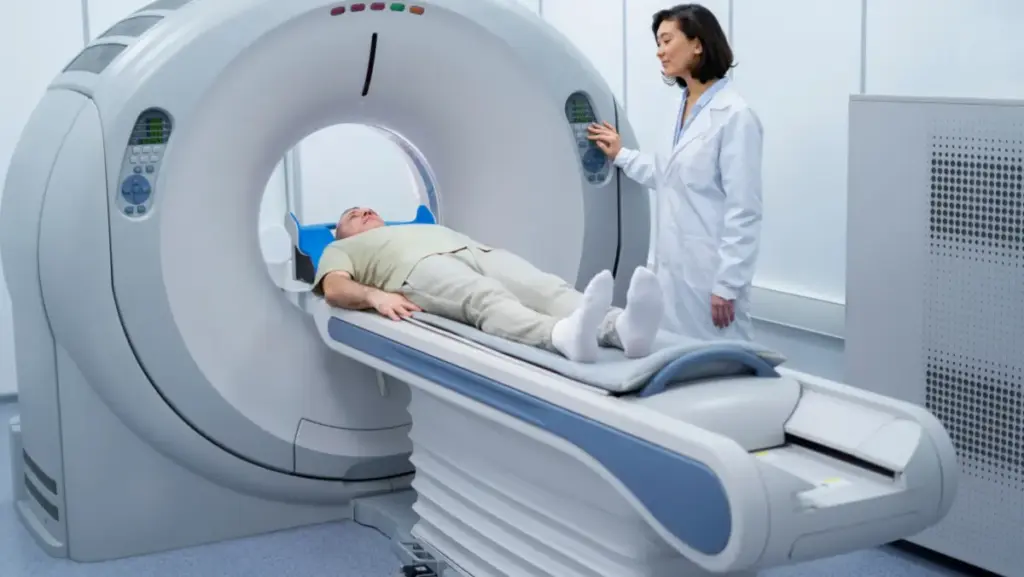
Accurate and timely diagnosis is the cornerstone of effective gastric cancer treatment. The diagnostic process typically begins with a thorough medical history review and physical examination, followed by a carefully planned sequence of investigations:
The multidisciplinary team at Kannappa Memorial Hospital coordinates all diagnostic steps efficiently under one roof, ensuring patients receive a complete and accurate picture of their condition before any treatment decisions are made.
Modern Gastric Cancer treatment includes personalized care plans, advanced therapies, surgery, chemotherapy, and multidisciplinary specialists working together to improve treatment outcomes, enhance recovery, manage symptoms effectively, and provide better quality of life for patients.
While no strategy can guarantee complete protection, adopting certain lifestyle practices significantly reduces the risk of developing stomach cancer. At Kannappa Memorial Hospital, our preventive oncology approach emphasizes:
Preventive lifestyle changes play a key role in reducing the need for complex Gastric Cancer treatment later in life.
The prognosis of Gastric Cancer mainly depends on the stage at which the disease is detected and treated.
Detecting the disease at an early stage greatly improves the chances of successful treatment and recovery. Recent advances in Gastric Cancer treatment, including targeted therapy, immunotherapy, and improved surgical techniques, have contributed to better survival outcomes even in advanced stages of the disease.
Very good treatment, very happy, will recommend for my known persons for treatment, Ms Vijaya Lakshmi ( Ms Nazreen and Ms Hemachitra ) and entire Staffs and Sisters are very kind and friendly.
Dr Margret and Team ( especially Dr Anuraga ) kindness and expertise made a real difference.
Chairman Dr Ganesh sir ,
kindness , dedication and compasionate care is very big support to us.
Thank you all, haven’t mentioned many names.
Gastric cancer is a serious but increasingly treatable condition when diagnosed early and managed with a comprehensive medical approach. Understanding its symptoms, risk factors, and diagnostic pathways is essential for timely intervention. Modern Gastric Cancer treatment has evolved significantly, combining surgery, chemotherapy, radiation, targeted therapy, and immunotherapy to improve survival outcomes and patient quality of life.
Hospitals like Kannappa Memorial Hospital play a crucial role in delivering advanced, patient-centered oncology care with a multidisciplinary approach. Early consultation, proper screening, and lifestyle modifications remain the strongest tools in reducing gastric cancer burden. With increasing awareness and medical advancements, the outlook for gastric cancer patients continues to improve, especially when treatment begins at an early stage.
Gastric cancer, also known as stomach cancer, is a disease in which malignant cells develop in the lining of the stomach. The stomach is a muscular organ responsible for digestion, and when its cells undergo abnormal changes, cancer can form. Most cases over 95% are adenocarcinomas, originating from mucus-producing glandular cells. The disease may also occur at the gastroesophageal junction.
Gastric cancer is a major global health concern and a leading cause of cancer-related deaths. Although advances in Gastric Cancer treatment have improved outcomes, many patients are still diagnosed late, making early detection and awareness essential for better prognosis and survival.
Anatomy
Types of Gastric Cancer
Causes of Gastric Cancer
Risk Factors
Symptoms of Gastric Cancer
Diagnosis of Gastric Cancer
Treatment of Gastric Cancer
Prevention of Gastric Cancer
Prognosis of Gastric Cancer
Patient Testimonals
Conclusion
To understand stomach cancer, it is helpful to know the basic parts of the stomach. The stomach has different sections called the cardia, fundus, body, antrum, and pylorus. Cancer can start in any of these areas, but it is now more commonly seen near the upper part of the stomach where it joins the food pipe.
In the early stages, the cancer stays in the inner lining of the stomach. As the disease grows, it spreads deeper into the stomach wall and may reach nearby organs such as the liver, pancreas, colon, and spleen. In advanced stages, the cancer can also spread to nearby lymph nodes, which may allow it to move to other parts of the body.
Not all stomach cancers are the same. Understanding the specific type helps guide the most appropriate gastric cancer treatment strategy:
Each subtype carries distinct biological characteristics, growth patterns, and responses to therapy, which is why accurate histological diagnosis is a cornerstone of planning effective gastric cancer treatment.
Gastric cancer does not develop overnight. It is typically the result of years of damage to the stomach’s mucosal lining, which over time leads to DNA mutations in epithelial cells. These mutations disrupt normal cell regulation, leading to uncontrolled proliferation and eventually tumor formation.
The most well-established cause of gastric cancer is chronic infection with Helicobacter pylori (H. pylori), a bacterium that colonizes the stomach lining and triggers persistent inflammation. This ongoing inflammation damages the mucosal barrier, promotes genetic instability, and significantly elevates the risk of adenocarcinoma particularly in the distal (lower) stomach. Other contributing factors include:
Understanding these root causes is not merely academic it informs prevention strategies and guides early screening in high-risk populations.
Certain individuals carry a statistically higher risk of developing gastric cancer. While having one or more risk factors does not mean cancer will develop, awareness empowers timely medical consultation and proactive screening. Key risk factors include:
At Kannappa Memorial Hospital, our oncology team offers personalized risk assessment consultations for individuals with one or more of these factors, helping to detect any precancerous changes well before a diagnosis of stomach cancer.
One of the greatest challenges with gastric cancer is that early-stage disease is often asymptomatic or presents with vague discomfort easily attributed to common digestive issues. This is why the majority of patients are diagnosed at an advanced stage.
Accurate and timely diagnosis is the cornerstone of effective gastric cancer treatment. The diagnostic process typically begins with a thorough medical history review and physical examination, followed by a carefully planned sequence of investigations:
The multidisciplinary team at Kannappa Memorial Hospital coordinates all diagnostic steps efficiently under one roof, ensuring patients receive a complete and accurate picture of their condition before any treatment decisions are made.
Modern Gastric Cancer treatment includes personalized care plans, advanced therapies, surgery, chemotherapy, and multidisciplinary specialists working together to improve treatment outcomes, enhance recovery, manage symptoms effectively, and provide better quality of life for patients.
While no strategy can guarantee complete protection, adopting certain lifestyle practices significantly reduces the risk of developing stomach cancer. At Kannappa Memorial Hospital, our preventive oncology approach emphasizes:
Preventive lifestyle changes play a key role in reducing the need for complex Gastric Cancer treatment later in life.
The prognosis of Gastric Cancer mainly depends on the stage at which the disease is detected and treated.
Detecting the disease at an early stage greatly improves the chances of successful treatment and recovery. Recent advances in Gastric Cancer treatment, including targeted therapy, immunotherapy, and improved surgical techniques, have contributed to better survival outcomes even in advanced stages of the disease.
Very good treatment, very happy, will recommend for my known persons for treatment, Ms Vijaya Lakshmi ( Ms Nazreen and Ms Hemachitra ) and entire Staffs and Sisters are very kind and friendly.
Dr Margret and Team ( especially Dr Anuraga ) kindness and expertise made a real difference.
Chairman Dr Ganesh sir ,
kindness , dedication and compasionate care is very big support to us.
Thank you all, haven’t mentioned many names.
Gastric cancer is a serious but increasingly treatable condition when diagnosed early and managed with a comprehensive medical approach. Understanding its symptoms, risk factors, and diagnostic pathways is essential for timely intervention. Modern Gastric Cancer treatment has evolved significantly, combining surgery, chemotherapy, radiation, targeted therapy, and immunotherapy to improve survival outcomes and patient quality of life.
Hospitals like Kannappa Memorial Hospital play a crucial role in delivering advanced, patient-centered oncology care with a multidisciplinary approach. Early consultation, proper screening, and lifestyle modifications remain the strongest tools in reducing gastric cancer burden. With increasing awareness and medical advancements, the outlook for gastric cancer patients continues to improve, especially when treatment begins at an early stage.
Stomach cancer can be curable if detected early. Early-stage gastric cancer may be treated effectively through surgery, chemotherapy, or targeted therapy. The success rate depends on tumor size, location, and spread. Timely diagnosis, lifestyle modifications, and adherence to treatment plans significantly improve outcomes, making early detection crucial for achieving long-term remission and better survival rates.
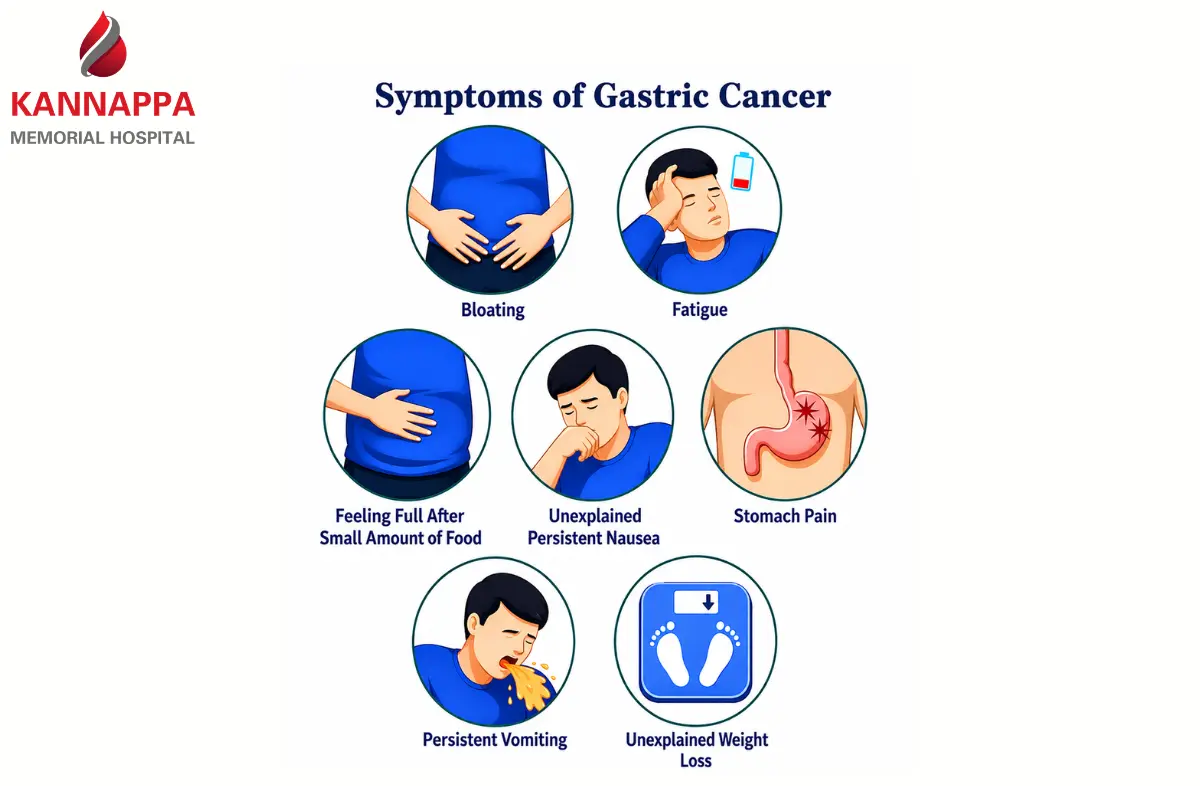
The most prominent symptom of stomach cancer is persistent indigestion or discomfort in the upper abdomen, often accompanied by bloating, nausea, or loss of appetite. Other warning signs include unexplained weight loss, vomiting, heartburn, or blood in stool. Early recognition of these symptoms and prompt medical evaluation can help detect gastric cancer in its initial stages for better treatment outcomes.
Gastric cancer is caused by a combination of genetic, environmental, and lifestyle factors. Chronic infection with Helicobacter pylori, excessive salt intake, smoking, alcohol consumption, and certain dietary habits increase the risk. Family history and genetic mutations also contribute. Early diagnosis and managing risk factors can significantly reduce the likelihood of developing gastric cancer and improve treatment effectiveness.