
Precision oncology is a modern approach to cancer treatment that uses a patient’s genetic and molecular information to provide personalized therapy. Unlike traditional treatments, which use the same method for many patients, precision oncology focuses on the unique characteristics of each tumor.
Advances in genomics and biotechnology have helped doctors identify specific mutations and biomarkers in cancer cells. This allows doctors to choose treatments that are more effective and cause fewer side effects. Precision oncology mainly targets cancer cells without harming healthy tissues, improving treatment accuracy, patient outcomes, and overall quality of cancer care.
Precision oncology plays a major role in modern cancer care by helping doctors provide more accurate, effective, and personalized treatments for cancer patients. Instead of using the same treatment for all patients, precision oncology focuses on the unique genetic and molecular characteristics of each patient’s cancer.
Precision oncology is transforming cancer treatment by making therapies more personalized, effective, and safer. With advances in genetic testing, molecular diagnostics, and targeted therapies, precision oncology continues to improve cancer care and offers new hope for better patient outcomes.
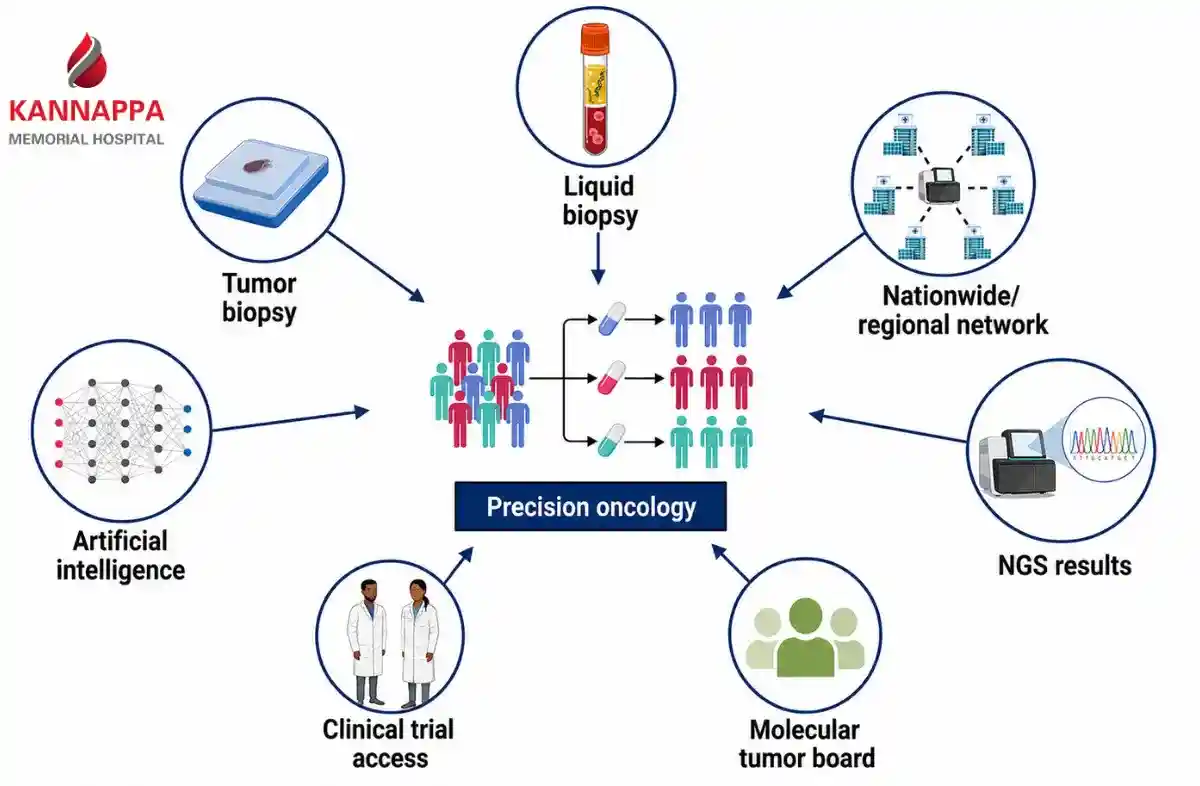
Precision oncology is a modern approach to cancer treatment that focuses on tailoring care to each individual patient. By using genetic information, advanced testing methods, and new technologies, doctors can better understand the disease and choose more effective treatments.
This approach improves the accuracy of diagnosis, increases treatment success, and reduces unnecessary side effects. As medical research continues to advance, precision oncology will play a key role in making cancer care more personalized, effective, and successful worldwide.
Precision oncology is a modern approach to cancer treatment that uses a patient’s genetic and molecular information to provide personalized therapy. Unlike traditional treatments, which use the same method for many patients, precision oncology focuses on the unique characteristics of each tumor.
Advances in genomics and biotechnology have helped doctors identify specific mutations and biomarkers in cancer cells. This allows doctors to choose treatments that are more effective and cause fewer side effects. Precision oncology mainly targets cancer cells without harming healthy tissues, improving treatment accuracy, patient outcomes, and overall quality of cancer care.
Importance of Precision Oncology
Evolution of Cancer Treatment
Principles of Precision Oncology
Technologies Used in Precision Oncology
Workflow of Precision Oncology
Clinical Applications of Precision Oncology
Artificial Intelligence in Precision Oncology
Advantages of Precision Oncology
Challenges and Limitations
Conclusion
Precision oncology plays a major role in modern cancer care by helping doctors provide more accurate, effective, and personalized treatments for cancer patients. Instead of using the same treatment for all patients, precision oncology focuses on the unique genetic and molecular characteristics of each patient’s cancer.
Precision oncology is transforming cancer treatment by making therapies more personalized, effective, and safer. With advances in genetic testing, molecular diagnostics, and targeted therapies, precision oncology continues to improve cancer care and offers new hope for better patient outcomes.
Precision oncology is a modern approach to cancer treatment that focuses on tailoring care to each individual patient. By using genetic information, advanced testing methods, and new technologies, doctors can better understand the disease and choose more effective treatments.
This approach improves the accuracy of diagnosis, increases treatment success, and reduces unnecessary side effects. As medical research continues to advance, precision oncology will play a key role in making cancer care more personalized, effective, and successful worldwide.
A precision oncologist is a cancer specialist who uses precision medicine to treat cancer based on a patient’s genetic makeup, tumor biology, and biomarkers. Instead of a one-size-fits-all approach, they analyze tumor DNA, identify mutations, and select treatments tailored to the cancer’s specific characteristics. This may include targeted therapies or immunotherapy, aiming for more effective treatment with fewer side effects.
Side effects of precision therapy vary depending on the drug type (targeted therapy or immunotherapy). Common effects include fatigue, skin rashes, diarrhea, nausea, loss of appetite, and high blood pressure. Some patients may experience liver function changes or abnormal blood counts. Immunotherapy can also trigger immune-related reactions such as inflammation in the lungs, liver, or thyroid. Overall, side effects are often more targeted but still require careful medical monitoring.
There isn’t a single “normal” number of chemotherapy cycles because it depends on the cancer type, stage, drug regimen, and how well the body responds. Many treatments are given in cycles, often 4 to 8 cycles over several months, but some may be shorter or extend beyond 12 cycles. Doctors adjust based on scans, side effects, and goals like cure or control. Your oncology team sets the exact plan for safety and effectiveness.