
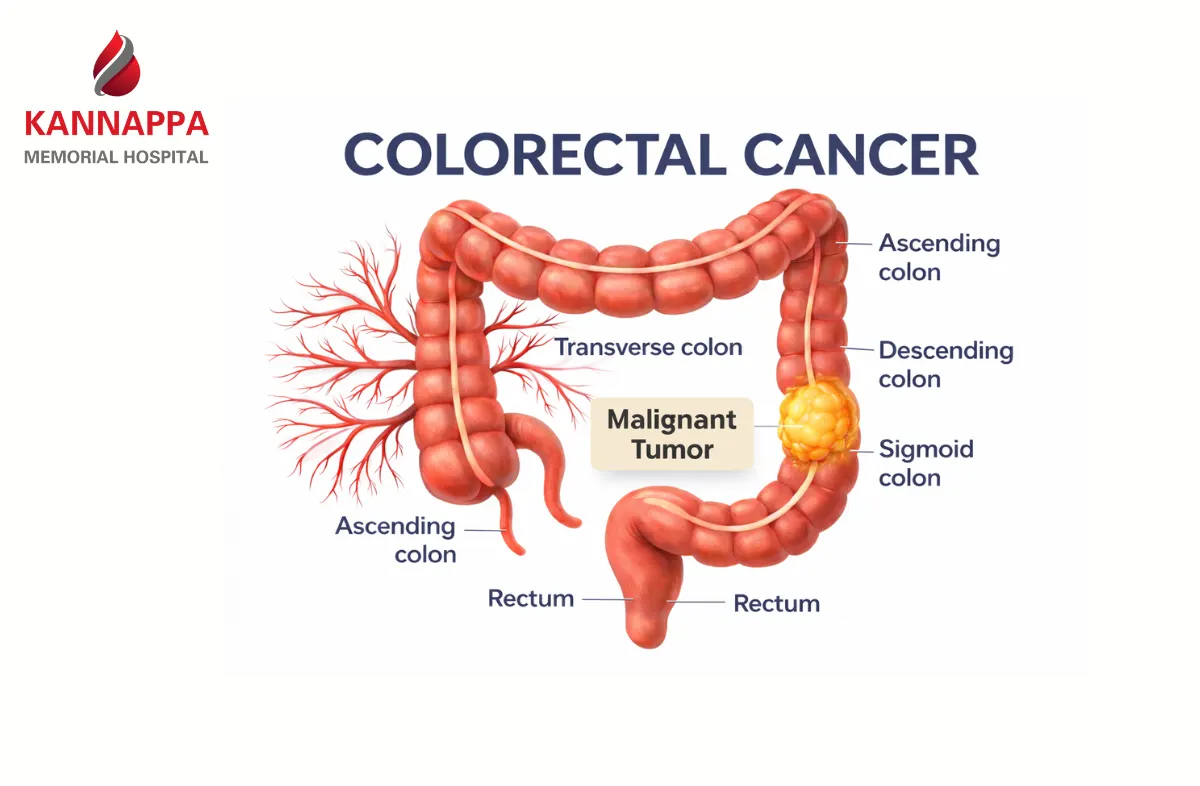
Colorectal cancer is a form of cancer that starts in the colon or rectum, both of which are parts of the large intestine.Often referred to as bowel cancer, it typically develops slowly over time, starting as small, non-cancerous growths known as polyps that can eventually become malignant.
This disease is a major global health concern due to its rising incidence and mortality rates. One of the biggest challenges with colorectal cancer is that it often remains asymptomatic in its early stages, making early detection difficult without proper screening. At Kannappa Memorial Hospital, emphasis is placed on early detection and preventive care, as timely diagnosis significantly improves outcomes and survival rates.
Colorectal cancer is among the most commonly diagnosed cancers worldwide, affecting both men and women. It is particularly prevalent in developed countries, largely due to lifestyle and dietary factors.
Recent trends indicate a concerning increase in colorectal cancer among younger populations, even those under the age of 50. However, the risk still rises significantly with age, making individuals over 50 more vulnerable. Despite advances in medical science, colorectal cancer remains a leading cause of cancer-related deaths, highlighting the need for improved awareness, screening programs, and lifestyle modifications.
Understanding the risk factors of colorectal cancer is essential for prevention and early detection. These factors can be broadly classified into non-modifiable, modifiable, and medical conditions.
Certain risk factors cannot be changed but help identify high-risk individuals:
Lifestyle choices play a crucial role in the development of colorectal cancer:
Adopting a healthier lifestyle can significantly reduce the risk of developing colorectal cancer.
Certain underlying health conditions also increase risk:
Colorectal cancer develops through a stepwise progression that begins in the inner lining of the colon or rectum.
Normal mucosa → Adenoma (polyp) → Carcinoma
This transformation typically occurs over several years, providing a valuable window for early detection and intervention.
Genetic Mutations
Several genetic mutations play a key role in colorectal cancer development:
Molecular Pathways
Three major molecular pathways are involved:
Understanding these pathways helps in developing targeted therapies for colorectal cancer.
In the early stage, colorectal cancer may not show any noticeable symptoms, which is why regular screening is very important. As the disease develops, certain signs may begin to appear.
Common symptoms include:
If any of these symptoms continue for more than a few weeks, medical advice should be sought. Detecting colorectal cancer early greatly increases the chances of successful treatment.
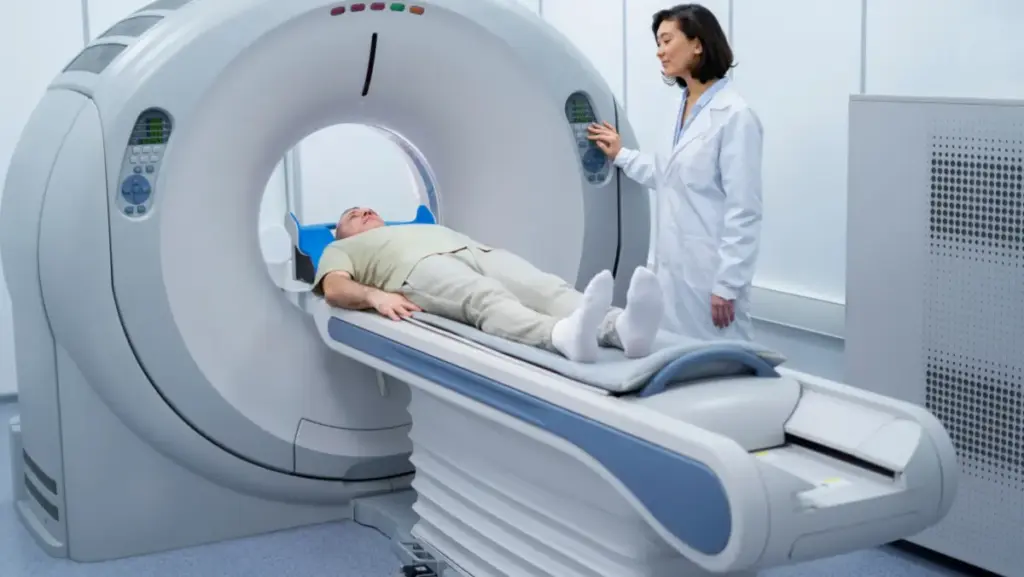
Screening plays a crucial role in reducing the mortality of colorectal cancer. It is generally recommended to begin screening at around age 45, or earlier for high-risk individuals.
At Kannappa Memorial Hospital, advanced screening protocols are implemented to ensure accurate and early detection of colorectal cancer.
Once colorectal cancer is suspected, a combination of clinical evaluation and diagnostic tests is used to confirm the diagnosis.
Accurate diagnosis is essential for determining the stage and planning effective treatment.
Colorectal cancer staging helps doctors understand how far the cancer has spread in the body. This is important because it guides treatment decisions and helps predict outcomes.
Doctors use the TNM system, which looks at three key things:
In simple terms, lower stages mean the cancer is more localized and easier to treat, while higher stages indicate more spread and require advanced treatment.
Understanding the stage of colorectal cancer helps doctors choose the best treatment and improve the chances of recovery.
Treatment of colorectal cancer depends on the stage, location, and overall health of the patient.
Surgery
Surgery is the primary treatment for localized colorectal cancer. It involves removal of the tumor and surrounding tissue.
Chemotherapy
Chemotherapy is used:
Radiotherapy
Radiotherapy is mainly used in rectal cancer, often before surgery to shrink tumors.
Targeted Therapy
Targeted drugs focus on specific molecular pathways involved in colorectal cancer growth, improving treatment precision.
Immunotherapy
Immunotherapy boosts the body’s immune system to fight cancer cells, especially in certain genetic types of colorectal cancer.
Kannappa Memorial Hospital offers a multidisciplinary approach, combining these therapies for optimal patient outcomes.
The prognosis of colorectal cancer largely depends on the stage at diagnosis.
With advancements in treatment and early screening, survival rates have improved significantly in recent years.
Preventing colorectal cancer means reducing the risk of getting it and finding it early.
Primary Prevention (Healthy lifestyle)
This means doing things that keep your body healthy:
These habits help lower the chance of cancer developing.
Secondary Prevention (Early detection)
This means finding cancer early before it becomes serious:
Early detection makes treatment easier and more successful.
Chemoprevention (Medicines)
Sometimes doctors may give medicines to reduce risk:
If left untreated or diagnosed late, colorectal cancer can lead to serious complications, including:
Even with medical progress, some problems still exist in colorectal cancer care:
These challenges can be reduced by improving awareness and healthcare services.
The future of colorectal cancer treatment looks better due to ongoing research:
These advancements will help detect cancer earlier and improve survival and quality of life.
Colorectal cancer is both preventable and treatable, especially when detected early. Increasing awareness, adopting a healthy lifestyle, and undergoing regular screening are key to reducing the burden of this disease.
Healthcare institutions like Kannappa Memorial Hospital play a vital role in providing comprehensive care, from early detection to advanced treatment options.By prioritizing prevention and timely intervention, we can significantly reduce the impact of colorectal cancer and improve patient outcomes worldwide.
Colorectal cancer is a form of cancer that starts in the colon or rectum, both of which are parts of the large intestine.Often referred to as bowel cancer, it typically develops slowly over time, starting as small, non-cancerous growths known as polyps that can eventually become malignant.
This disease is a major global health concern due to its rising incidence and mortality rates. One of the biggest challenges with colorectal cancer is that it often remains asymptomatic in its early stages, making early detection difficult without proper screening. At Kannappa Memorial Hospital, emphasis is placed on early detection and preventive care, as timely diagnosis significantly improves outcomes and survival rates.
Epidemiology
Etiology and Risk Factors
Pathogenesis
Signs and Symptoms
Screening and Early Detection
Diagnosis
Staging
Treatment
Prognosis
Prevention
Complications of Colorectal Cancer
Current Challenges
Future Perspectives
Conclusion
Colorectal cancer is among the most commonly diagnosed cancers worldwide, affecting both men and women. It is particularly prevalent in developed countries, largely due to lifestyle and dietary factors.
Recent trends indicate a concerning increase in colorectal cancer among younger populations, even those under the age of 50. However, the risk still rises significantly with age, making individuals over 50 more vulnerable. Despite advances in medical science, colorectal cancer remains a leading cause of cancer-related deaths, highlighting the need for improved awareness, screening programs, and lifestyle modifications.
Understanding the risk factors of colorectal cancer is essential for prevention and early detection. These factors can be broadly classified into non-modifiable, modifiable, and medical conditions.
Certain risk factors cannot be changed but help identify high-risk individuals:
Lifestyle choices play a crucial role in the development of colorectal cancer:
Adopting a healthier lifestyle can significantly reduce the risk of developing colorectal cancer.
Certain underlying health conditions also increase risk:
Colorectal cancer develops through a stepwise progression that begins in the inner lining of the colon or rectum.
Normal mucosa → Adenoma (polyp) → Carcinoma
This transformation typically occurs over several years, providing a valuable window for early detection and intervention.
Genetic Mutations
Several genetic mutations play a key role in colorectal cancer development:
Molecular Pathways
Three major molecular pathways are involved:
Understanding these pathways helps in developing targeted therapies for colorectal cancer.
In the early stage, colorectal cancer may not show any noticeable symptoms, which is why regular screening is very important. As the disease develops, certain signs may begin to appear.
Common symptoms include:
If any of these symptoms continue for more than a few weeks, medical advice should be sought. Detecting colorectal cancer early greatly increases the chances of successful treatment.
Screening plays a crucial role in reducing the mortality of colorectal cancer. It is generally recommended to begin screening at around age 45, or earlier for high-risk individuals.
At Kannappa Memorial Hospital, advanced screening protocols are implemented to ensure accurate and early detection of colorectal cancer.
Once colorectal cancer is suspected, a combination of clinical evaluation and diagnostic tests is used to confirm the diagnosis.
Accurate diagnosis is essential for determining the stage and planning effective treatment.
Colorectal cancer staging helps doctors understand how far the cancer has spread in the body. This is important because it guides treatment decisions and helps predict outcomes.
Doctors use the TNM system, which looks at three key things:
In simple terms, lower stages mean the cancer is more localized and easier to treat, while higher stages indicate more spread and require advanced treatment.
Understanding the stage of colorectal cancer helps doctors choose the best treatment and improve the chances of recovery.
Treatment of colorectal cancer depends on the stage, location, and overall health of the patient.
Surgery
Surgery is the primary treatment for localized colorectal cancer. It involves removal of the tumor and surrounding tissue.
Chemotherapy
Chemotherapy is used:
Radiotherapy
Radiotherapy is mainly used in rectal cancer, often before surgery to shrink tumors.
Targeted Therapy
Targeted drugs focus on specific molecular pathways involved in colorectal cancer growth, improving treatment precision.
Immunotherapy
Immunotherapy boosts the body’s immune system to fight cancer cells, especially in certain genetic types of colorectal cancer.
Kannappa Memorial Hospital offers a multidisciplinary approach, combining these therapies for optimal patient outcomes.
The prognosis of colorectal cancer largely depends on the stage at diagnosis.
With advancements in treatment and early screening, survival rates have improved significantly in recent years.
Preventing colorectal cancer means reducing the risk of getting it and finding it early.
Primary Prevention (Healthy lifestyle)
This means doing things that keep your body healthy:
These habits help lower the chance of cancer developing.
Secondary Prevention (Early detection)
This means finding cancer early before it becomes serious:
Early detection makes treatment easier and more successful.
Chemoprevention (Medicines)
Sometimes doctors may give medicines to reduce risk:
If left untreated or diagnosed late, colorectal cancer can lead to serious complications, including:
Even with medical progress, some problems still exist in colorectal cancer care:
These challenges can be reduced by improving awareness and healthcare services.
The future of colorectal cancer treatment looks better due to ongoing research:
These advancements will help detect cancer earlier and improve survival and quality of life.
Colorectal cancer is both preventable and treatable, especially when detected early. Increasing awareness, adopting a healthy lifestyle, and undergoing regular screening are key to reducing the burden of this disease.
Healthcare institutions like Kannappa Memorial Hospital play a vital role in providing comprehensive care, from early detection to advanced treatment options.By prioritizing prevention and timely intervention, we can significantly reduce the impact of colorectal cancer and improve patient outcomes worldwide.
The exact cause of colorectal cancer is not fully known, but it develops due to genetic mutations in colon or rectal cells. Risk factors include aging, family history, unhealthy diet, obesity, smoking, alcohol use, inflammatory bowel diseases, and lack of physical activity. These factors can damage DNA and lead to uncontrolled cell growth.
Colorectal cancer most commonly occurs in people over the age of 50, as risk increases with age. However, it can also develop in younger adults, especially those with a family history, genetic conditions, or inflammatory bowel diseases. In recent years, cases in people under 50 have been increasing, so awareness and early screening are important for all risk groups.