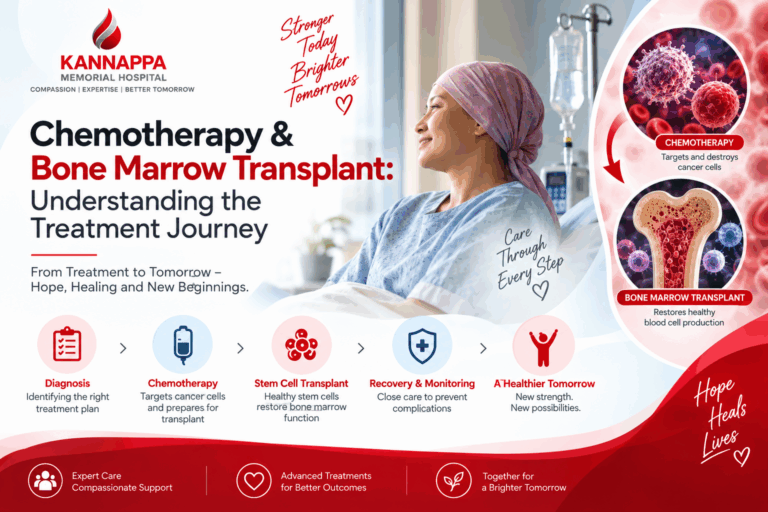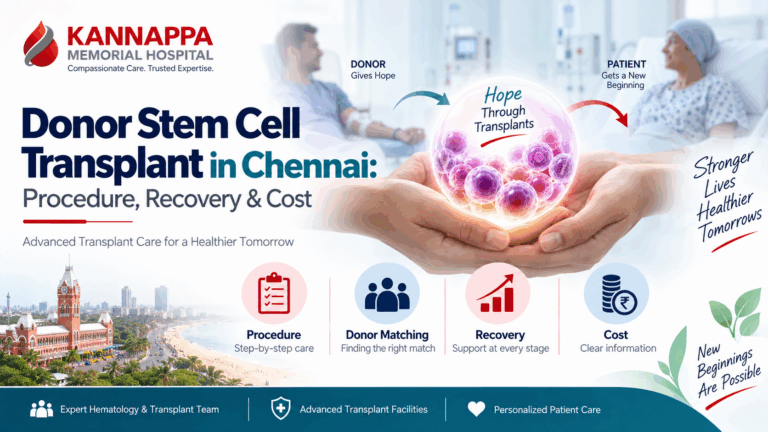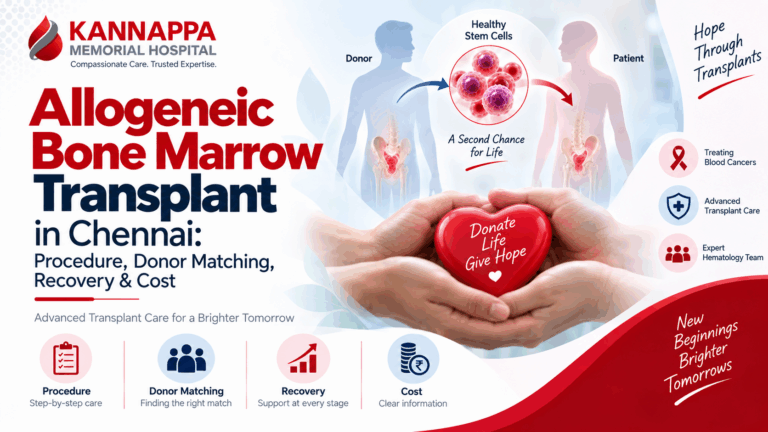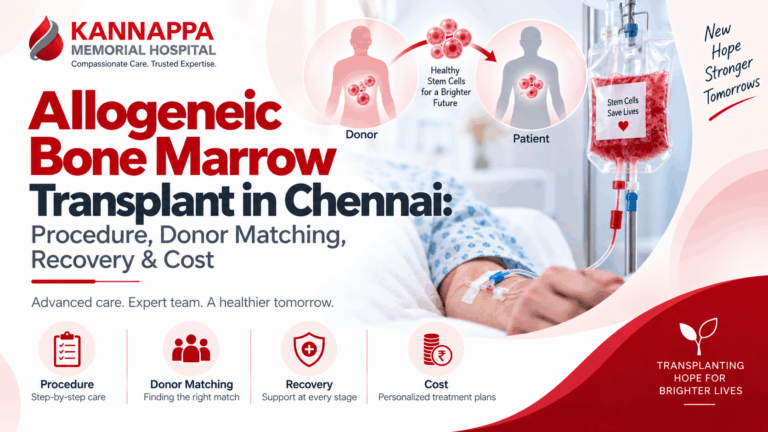
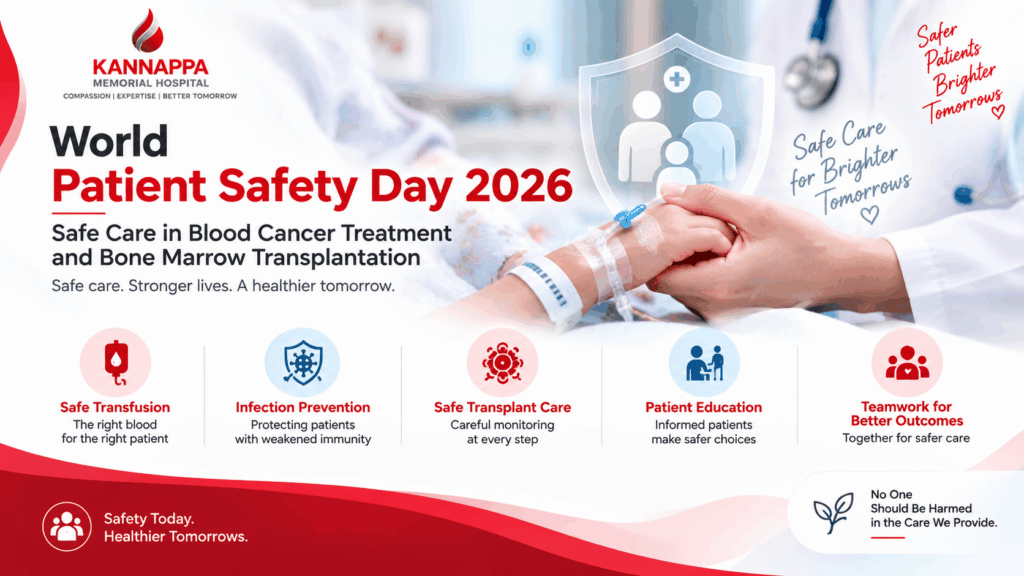
World Patient Safety Day 2026 is an important opportunity to highlight the role of safe, coordinated, and patient-centred healthcare. For people undergoing blood cancer treatment and Bone Marrow Transplantation (BMT), patient safety becomes especially important because treatment can involve chemotherapy, blood transfusions, immunosuppressive medicines, stem cell transplantation, and close medical monitoring.
Patients with blood cancers may have weakened immune systems and can be more vulnerable to infections and treatment-related complications. Therefore, every stage of care—from diagnosis and treatment planning to transfusion, transplantation, recovery, and follow-up—requires careful attention to safety.
At Kannappa Memorial Hospital, patient safety is an integral part of blood cancer and Bone Marrow Transplant care. A multidisciplinary healthcare team works together to provide appropriate monitoring, infection prevention, safe transfusion practices, patient education, and supportive care throughout the treatment journey.
What Is World Patient Safety Day 2026?
World Patient Safety Day is observed every year to raise awareness about the importance of preventing avoidable harm in healthcare and improving the quality and safety of patient care.
The day encourages healthcare professionals, hospitals, patients, caregivers, and communities to work together to create safer healthcare systems.
Patient safety is not limited to preventing medical errors. It includes every aspect of healthcare that can affect a patient’s well-being, such as:
- Accurate diagnosis and treatment planning
- Correct medication administration
- Safe blood transfusion
- Infection prevention
- Proper patient identification
- Monitoring during treatment
- Safe surgical and transplant procedures
- Effective communication between healthcare teams
- Patient and caregiver education
- Appropriate follow-up and recovery care
For patients undergoing blood cancer treatment, these safety measures are particularly important because treatment may affect blood counts, immunity, and the body’s ability to fight infections.
Why Patient Safety Matters in Blood Cancer Treatment
Blood cancers such as leukemia, lymphoma, and multiple myeloma can affect the blood-forming tissues and immune system. Treatment may further reduce blood cell counts, making patients susceptible to infections, anemia, and bleeding.
Depending on the diagnosis and treatment plan, patients may require chemotherapy, targeted therapy, immunotherapy, radiation therapy, blood transfusions, or stem cell transplantation.
During this period, careful monitoring can help healthcare teams identify changes early and provide timely treatment.
Important safety measures may include:
- Regular monitoring of blood counts
- Monitoring for signs of infection
- Safe administration of medicines
- Appropriate blood and platelet transfusions
- Monitoring of vital signs
- Maintaining proper hygiene and infection-control practices
- Monitoring treatment-related side effects
- Clear communication between doctors, nurses, patients, and caregivers
A structured approach to patient safety can support better coordination throughout the treatment journey.
Safe Blood Transfusion: The Right Blood for the Right Patient
Blood and platelet transfusions may be required during certain stages of blood cancer treatment. Patients with low hemoglobin or platelet counts may need transfusion support based on their individual clinical condition.
Safe transfusion practices are an essential part of patient care.
Before a transfusion, healthcare professionals follow established procedures to ensure the correct blood component is provided to the correct patient. Patient identification, blood-group compatibility, proper documentation, and monitoring during transfusion are important safety steps.
During and after a transfusion, the healthcare team may monitor the patient for possible reactions.
Patients and caregivers should also inform the healthcare team if they experience symptoms such as:
- Fever or chills
- Breathing difficulty
- Skin rash or itching
- Chest discomfort
- Sudden weakness
- Unusual discomfort during or after transfusion
Prompt communication can help the healthcare team assess and manage potential transfusion-related reactions.
Infection Prevention During Blood Cancer Treatment
Infection prevention is one of the most important aspects of patient safety for people undergoing intensive cancer treatment and Bone Marrow Transplantation.
Some treatments can lower white blood cell counts, including neutrophils, which are important for fighting infections. Following appropriate infection-control measures can therefore become a critical part of supportive care.
Hospitals may implement measures such as:
- Strict hand hygiene
- Appropriate use of personal protective equipment
- Proper cleaning and disinfection
- Safe food and water practices
- Careful management of intravenous lines and catheters
- Monitoring for fever and other infection symptoms
- Appropriate isolation precautions when required
Patients and caregivers can also contribute to infection prevention by following hospital instructions carefully.
Simple measures such as washing hands regularly, maintaining personal hygiene, avoiding contact with people who have active infections, and informing the medical team about fever or other concerning symptoms can be important.
Safe Bone Marrow Transplant Care
Bone Marrow Transplantation, also known as hematopoietic stem cell transplantation, is an important treatment option for selected patients with certain blood cancers and other blood disorders.
A transplant journey involves several stages, and each stage requires careful planning and monitoring.
1. Pre-Transplant Evaluation
Before transplantation, the medical team evaluates the patient’s overall condition and treatment requirements.
This may involve:
- Blood tests
- Imaging investigations
- Organ-function assessments
- Infection screening
- Disease-status evaluation
- Donor evaluation where applicable
These assessments help the healthcare team plan treatment according to the patient’s individual needs.
2. Conditioning Treatment
Some transplant protocols involve conditioning treatment before stem cell infusion. Conditioning may include chemotherapy and, in selected cases, radiation therapy.
During this period, patients may experience side effects and changes in blood counts. Close monitoring helps the medical team identify complications and provide supportive treatment.
3. Stem Cell Infusion
During the transplant procedure, stem cells are infused through an appropriate venous access route.
The healthcare team follows established procedures for patient identification, stem cell verification, administration, and monitoring.
4. Post-Transplant Monitoring
After transplantation, patients require close monitoring because the immune system needs time to recover.
The healthcare team may monitor:
- Blood counts
- Signs of infection
- Organ function
- Medication effects
- Graft function
- Nutritional status
- Fluid balance
- Other transplant-related complications
Regular monitoring allows potential problems to be recognized and addressed promptly.
Medication Safety in Blood Cancer Care
Patients undergoing blood cancer treatment may receive multiple medications. These can include chemotherapy, antibiotics, antiviral medicines, antifungal medicines, immunosuppressive drugs, pain medicines, anti-nausea medications, and other supportive treatments.
Medication safety involves ensuring that the right medication is given at the right dose, through the appropriate route, and at the correct time.
Patients should:
- Maintain an updated list of medicines
- Tell the healthcare team about all medications they are taking
- Inform doctors about known drug allergies
- Follow prescribed doses and schedules
- Avoid taking new medicines or supplements without medical advice
- Ask questions if they are unsure about a medication
Clear communication can help reduce medication-related risks.
Patient Education: Empowering Patients and Families
Patient safety is not only the responsibility of doctors and nurses. Patients and caregivers are important members of the healthcare team.
Patient education can help families understand what to expect during treatment and when to seek medical attention.
Patients may be educated about:
- Medication schedules
- Infection prevention
- Dietary precautions
- Personal hygiene
- Warning signs and symptoms
- Follow-up appointments
- Blood test requirements
- Central line or catheter care when applicable
- Post-transplant precautions
- When to contact the hospital
For example, a patient who understands that fever during a period of low immunity requires immediate medical attention may be able to seek care sooner.
Communication Is an Important Part of Patient Safety
Effective communication between patients, caregivers, doctors, nurses, laboratory teams, pharmacists, and other healthcare professionals plays an important role in safe healthcare delivery.
Patients should feel comfortable asking questions about:
- Their diagnosis
- Treatment plan
- Medicines
- Possible side effects
- Test results
- Infection precautions
- Transfusion requirements
- Transplant procedures
- Follow-up care
Caregivers should also communicate any significant changes they notice in the patient’s condition.
Clear and timely communication can support coordinated decision-making and help the healthcare team respond appropriately to changes.
Nutrition and Safe Supportive Care
Nutrition can be an important component of supportive care during blood cancer treatment and transplantation.
Depending on the patient’s condition and treatment stage, the healthcare team may provide specific dietary recommendations. Food safety can also be particularly important when immunity is reduced.
Patients may be advised to:
- Follow the dietary plan provided by their healthcare team
- Maintain adequate hydration where medically appropriate
- Follow food hygiene recommendations
- Avoid foods that the medical team has specifically restricted
- Discuss nutritional supplements with their healthcare team before using them
Nutritional needs can vary significantly between patients, so dietary recommendations should be individualized.
The Role of Caregivers in Patient Safety
Caregivers can provide valuable support throughout cancer treatment and transplantation.
They can help patients by:
- Keeping track of appointments
- Maintaining medication schedules
- Following infection-prevention measures
- Monitoring symptoms
- Supporting healthy nutrition and hydration
- Communicating concerns to the healthcare team
- Helping patients follow post-transplant instructions
Caregivers should also understand the warning signs that require immediate communication with the medical team.
Patient Safety at Kannappa Memorial Hospital
At Kannappa Memorial Hospital, patient safety is considered an important part of comprehensive blood cancer and Bone Marrow Transplant care.
The focus is on maintaining safety throughout different stages of treatment, including:
Safe Transfusion
Ensuring appropriate identification, compatibility checks, administration, and monitoring during blood and blood-component transfusions.
Infection Prevention
Following appropriate infection-control practices to protect patients whose immunity may be weakened during treatment. Safe Transplant Care
Providing careful monitoring and coordinated care throughout the Bone Marrow Transplant journey.
Patient Education
Helping patients and families understand treatment instructions, precautions, warning signs, medications, and follow-up care.
What Patients Can Do to Support Safer Care
Patients can actively participate in their own safety by taking a few important steps:
- Share complete medical information with the healthcare team.
- Inform doctors about allergies and current medications.
- Ask questions when treatment instructions are unclear.
- Follow infection-prevention guidelines carefully.
- Take medicines exactly as prescribed.
- Attend scheduled tests and follow-up appointments.
- Report unusual symptoms promptly.
- Follow blood transfusion and transplant-care instructions.
- Keep caregivers informed about important treatment instructions.
- Maintain communication with the healthcare team throughout treatment.
Conclusion
World Patient Safety Day 2026 reminds us that safe healthcare is built into every step of the patient journey. For individuals undergoing blood cancer treatment and Bone Marrow Transplantation, careful monitoring, infection prevention, safe transfusion practices, medication safety, communication, and patient education are essential components of comprehensive care.
At Kannappa Memorial Hospital, the focus is on supporting patients through every stage of their treatment journey with coordinated medical care and safety-focused practices.