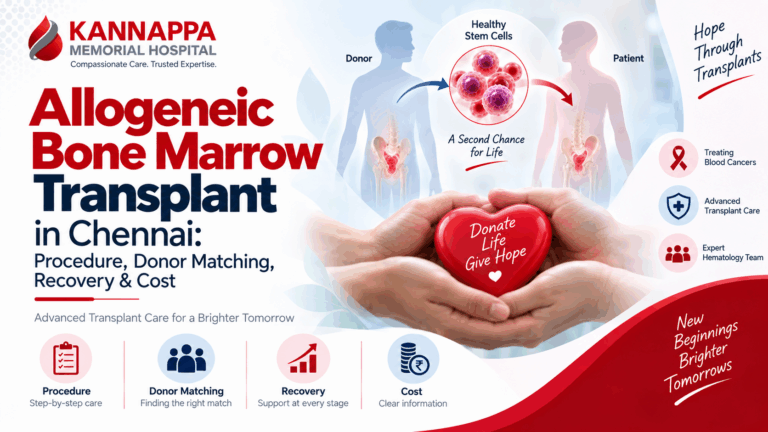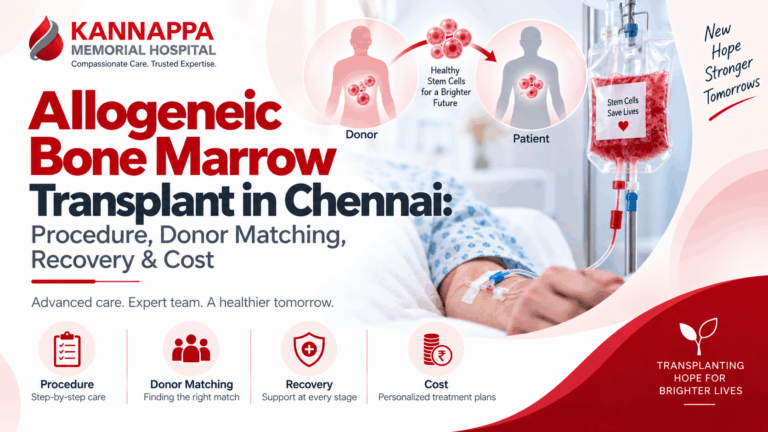
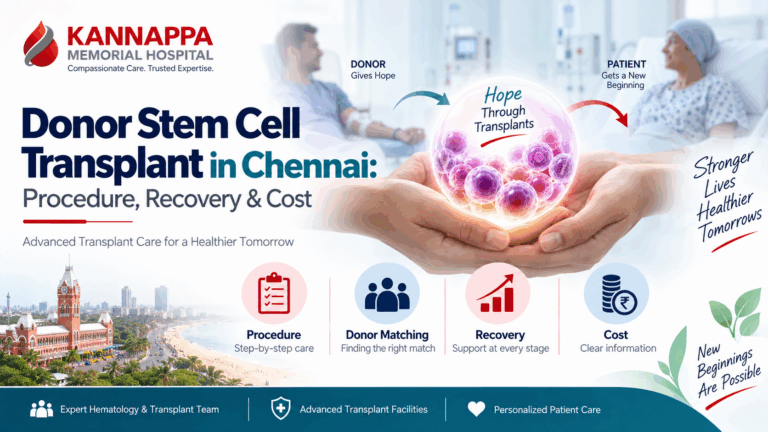
A donor stem cell transplant is an advanced treatment used for selected patients with blood cancers, bone marrow disorders and certain inherited blood conditions. In this procedure, healthy blood-forming stem cells are obtained from a suitable donor and infused into the patient’s bloodstream. The transplanted cells can travel to the bone marrow, establish themselves and begin producing healthy blood cells.
A donor transplant is also called an allogeneic stem cell transplant. It differs from an autologous transplant, in which the patient’s own stem cells are collected and returned after intensive treatment. The National Cancer Institute explains stem cell and bone marrow transplantation as a treatment approach used for selected cancers and other conditions.
Patients searching for donor stem cell transplant in Chennai should undergo a detailed evaluation with an experienced hematologist or transplant specialist before deciding whether transplantation is appropriate.
What Is a Donor Stem Cell Transplant?
A donor stem cell transplant uses healthy blood-forming stem cells from another individual to restore or replace damaged blood-forming cells.
Stem cells can develop into:
- Red blood cells
- White blood cells
- Platelets
Depending on the patient’s condition, the donor may be a matched sibling, another family member, a partially matched family member or a suitably matched unrelated donor.
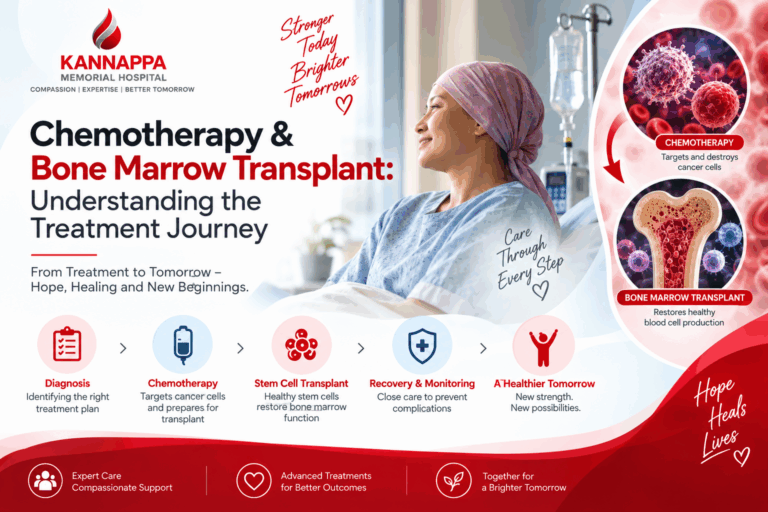
Before transplantation, the patient generally receives conditioning treatment, which may involve chemotherapy with or without radiotherapy. This prepares the body for the donor cells and helps suppress the existing immune system.
After the cells are infused, they travel through the bloodstream to the bone marrow. The process in which transplanted stem cells establish themselves and begin producing blood cells is called engraftment.
Kannappa Memorial Hospital provides specialized bone marrow transplant care in Chennai, including evaluation, transplant planning and post-transplant care.
Who May Need a Donor Stem Cell Transplant?
A donor stem cell transplant may be considered for selected patients with serious blood and bone marrow disorders.
Conditions may include:
- Acute myeloid leukemia (AML)
- Acute lymphoblastic leukemia (ALL)
- Myelodysplastic syndromes
- Myelofibrosis
- Severe aplastic anemia
- Selected lymphomas
- Certain inherited blood disorders
- Other high-risk hematological conditions
A transplant is not automatically recommended for everyone with these conditions. The medical team considers the patient’s diagnosis, disease risk, treatment response, age, general health, genetic characteristics and availability of an appropriate donor.
For example, an AML bone marrow transplant in Chennai may be considered for selected patients with higher-risk AML or specific disease characteristics.
Patients can read more about AML bone marrow transplant treatment, recovery and cost before discussing their individual treatment plan with a specialist.
How Is a Stem Cell Donor Selected?
Donor matching for stem cell transplant is one of the most important stages of the transplant process.
Doctors primarily assess human leukocyte antigen (HLA) compatibility between the patient and potential donor. HLA markers help the immune system distinguish the body’s own cells from foreign cells.
Potential donors can include:
Matched Sibling Donor
A brother or sister may be a suitable donor when their HLA characteristics are sufficiently compatible.
Family Donor
Another family member may be considered depending on the patient’s requirements and compatibility.
Matched Unrelated Donor
If a suitable family donor is unavailable, an appropriately matched unrelated donor may be identified through a donor registry.
Haploidentical Donor
A partially matched family member may be considered in selected situations.
The closer the donor’s stem cells match the recipient’s tissue characteristics, the lower the risk of certain complications such as GVHD, although donor selection involves several other factors as well.
What Tests Are Done Before Transplant?
Before a donor stem cell transplant, patients undergo a detailed medical assessment.
Testing may include:
- Complete blood tests
- Bone marrow examination
- HLA typing
- Heart evaluation
- Lung assessment
- Kidney and liver function tests
- Infection screening
- Imaging studies when required
- Disease-specific molecular or genetic testing
These tests help determine whether the patient is fit enough for transplantation and whether the disease is at an appropriate stage for the procedure.
The NHS guide to preparing for a stem cell or bone marrow transplant also describes assessments such as blood tests, heart and lung investigations and bone marrow evaluation.
How Are Donor Stem Cells Collected?
Donor stem cells can usually be collected from peripheral blood or directly from bone marrow.
Peripheral Blood Stem Cell Collection
The donor may receive medication before collection to increase the number of stem cells circulating in the bloodstream.
A procedure called apheresis is then used to collect the stem cells. Blood passes through a cell-separation machine, the required stem cells are collected and the remaining blood components are returned to the donor.
Bone Marrow Collection
Stem cells can also be collected directly from bone marrow, usually from the pelvic bone under anesthesia.
The NHS explains the different methods used to collect stem cells, including collection from blood and bone marrow.
The collection method is selected according to the patient’s treatment plan and donor-related considerations.
Donor Stem Cell Transplant Procedure
The donor stem cell transplant procedure involves several important stages.
1. Patient Evaluation
The transplant team evaluates the patient’s disease, overall health and organ function.
2. Donor Matching
HLA testing and other donor assessments are performed to identify the most suitable donor.
3. Conditioning Therapy
Chemotherapy, with or without radiotherapy, is given before transplantation.
Conditioning aims to:
- Reduce abnormal or cancerous cells
- Suppress the patient’s immune system
- Prepare the bone marrow for donor cells
4. Stem Cell Infusion
The donor stem cells are infused through an intravenous line or central venous catheter. The infusion is similar to receiving a blood transfusion and does not usually require surgery.
5. Engraftment
After infusion, the donor cells migrate to the bone marrow and begin producing new blood cells.
This is an important stage because blood counts may remain low until engraftment occurs.
Benefits of Donor Stem Cell Transplant
A donor stem cell transplant may offer important benefits for appropriately selected patients.
Potential benefits include:
- Replacement of diseased blood-forming cells
- Restoration of blood-cell production
- Potential long-term disease control
- Potentially curative treatment for selected diseases
- Graft-versus-leukemia effect in some blood cancers
In an allogeneic transplant, donor immune cells may recognize and attack remaining abnormal cancer cells. This is called the graft-versus-leukemia or graft-versus-tumor effect.
However, the same immune response can sometimes affect healthy tissues and lead to graft-versus-host disease.
Risks and Complications
Like any intensive medical treatment, a donor stem cell transplant can involve risks.
Possible complications include:
- Infection
- Bleeding
- Low blood-cell counts
- Graft-versus-host disease
- Organ complications
- Medication side effects
- Mucositis
- Graft failure
- Disease relapse
- Fertility problems
- Long-term immune complications
The National Cancer Institute provides information about short- and long-term transplant side effects, including infections, fatigue, mouth sores, infertility and organ complications.
The risks vary according to the patient’s age, disease, conditioning regimen, donor compatibility and overall health.
What Is Graft-Versus-Host Disease?
Graft-versus-host disease (GVHD) is a significant potential complication of an allogeneic transplant.
GVHD occurs when immune cells from the donor recognize tissues in the recipient’s body as foreign and attack them.
It may affect:
- Skin
- Liver
- Intestines
- Mouth
- Eyes
- Other organs
GVHD can occur in an acute or chronic form. Doctors use preventive medicines and close monitoring to reduce its risk and manage it when it occurs.
For patients and families, understanding graft-versus-host disease after stem cell transplantation can help them recognize why long-term monitoring is important.
Recovery After Donor Stem Cell Transplant
Donor stem cell transplant recovery is a gradual process.
Immediately after transplantation, blood counts may remain very low. Patients may therefore require close monitoring and supportive treatment.
Recovery may involve:
- Regular blood tests
- Infection prevention
- Antibiotics, antivirals or antifungal medicines when prescribed
- Blood or platelet transfusions
- GVHD prevention and monitoring
- Nutritional support
- Regular transplant-team consultations
The immune system may take considerably longer to recover than blood counts. According to the NHS, full recovery from a stem cell or bone marrow transplant can take up to a year for some patients.
Patients should follow their transplant team’s advice regarding food safety, hygiene, visitors, travel, physical activity and infection prevention.
For additional information, patients can explore post-transplant care and survivorship at Kannappa Memorial Hospital.
Donor Stem Cell Transplant for Leukemia
A donor stem cell transplant may be considered for selected patients with leukemia.
For AML, transplantation may be recommended in situations where the disease has a higher risk of relapse or when other clinical and molecular factors support the treatment.
Patients and families can learn more about leukemia bone marrow transplant in Chennai, including treatment considerations, recovery and follow-up.
The decision depends on factors such as:
- Leukemia subtype
- Genetic and molecular findings
- Disease response
- Relapse risk
- Measurable residual disease
- Overall health
- Donor availability
A transplant specialist should determine whether transplantation is appropriate for an individual patient.
Choosing a Donor Stem Cell Transplant Hospital in Chennai
Choosing the right donor stem cell transplant hospital in Chennai is important because transplantation requires specialized care before, during and after the procedure.
Patients may consider:
- Experienced hematology and transplant specialists
- Dedicated transplant facilities
- HLA and donor evaluation
- Stem-cell collection facilities
- Infection-control measures
- Blood-bank support
- Critical-care support
- GVHD management
- Long-term follow-up
Kannappa Memorial Hospital provides specialized bone marrow transplant services in Chennai, including transplant procedures, risk management and post-transplant care.
The hospital also provides hematologic cancer treatment for conditions including leukemia, lymphoma and multiple myeloma.
Donor Stem Cell Transplant Cost in Chennai
The donor stem cell transplant cost in Chennai varies from patient to patient.
Factors that can influence the overall cost include:
- Type of transplant
- Donor source
- HLA testing
- Donor evaluation
- Conditioning treatment
- Hospital stay
- Medications
- Blood and platelet transfusions
- Infection management
- Treatment of complications
- Post-transplant monitoring
There is no single cost that applies to every patient because the treatment plan depends on the diagnosis, transplant type, donor requirements and clinical condition.
Patients should discuss an individualized estimate with their transplant team before starting treatment.
Life After Donor Stem Cell Transplant
Recovery does not end when the patient leaves the hospital.
Regular follow-up may be required to monitor:
- Blood counts
- Immune recovery
- GVHD
- Disease recurrence
- Organ function
- Medication effects
- Infections
Patients may gradually return to work, exercise, education and other daily activities depending on their recovery and medical team’s advice.
The NHS recovery guidance notes that patients generally need regular follow-up after discharge and may require medicines to prevent infections and immune complications.
Conclusion
A donor stem cell transplant is an advanced treatment that can replace diseased or damaged blood-forming cells with healthy donor stem cells. It may be used for selected patients with leukemia, lymphoma, aplastic anemia, myelodysplastic syndromes and other serious blood disorders.
The treatment involves several stages, including patient evaluation, HLA donor matching, conditioning therapy, stem-cell collection, infusion, engraftment and long-term follow-up.
For patients considering donor stem cell transplant in Chennai, an individualized consultation with an experienced hematologist or transplant specialist is essential to understand eligibility, donor options, potential benefits, risks, recovery and treatment costs.