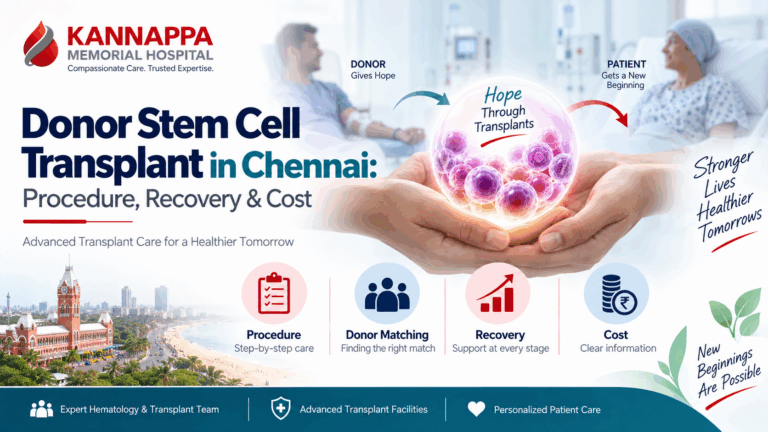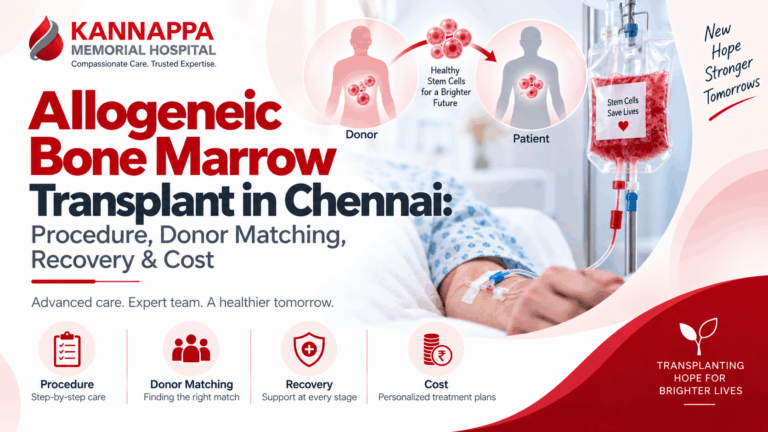
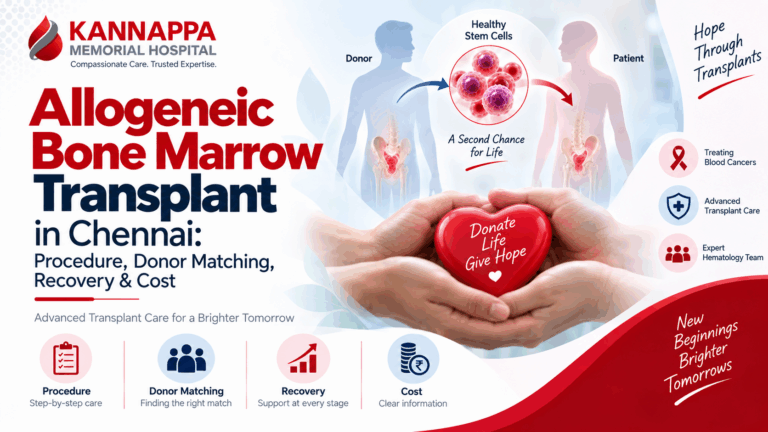
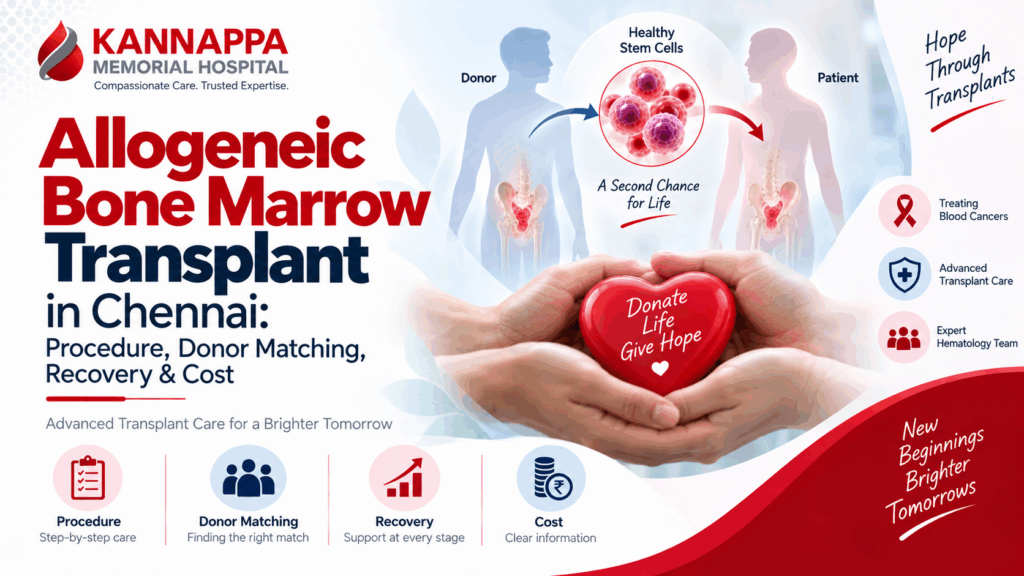
An allogeneic bone marrow transplant in Chennai is an advanced treatment in which healthy blood-forming stem cells are obtained from a suitable donor and infused into a patient whose bone marrow has been affected by cancer or another serious blood disorder. It is also called an allogeneic stem cell transplant or donor stem cell transplant.
Unlike an autologous transplant, where the patient’s own stem cells are collected and returned, an allogeneic transplant uses cells from another person. The donor may be a matched sibling, another family member, a haploidentical donor, or a suitable unrelated donor.
For patients considering an allogeneic bone marrow transplant in Chennai, understanding donor matching, conditioning, stem-cell infusion, engraftment, possible complications, recovery and cost can help them prepare for discussions with their transplant team.
What Is an Allogeneic Bone Marrow Transplant?
An allogeneic bone marrow transplant in Chennai replaces or restores damaged blood-forming cells using healthy stem cells from a donor.
Blood-forming stem cells produce:
- Red blood cells
- White blood cells
- Platelets
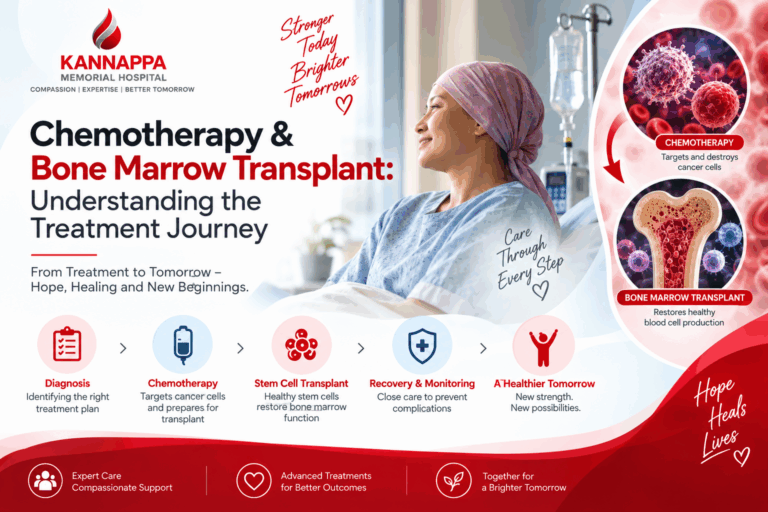
After the donor cells are infused into the patient’s bloodstream, they travel to the bone marrow and begin producing new blood cells. This process is called engraftment.
An important potential benefit of an allogeneic transplant is the graft-versus-leukemia or graft-versus-tumor effect. Donor immune cells may recognize and attack remaining abnormal cells.
For more information, patients can explore stem cell transplantation services.
Who May Need an Allogeneic Bone Marrow Transplant?
An allogeneic bone marrow transplant in Chennai may be considered for selected patients with serious blood cancers, bone marrow disorders and certain inherited or immune conditions.
Conditions may include:
- Acute myeloid leukemia (AML)
- Acute lymphoblastic leukemia (ALL)
- Myelodysplastic syndromes (MDS)
- Selected lymphomas
- Chronic myeloid leukemia (CML) in selected situations
- Myelofibrosis
- Severe aplastic anemia
- Certain inherited blood and immune disorders
The decision is individualized. Doctors consider disease type, disease status, previous treatment, response to therapy, age, organ function, overall health and donor availability.
For example, an AML bone marrow transplant in Chennai may be considered for selected patients with higher-risk AML or particular disease characteristics.
Donor Matching for Bone Marrow Transplant
Donor matching for bone marrow transplant is one of the most important stages before an allogeneic transplant.
Doctors primarily evaluate human leukocyte antigen (HLA) compatibility between the patient and potential donor. HLA markers help the immune system distinguish the body’s own cells from foreign cells. A closer match can reduce certain transplant-related complications.
Potential donors can include:
- Matched siblings
- Other family members
- Haploidentical family donors
- Matched unrelated donors
- Donors identified through stem-cell registries
A matched sibling may be an appropriate donor when HLA characteristics are sufficiently compatible. However, not having a matched sibling does not necessarily mean transplantation is impossible. Other donor options may be evaluated by the transplant team.
Evaluation Before Transplant
Before an allogeneic bone marrow transplant in Chennai, the patient undergoes a detailed medical evaluation.
This may include:
- Blood tests
- Bone marrow examination
- Imaging studies when necessary
- Heart assessment
- Lung assessment
- Kidney and liver function tests
- Infection screening
- HLA typing
- Dental evaluation
- General fitness assessment
The transplant team also reviews the patient’s disease status and determines whether transplantation is appropriate.
This assessment helps doctors identify potential risks and develop an individualized transplant plan.
Conditioning Treatment
Conditioning is an important stage of an allogeneic bone marrow transplant in Chennai.
The patient may receive chemotherapy, radiation therapy, or a combination of treatments before donor stem cells are infused.
The goals of conditioning can include:
- Destroying or suppressing abnormal bone marrow cells
- Suppressing the patient’s immune response
- Preparing space in the bone marrow
- Helping donor stem cells establish themselves
The intensity of conditioning varies according to the patient’s disease, age, health and transplant strategy.
How Are Donor Stem Cells Collected?
Donor stem cells can be collected in different ways.
Peripheral Blood Stem Cell Collection
In many cases, stem cells are collected from the donor’s bloodstream. Medication may be given beforehand to increase the number of circulating stem cells. The cells are then collected through apheresis, while other blood components are returned to the donor.
Bone Marrow Collection
Stem cells may also be collected directly from the donor’s bone marrow, usually from the pelvic bones under anesthesia.
The appropriate collection method depends on the patient’s treatment plan and donor-related factors.
The National Cancer Institute’s stem-cell transplant information also explains the differences between donor and autologous transplantation, HLA matching and transplant recovery.
How Is the Transplant Performed?
The actual donor stem-cell infusion generally does not require surgery.
The stem cells are infused through a vein, often using a central venous catheter, in a process similar to receiving a blood product. After infusion, the cells travel to the bone marrow and begin the process of engraftment.
Although the infusion itself is relatively straightforward, the surrounding treatment period requires close monitoring because blood counts can remain low while the donor cells become established.
What Is Engraftment?
Engraftment after bone marrow transplant is the process in which transplanted donor stem cells begin producing new blood cells.
During this period, patients may have low levels of:
- White blood cells
- Red blood cells
- Platelets
This can increase the risk of infection, anemia and bleeding. The transplant team regularly monitors blood counts, infection signs, organ function and evidence of donor-cell engraftment.
Successful engraftment is an important milestone, but it does not mark the end of transplant care.
Risks and Complications
An allogeneic bone marrow transplant in Chennai is an intensive treatment and may involve significant complications.
Potential risks include:
- Infections
- Bleeding
- Anemia
- Low blood counts
- Mucositis
- Organ complications
- Medication side effects
- Infertility
- Graft failure
- Disease relapse
- Graft-versus-host disease (GVHD)
The level of risk varies according to disease, donor compatibility, conditioning treatment, previous therapies, age and general health.
Graft-Versus-Host Disease
Graft-versus-host disease (GVHD) is an important complication of allogeneic transplantation. It occurs when donor immune cells recognize the patient’s tissues as foreign and attack them.
GVHD may affect:
- Skin
- Liver
- Gastrointestinal tract
- Eyes
- Mouth
It can be acute or chronic. Transplant specialists use preventive medicines and other strategies to reduce its risk and severity.
Recovery After Allogeneic Transplant
Recovery following an allogeneic bone marrow transplant in Chennai is gradual and varies between patients.
During recovery, patients may require:
- Regular blood tests
- Infection prevention
- Immunosuppressive medicines
- Blood or platelet transfusions
- Nutritional support
- Follow-up consultations
- GVHD monitoring
- Disease-relapse monitoring
The immune system may take considerably longer to recover than blood counts. Patients therefore need to follow their transplant team’s instructions regarding hygiene, food safety, medications, visitors and infection exposure.
Some patients gradually return to normal activities over several months, while others may need a longer recovery period.
Allogeneic Bone Marrow Transplant Cost in Chennai
The allogeneic bone marrow transplant cost in Chennai varies from patient to patient.
Factors that can influence the overall cost include:
- Type of transplant
- Underlying disease
- Conditioning treatment
- Donor evaluation
- Stem-cell collection
- Hospitalization
- Blood and platelet transfusions
- Medicines
- Laboratory investigations
- Treatment of complications
- Intensive-care requirements
- Follow-up treatment
Because these factors differ considerably, a fixed cost cannot be applied to every patient. An individualized estimate should be discussed with the transplant centre before treatment begins.
Choosing a Bone Marrow Transplant Hospital in Chennai
Choosing the right bone marrow transplant hospital in Chennai is an important decision because transplantation requires coordinated care before, during and after the procedure.
Patients should consider:
- Experienced hematology and transplant specialists
- Appropriate transplant infrastructure
- Infection-control protocols
- Stem-cell collection facilities
- Blood-bank support
- Critical-care facilities
- Engraftment monitoring
- Long-term follow-up
- Management of transplant complications
Patients looking for allogeneic bone marrow transplant in Chennai can consult the specialists at Kannappa Memorial Hospital for individualized evaluation and treatment planning. The hospital provides hematology and transplant services for selected blood and bone marrow disorders.
Allogeneic vs Autologous Transplant
The primary difference is the source of the stem cells.
| Allogeneic Transplant | Autologous Transplant |
|---|---|
| Uses donor stem cells | Uses patient’s own stem cells |
| Requires donor evaluation | Does not require an external donor |
| HLA matching is important | Donor-recipient matching is not required |
| May provide graft-versus-leukemia effect | Does not provide the same donor immune effect |
| GVHD is a potential complication | GVHD is not expected |
The appropriate approach depends on the patient’s disease, treatment response, overall health and clinical circumstances.
Allogeneic Stem Cell Transplant Success Rate
Patients often ask about the allogeneic stem cell transplant success rate, but there is no single percentage that applies to everyone.
Outcomes depend on:
- Disease type
- Disease stage
- Response before transplantation
- Patient age
- Overall health
- Donor compatibility
- Conditioning regimen
- Transplant complications
- Risk of disease relapse
A transplant specialist can provide a more meaningful prognosis after reviewing the individual patient’s medical history and disease characteristics.
Conclusion
An allogeneic bone marrow transplant in Chennai is an advanced treatment that uses healthy donor stem cells to restore blood-forming function in selected patients with leukemia, lymphoma, myelodysplastic syndromes, bone marrow failure and other serious disorders.
The transplant journey includes detailed evaluation, HLA donor matching, conditioning treatment, stem-cell collection, infusion, engraftment and long-term follow-up. Because the procedure can involve significant risks, careful patient selection and specialized transplant care are essential.
Patients considering an allogeneic bone marrow transplant in Chennai should discuss the potential benefits, risks, donor options, recovery expectations and treatment costs with an experienced hematologist or transplant specialist.