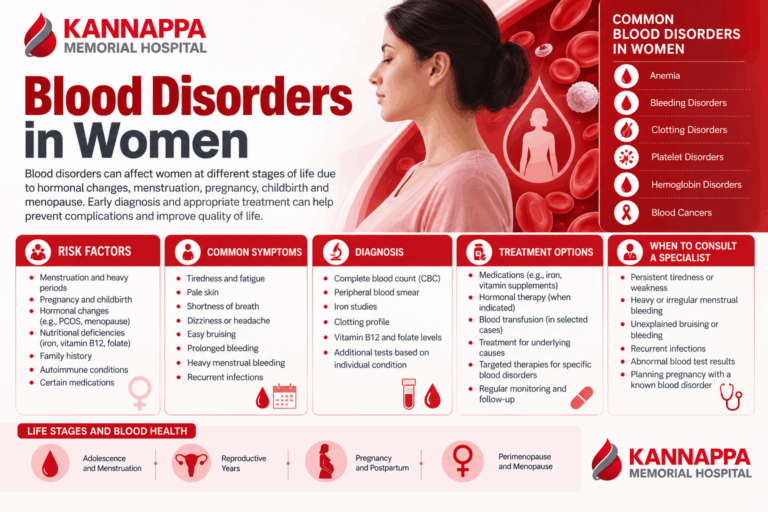
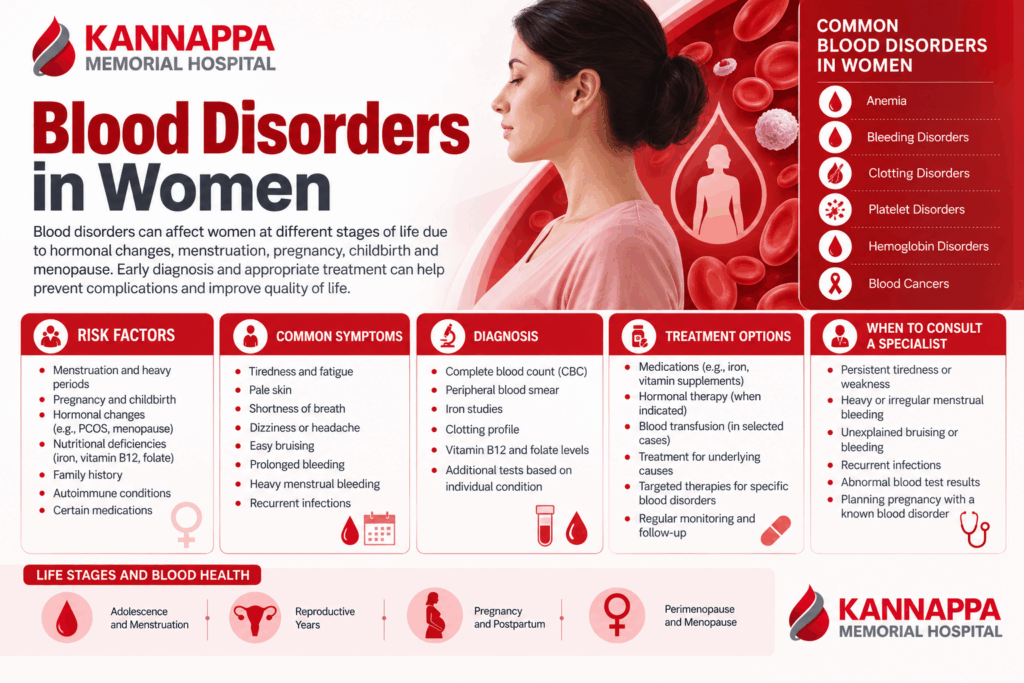
Blood disorders can affect women at every stage of life. Menstruation, pregnancy, childbirth, nutritional requirements, hormonal changes and menopause can all influence blood health. Symptoms such as persistent fatigue, dizziness, weakness, breathlessness, heavy menstrual bleeding or unexplained bruising may sometimes be overlooked as routine concerns. However, these symptoms can also be associated with anaemia, bleeding disorders, platelet abnormalities and other haematological conditions.
Understanding blood disorders in women and recognising warning signs early can support timely diagnosis and appropriate treatment. Women experiencing persistent or unexplained symptoms can consult a qualified haematologist in Tamil Nadu for specialist evaluation.
What Are Blood Disorders?
Blood disorders in women are conditions affecting the blood, bone marrow or components of blood, including red blood cells, white blood cells, platelets and clotting factors. Some conditions may be temporary and treatable, while others require long-term monitoring and specialist care.
Common examples include:
- Iron-deficiency anaemia
- Vitamin B12 or folate deficiency anaemia
- Aplastic anaemia
- Thalassaemia
- Sickle cell disease
- Platelet disorders
- Bleeding and clotting disorders
- Leukaemia and other blood cancers
- Bone marrow disorders
These conditions can affect the body’s ability to transport oxygen, fight infections, control bleeding and maintain normal blood-cell production. Kannappa Memorial Hospital provides haematology services for a broad range of blood-related conditions.
Why Are Blood Disorders Important in Women?
Women experience several physiological changes throughout their lives. Menstruation, pregnancy, childbirth, breastfeeding and menopause can influence iron levels, blood volume and nutritional requirements.
Regular menstrual blood loss can contribute to iron deficiency, particularly when periods are heavy or prolonged. During pregnancy, the body’s blood volume increases and the demand for iron and other nutrients rises. These factors do not mean that every woman experiencing tiredness or heavy periods has a blood disorder, but persistent or significant symptoms should be medically assessed.
Understanding blood disorders in women is especially important because symptoms may initially appear mild or may be attributed to lifestyle factors.
Iron-Deficiency Anaemia in Women
Iron-deficiency anaemia is one of the most common blood-related conditions affecting women. Iron is necessary for producing haemoglobin, which carries oxygen through the body. When iron levels are insufficient, haemoglobin production can decrease and anaemia may develop.
Possible causes include:
- Heavy menstrual bleeding
- Pregnancy
- Increased nutritional requirements
- Insufficient dietary iron
- Reduced iron absorption
- Gastrointestinal blood loss
- Certain chronic medical conditions
Symptoms can include persistent tiredness, weakness, dizziness, headaches, pale skin, shortness of breath, reduced concentration, feeling cold and rapid heartbeat in more significant cases.
Treatment depends on the cause and severity. Taking iron supplements without identifying the underlying reason for deficiency may not solve the problem.
Heavy Menstrual Bleeding and Blood Disorders
Heavy menstrual bleeding should not always be considered a normal part of menstruation. Gynaecological conditions, hormonal changes, fibroids and bleeding disorders can all contribute to unusually heavy periods.
Warning signs include:
- Periods lasting unusually long
- Very heavy menstrual flow
- Frequently changing sanitary products
- Passing large blood clots
- Severe tiredness during or after periods
- Iron-deficiency anaemia
- Excessive bleeding after dental procedures or surgery
Conditions such as von Willebrand disease can cause prolonged or excessive bleeding. Some women may only receive a diagnosis when heavy menstrual bleeding, pregnancy, childbirth, surgery or another event reveals an underlying bleeding tendency.
Women with possible bleeding abnormalities can seek assessment from a haematologist in Tamil Nadu for appropriate investigations.
Bleeding Disorders in Women
Bleeding disorders occur when blood does not clot normally. They may involve platelets, clotting factors, von Willebrand factor, blood vessels, certain medications, liver disease or other acquired conditions. Some are inherited, while others develop later in life.
Symptoms may include:
- Heavy menstrual periods
- Frequent nosebleeds
- Easy bruising
- Prolonged bleeding from minor cuts
- Excessive bleeding after dental procedures
- Excessive bleeding after surgery or childbirth
- Blood in the urine or stool
Depending on the suspected condition, doctors may recommend a complete blood count, platelet count, PT, aPTT and specialised coagulation or clotting-factor tests.
Blood Disorders During Pregnancy
Pregnancy causes significant changes in the circulatory and blood-forming systems. The body produces more blood to support the pregnancy, increasing nutritional requirements, particularly for iron and folate.
Anaemia during pregnancy is relatively common but should still be evaluated. Women with inherited conditions such as thalassaemia or sickle cell disease may require specialised monitoring during pregnancy.
Women with known or suspected bleeding disorders may also require coordinated care before delivery because pregnancy and childbirth can involve major changes in bleeding and clotting.
If a woman has a known blood disorder during pregnancy, she should discuss her condition with her obstetrician and haematology team.
Thalassaemia and Sickle Cell Disease
Some blood disorders in women are inherited and may be present from birth.
Thalassaemia
Thalassaemia affects haemoglobin production and can cause chronic anaemia of varying severity. Depending on the type and severity, patients may require monitoring, blood transfusions, iron-chelation treatment and other specialised care. Women planning pregnancy may benefit from appropriate pre-pregnancy counselling and medical monitoring.
Sickle Cell Disease
Sickle cell disease is an inherited condition involving abnormal haemoglobin. Red blood cells can become rigid and sickle-shaped, potentially causing pain episodes, anaemia, infections and complications affecting different organs. Women may require specialised care throughout adulthood and pregnancy.
Platelet Disorders in Women
Platelets are important for controlling bleeding. Platelet disorders can involve too few platelets, too many platelets or abnormal platelet function.
Low platelet levels may cause:
- Easy bruising
- Nosebleeds
- Heavy menstrual bleeding
- Bleeding gums
- Prolonged bleeding
Certain conditions involving elevated platelet counts may increase the tendency for abnormal clotting, although the risk depends on the underlying cause. Persistent platelet abnormalities should therefore be evaluated rather than interpreted in isolation.
Blood Clotting Disorders and Women
Blood clotting prevents excessive bleeding, but excessive clot formation can also be dangerous. Pregnancy, postpartum changes, inherited conditions, medical illnesses, hormonal medications and prolonged immobility can influence clotting risk.
A clot in a deep vein may cause leg swelling, pain, warmth or redness. If a clot travels to the lungs, it can cause pulmonary embolism, which may present with sudden breathlessness, chest pain or rapid heartbeat.
Women with unexplained blood clots or repeated pregnancy-related complications may require evaluation for underlying clotting disorders.
Blood Disorders and Menopause
Menopause is another important stage for women’s blood health. After menstrual periods stop, ongoing menstrual blood loss is no longer a common explanation for iron deficiency. Therefore, iron-deficiency anaemia after menopause may require investigation for other possible causes.
Persistent anaemia, unexplained bruising or abnormal blood counts should be discussed with a healthcare professional.
Warning Signs Women Should Not Ignore
Some blood disorders in women initially cause mild or nonspecific symptoms. Women should seek medical advice for:
- Persistent unexplained fatigue
- Recurrent dizziness
- Shortness of breath
- Frequent headaches
- Pale skin
- Heavy or prolonged menstrual bleeding
- Easy or unexplained bruising
- Frequent nosebleeds
- Prolonged bleeding after minor injuries
- Recurrent infections
- Unexplained weight loss
- Persistent fever
- Abnormal blood-test results
- Swelling or pain associated with a possible blood clot
These symptoms do not necessarily indicate a blood disorder, but persistent or unexplained symptoms warrant appropriate evaluation.
How Are Blood Disorders Diagnosed?
Diagnosis begins with a medical history and physical examination. The doctor may ask about menstrual history, pregnancy history, previous surgeries, bleeding after dental procedures, family history, dietary habits, medications, previous blood tests and any history of blood clots.
A complete blood count (CBC) is often one of the first investigations. Depending on symptoms, additional tests may include:
- Iron studies
- Vitamin B12 and folate testing
- Peripheral blood smear
- Reticulocyte count
- Coagulation tests
- Platelet function tests
- Bone marrow examination
- Genetic or molecular testing
- Other specialised haematology investigations
Why Early Detection Matters
Early identification of blood disorders in women can help determine the underlying cause and guide appropriate treatment. Identifying iron deficiency early may allow the cause to be addressed before anaemia becomes more severe.
Recognising a bleeding disorder can also help women and their doctors plan safely for surgery, dental procedures, pregnancy and childbirth. For inherited conditions, early diagnosis can support informed family-planning and long-term healthcare decisions.
Treatment Options
Treatment depends entirely on the underlying diagnosis. Options may include:
Iron and Nutritional Replacement
Iron, vitamin B12 or folate replacement may be recommended when a confirmed deficiency is identified.
Treatment of Underlying Causes
If anaemia is caused by blood loss, inflammation, chronic disease or another condition, treatment should focus on the underlying cause.
Management of Bleeding Disorders
Depending on the diagnosis, treatment may include clotting-factor replacement, desmopressin, antifibrinolytic medicines or other therapies.
Treatment of Inherited Blood Disorders
Thalassaemia and sickle cell disease may require long-term specialist management, monitoring, medicines, transfusions or advanced therapies depending on severity.
Treatment of Blood Cancers
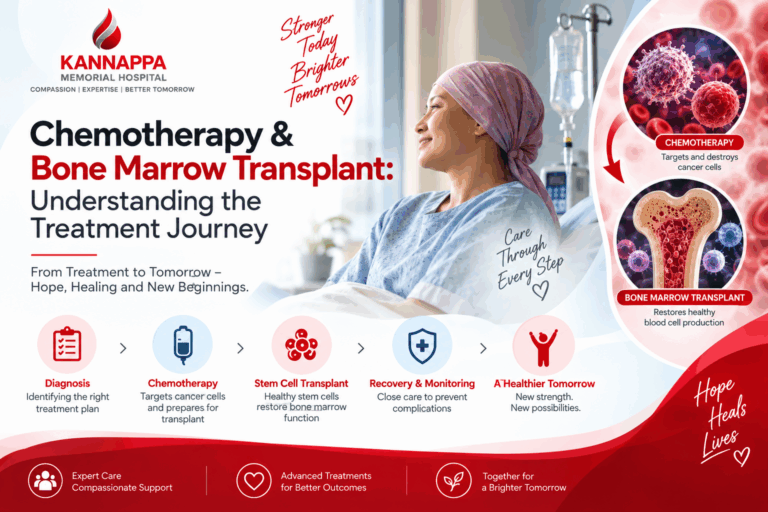
Leukaemia and lymphoma may require chemotherapy, targeted therapy, immunotherapy, radiation therapy, stem cell transplantation or combinations of these approaches.
When Should You See a Haematologist?
A haematologist in Tamil Nadu can evaluate disorders involving blood cells, bone marrow, clotting and related systems.
Specialist consultation may be appropriate when a woman has:
- Persistent unexplained anaemia
- Repeatedly abnormal CBC results
- Unexplained low or high platelet counts
- Persistent white blood cell abnormalities
- Unusual or excessive bleeding
- Recurrent blood clots
- Suspected inherited blood disorders
- Abnormal bone marrow findings
- A diagnosed blood disorder requiring specialist management
Kannappa Memorial Hospital provides specialised haematology care and diagnostic services for a broad range of blood disorders.
Conclusion
Blood disorders in women can range from common conditions such as iron-deficiency anaemia to inherited bleeding disorders, platelet abnormalities, bone marrow disorders and blood cancers. Symptoms such as fatigue, dizziness, weakness and heavy menstrual bleeding should not always be dismissed as routine.
Early detection can help identify the underlying cause, guide appropriate treatment and support prevention of complications. Women with persistent symptoms, unexplained bleeding, recurrent infections, abnormal blood-test results or unusual clotting should consider specialist evaluation.
Kannappa Memorial Hospital provides specialised haematology services for women requiring evaluation and management of blood disorders. Consulting a qualified haematologist in Tamil Nadu can help ensure appropriate diagnosis and individualised care.