When a child is diagnosed with a serious blood disorder, blood cancer, bone marrow failure condition, or inherited immune disorder, parents may be advised to consider a bone marrow transplant. Choosing the right Pediatric BMT Hospital in Chennai: Bone Marrow Transplant for Children is an important decision because children require specialized treatment, careful infection prevention, nutritional support, emotional care, and long-term follow-up.
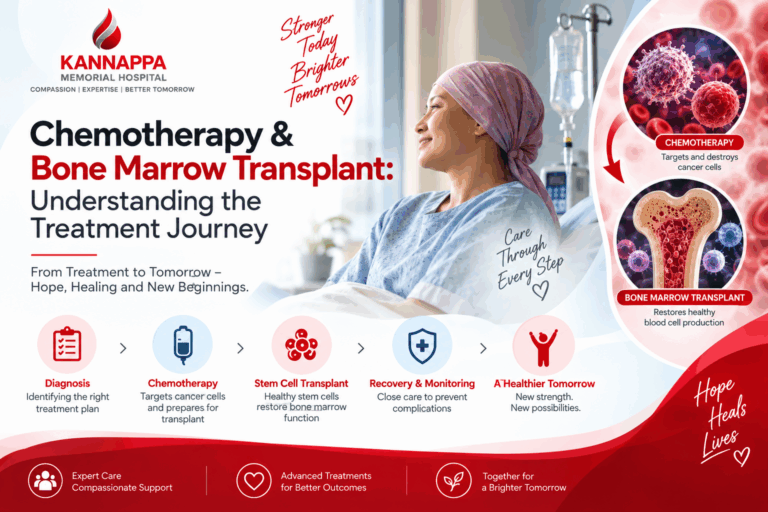
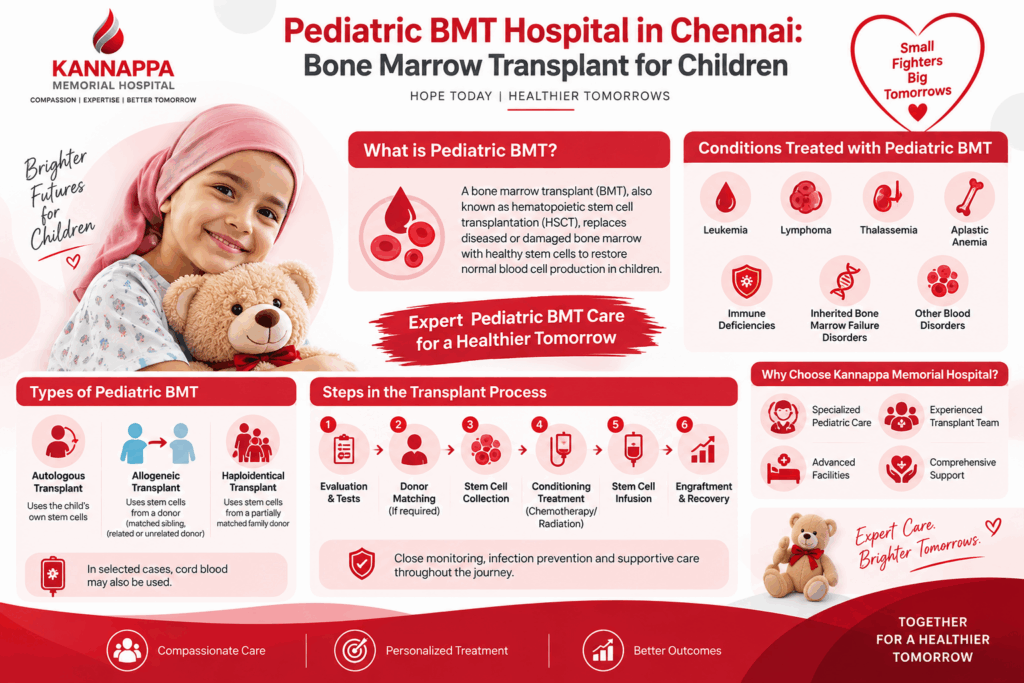
A pediatric bone marrow transplant, also known as hematopoietic stem cell transplantation (HSCT), replaces damaged or diseased blood-forming stem cells with healthy stem cells. Depending on the child’s condition, the stem cells may come from the child or from a suitable donor.
Kannappa Memorial Hospital provides specialized bone marrow transplant services, including pediatric transplant care. Parents can learn more about the hospital’s Bone Marrow Transplant Overview before discussing treatment options with a specialist.
What Is a Pediatric Bone Marrow Transplant?
A pediatric bone marrow transplant is a treatment used to restore healthy blood-cell production in children whose bone marrow is affected by cancer, severe marrow failure, genetic conditions, or certain immune-system disorders.
Bone marrow produces important blood cells, including:
- Red blood cells
- White blood cells
- Platelets
- Other blood-forming cells
During a transplant, healthy blood-forming stem cells are given to the child after appropriate preparation and conditioning treatment. The transplanted cells travel to the bone marrow and gradually begin producing new blood cells.
A Pediatric BMT Hospital in Chennai should have the expertise and infrastructure required to manage children throughout evaluation, transplantation, engraftment, and recovery.
Which Children May Need Bone Marrow Transplantation?
A bone marrow transplant is not necessary for every child with a blood disorder. Doctors consider transplantation when the expected benefits outweigh the potential risks.
Conditions in which pediatric stem cell transplantation may be considered include:
Leukemia
Some children with acute leukemia may require an allogeneic stem cell transplant depending on disease characteristics, treatment response, relapse risk, and other clinical factors.
Thalassemia
Children with severe thalassemia may be considered for hematopoietic stem cell transplantation when they meet appropriate clinical criteria. The treatment can potentially establish healthy blood formation.
Aplastic Anemia
Severe aplastic anemia can cause the bone marrow to produce insufficient blood cells. Selected children may be considered for an allogeneic transplant.
Immune Deficiencies
Certain inherited immune deficiencies may be treated with hematopoietic stem cell transplantation.
Inherited Bone Marrow Failure Disorders
Some genetic disorders affecting the bone marrow may require transplantation as part of their treatment plan.
Lymphoma and Other Blood Disorders
Selected children with lymphoma and other serious hematological conditions may also be considered for stem cell transplantation.
The decision is individualized according to the child’s diagnosis, age, disease status, previous treatment, overall health, and donor availability.
Why Is Pediatric BMT Different From Adult BMT?
Children are still growing and developing, so transplant care must address needs that are different from those of adults. A specialized Pediatric BMT Hospital in Chennai should consider factors such as:
- Age and weight
- Growth and development
- Nutrition
- Infection prevention
- Vaccination history
- Organ function
- Emotional well-being
- Schooling and development
- Family support
- Long-term health
Pediatric transplant care may involve pediatric hematologists, BMT specialists, nurses, nutritionists, psychologists, physiotherapists, pharmacists, and other healthcare professionals.
This multidisciplinary approach helps coordinate the child’s medical and supportive care throughout the transplant journey.
Types of Pediatric Stem Cell Transplant
There are different types of pediatric stem cell transplantation. The appropriate option depends on the child’s disease and treatment plan.
1. Allogeneic Stem Cell Transplant
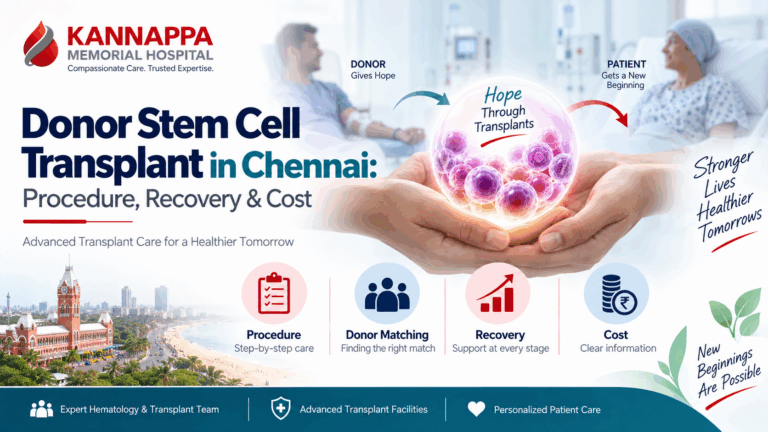
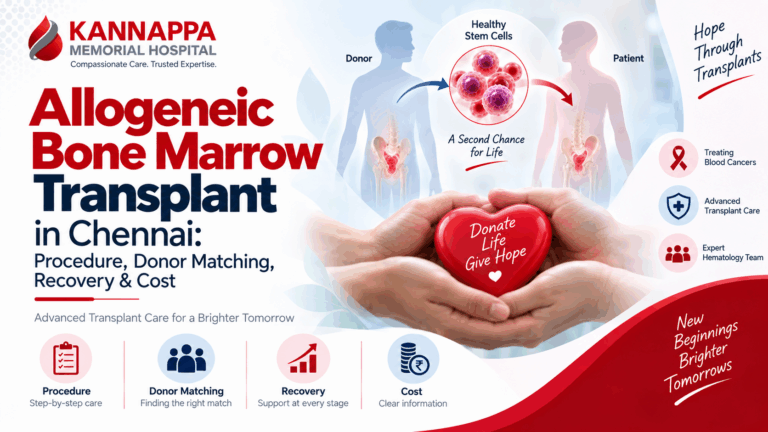
An allogeneic transplant uses stem cells from another person. The donor may be a matched sibling, matched unrelated donor, partially matched family member, or another appropriate donor.
In some blood cancers, donor immune cells may provide an additional anti-cancer effect known as the graft-versus-leukemia or graft-versus-tumor effect.
2. Autologous Stem Cell Transplant
An autologous transplant uses the child’s own stem cells. The cells are collected and stored before intensive treatment and then returned after high-dose chemotherapy.
Because the child’s own stem cells are used, a donor is not required for an autologous transplant.
3. Haploidentical Transplant
A haploidentical transplant uses a partially matched family donor. This can provide another donor option when a fully matched donor is not available.
Parents can explore the different Types of Bone Marrow Transplant to understand the basic differences between transplant approaches.
How Is Pediatric Bone Marrow Transplant Performed?
The process can vary according to the child’s diagnosis and transplant plan. Generally, it includes several stages.
Step 1: Medical Evaluation
Before transplantation, the child undergoes detailed medical evaluation. Tests may include blood investigations, bone marrow examination, imaging when necessary, heart and lung assessments, kidney and liver tests, infection screening, genetic investigations, and donor matching.
Step 2: Donor Matching
For an allogeneic transplant, HLA testing is performed to assess compatibility between the child and potential donors.
Step 3: Stem Cell Collection
Stem cells may be collected from the child or donor. Peripheral blood stem cell collection may involve a procedure called apheresis.
Step 4: Conditioning Treatment
Conditioning therapy is given before the transplant. Depending on the treatment protocol, this may include chemotherapy and, in selected cases, radiation therapy.
Step 5: Stem Cell Infusion
Healthy stem cells are infused through an intravenous line or central venous catheter. The infusion is generally similar to a blood transfusion rather than conventional surgery.
Step 6: Engraftment
Engraftment occurs when the transplanted stem cells begin producing new blood cells. During this stage, blood counts may remain low, requiring close monitoring and supportive care.
More details are available in the hospital’s Bone Marrow Transplant Procedure information.
Infection Prevention During Pediatric BMT
After transplantation, the child’s immune system can be significantly weakened. Infection prevention is therefore a major part of pediatric transplant care.
A specialized Pediatric BMT Hospital in Chennai may use measures such as:
- HEPA-filtered isolation facilities
- Controlled air quality
- Strict hygiene procedures
- Visitor precautions
- Infection monitoring
- Appropriate antimicrobial medicines
- Food and water precautions
Parents should carefully follow the transplant team’s instructions regarding hygiene, visitors, food, medications, and exposure to infections.
Recovery After Pediatric Bone Marrow Transplant
Recovery after a pediatric bone marrow transplant is gradual. During the early period, blood counts may be low and the immune system may take time to recover.
Doctors may monitor:
- Blood counts
- Engraftment
- Infections
- Organ function
- Medication effects
- Graft-versus-host disease
- Disease response
- Growth and nutrition
After discharge, regular follow-up remains important. Children may need continued support with nutrition, physical activity, school reintegration, vaccinations, emotional well-being, and growth.
Parents can read more about Post-Transplant Care and Survivorship for information about long-term care.
Possible Risks of Pediatric BMT
Bone marrow transplantation is an intensive treatment and can have potential complications. Possible risks include:
- Infections
- Low blood counts
- Bleeding
- Nausea and vomiting
- Fatigue
- Mouth sores
- Organ-related complications
- Graft failure
- Graft-versus-host disease
- Disease relapse
- Growth and developmental concerns
- Long-term treatment effects
GVHD is primarily associated with allogeneic transplantation. It occurs when donor immune cells recognize tissues in the child’s body as foreign.
The actual risk varies according to the child’s condition, transplant type, donor compatibility, conditioning regimen, age, and general health.
Parents can learn more about Bone Marrow Transplant Risks and Complications.
Pediatric Bone Marrow Transplant Cost in Chennai
The pediatric bone marrow transplant cost in Chennai can vary considerably from one child to another. There is no single fixed cost because treatment requirements depend on the diagnosis and transplant plan.
Factors that can affect the overall cost include:
- Type of transplant
- Underlying disease
- Pre-transplant investigations
- Donor testing
- HLA matching
- Stem cell collection
- Conditioning treatment
- Hospitalization duration
- Medicines
- Blood and platelet transfusions
- Infection management
- ICU requirements
- Treatment of complications
- Post-transplant medicines and follow-up
Families considering treatment at a Pediatric BMT Hospital in Chennai should discuss their child’s specific treatment plan and obtain an individualized estimate.
For additional information, visit the hospital’s Bone Marrow Transplant Cost in Chennai page.
Why Choose a Specialized Pediatric BMT Hospital in Chennai?
Choosing a Pediatric BMT Hospital in Chennai involves more than looking at the transplant procedure itself. Parents should consider the hospital’s pediatric hematology expertise, transplant facilities, infection-control infrastructure, laboratory support, blood bank services, stem cell processing capabilities, donor-matching support, nutritional care, psychological support, and long-term follow-up.
Kannappa Memorial Hospital provides specialized BMT services supported by hematology and transplant expertise. The hospital’s specialist information includes pediatric hematology and BMT expertise.
Parents looking for specialist guidance can explore the Bone Marrow Transplant Doctors in Chennai page.
Emotional Support for Children and Parents
A transplant can be emotionally challenging for the entire family. Children may experience fear of procedures, anxiety about hospitalization, separation from school and friends, fatigue, and changes in their daily routines.
Parents may also experience emotional, practical, and financial stress.
Age-appropriate explanations, family involvement, psychological support, educational activities, and regular communication with the medical team can help children cope with treatment.
A comprehensive Pediatric BMT Hospital in Chennai should consider the child’s emotional, developmental, nutritional, and social needs along with medical treatment.
Long-Term Follow-Up After Pediatric BMT
Successful engraftment is an important milestone, but pediatric transplant care continues after hospital discharge.
Long-term follow-up may include monitoring of:
- Blood-cell recovery
- Immune-system recovery
- Disease recurrence
- Growth and development
- Organ function
- Bone health
- Nutrition
- Vaccinations
- Psychological well-being
- School performance
The follow-up plan is individualized according to the child’s transplant type, disease, previous treatment, age, and recovery.
When Should Parents Consult a Pediatric BMT Specialist?
Parents may consider a consultation when their child has a condition for which hematopoietic stem cell transplantation may be appropriate.
A specialist can help answer important questions such as:
- Does my child need a bone marrow transplant?
- Which transplant type is appropriate?
- Is a donor required?
- How is donor matching performed?
- What tests are required?
- What are the potential risks?
- How long might hospitalization take?
- What precautions are needed after discharge?
- What factors influence treatment cost?
- What long-term follow-up will be required?
A consultation with a qualified specialist allows the child’s diagnosis and treatment history to be reviewed before a transplant decision is made.
Conclusion
Choosing a Pediatric BMT Hospital in Chennai is an important decision for families whose children may require hematopoietic stem cell transplantation. Pediatric BMT may be considered for selected children with leukemia, severe thalassemia, aplastic anemia, inherited bone marrow failure disorders, immune deficiencies, lymphoma, and other serious blood or immune-system conditions.
The transplant journey involves medical evaluation, donor matching when required, stem cell collection, conditioning therapy, stem cell infusion, engraftment, infection prevention, supportive care, and long-term follow-up.
Children require specialized care because their medical, nutritional, developmental, educational, and emotional needs differ from those of adults. Kannappa Memorial Hospital provides specialized pediatric BMT and stem cell transplant care in Chennai with hematology and transplant expertise.
If your child has been advised to undergo a bone marrow transplant, consult a qualified pediatric hematology and BMT specialist to understand the diagnosis, available treatment options, potential risks, recovery expectations, and individualized treatment plan.