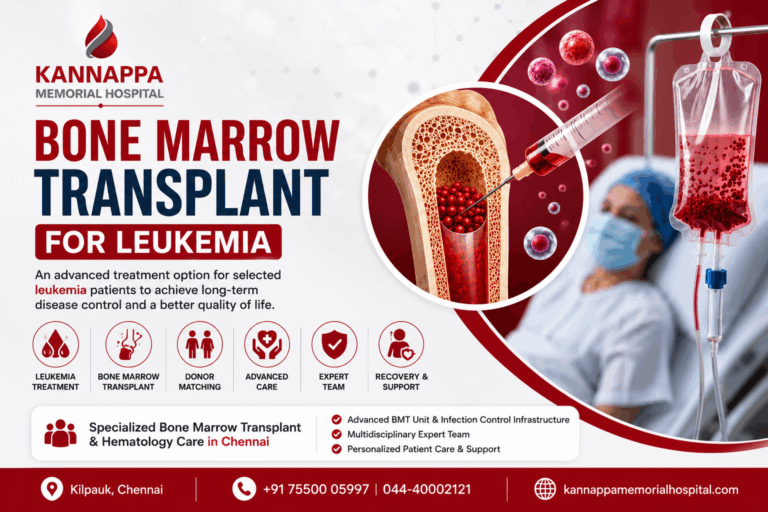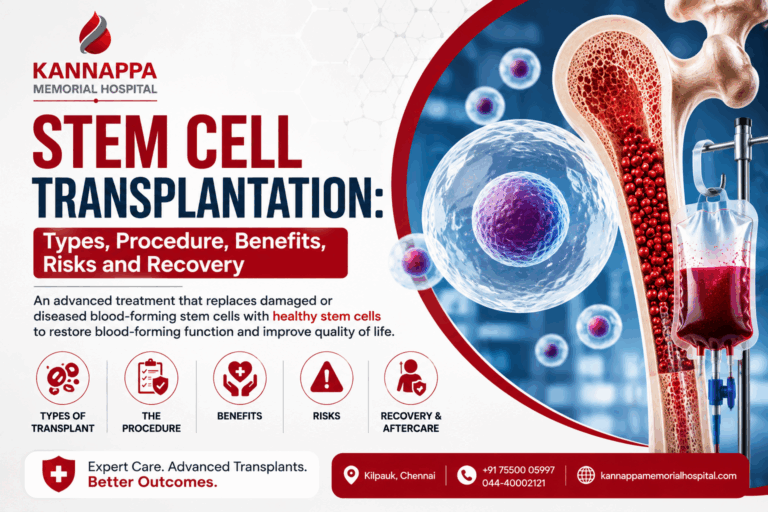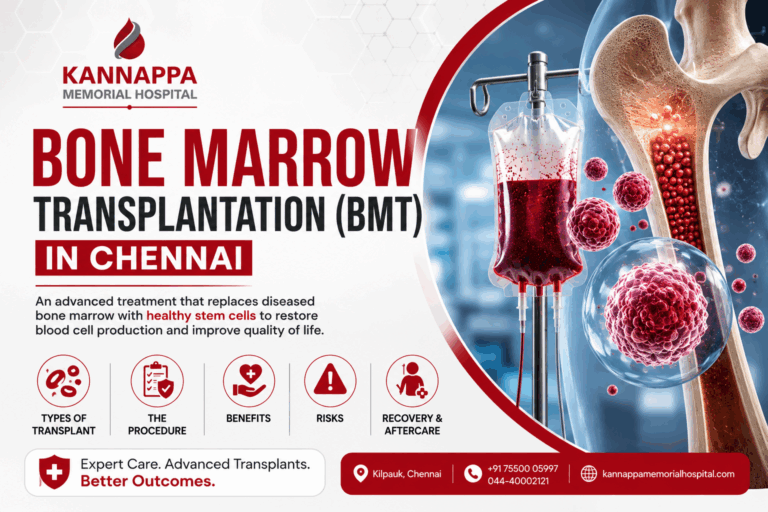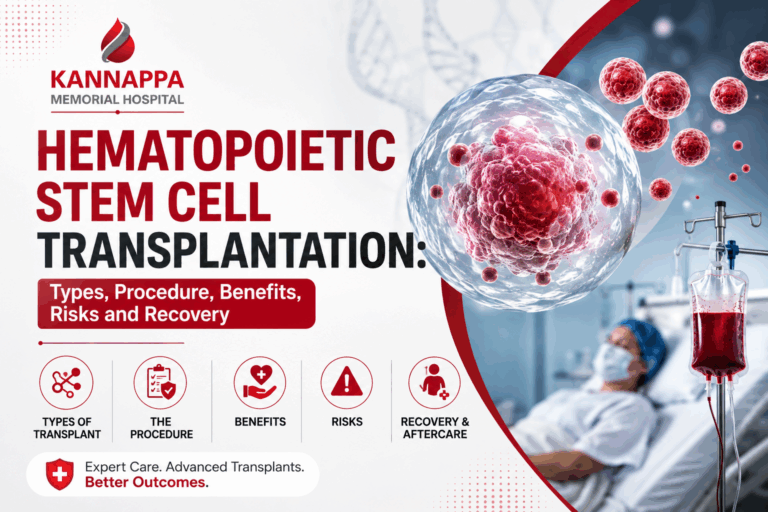
A bone marrow transplant (BMT) is a highly specialized treatment used for blood cancers and serious blood disorders such as leukemia, lymphoma, multiple myeloma, and aplastic anemia. For many patients, it offers the possibility of long-term remission or even a cure. However, understanding the bone marrow transplant cost in Chennai is often a major concern for patients and their families.
Knowing the expected expenses in advance helps with financial planning, insurance approvals, and timely treatment decisions. Chennai has become a leading destination for bone marrow transplantation, offering advanced medical expertise, modern transplant facilities, and cost-effective care. At Kannappa Memorial Hospital, we are committed to providing high-quality transplant services with transparent pricing, helping patients make informed decisions about their treatment journey.
What Is a Bone Marrow Transplant?
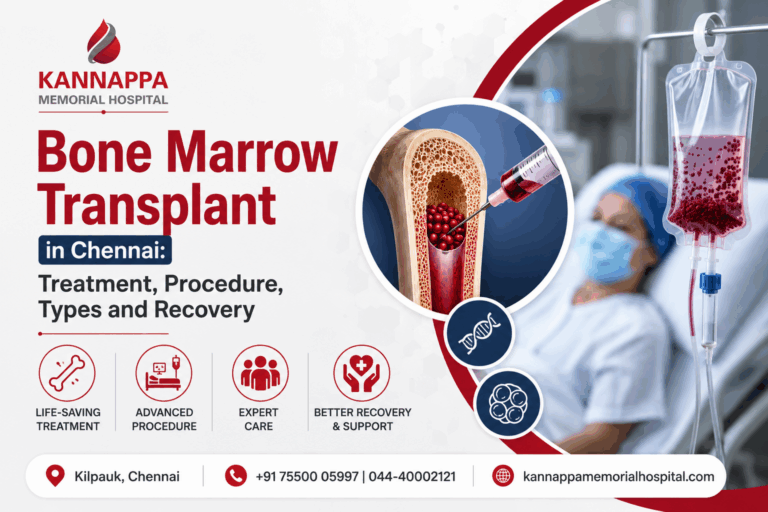
Bone marrow is the soft, spongy tissue found inside large bones — the spine, pelvis, and sternum — where the body produces all of its blood cells. Stem cells within the bone marrow are the source of red blood cells (which carry oxygen), white blood cells (which fight infection), and platelets (which control bleeding).
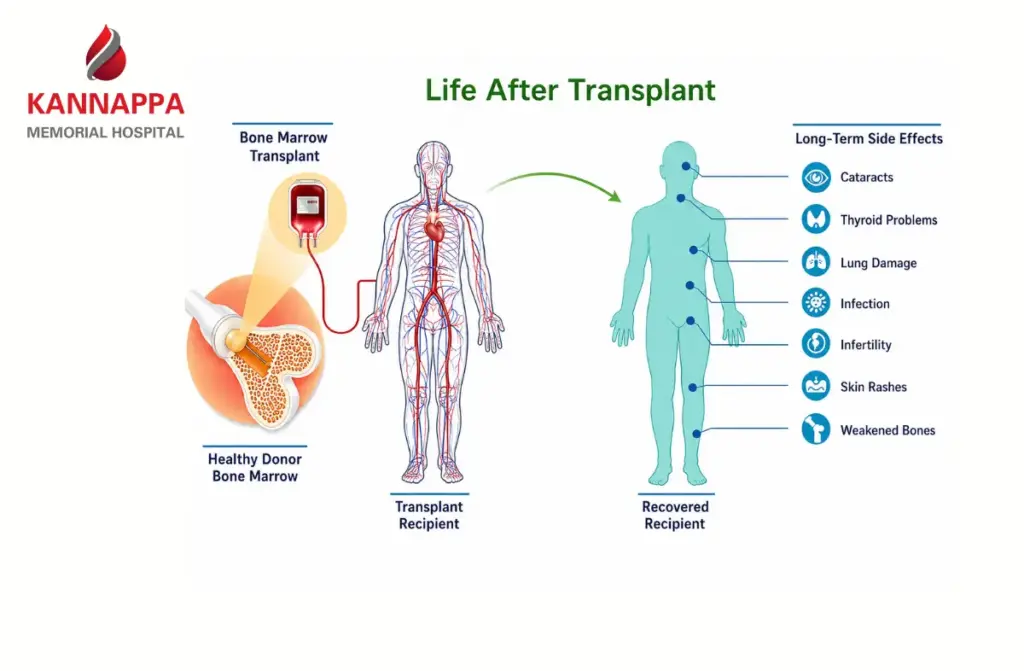
When disease, cancer, or its treatment destroys the bone marrow’s ability to produce healthy blood cells, a bone marrow transplant — also called a stem cell transplant — becomes necessary. The procedure replaces damaged or destroyed bone marrow with healthy stem cells that can rebuild a fully functioning blood and immune system.
Why Choose Kannappa Memorial Hospital for BMT in Chennai
Kannappa Memorial Hospital is committed to providing comprehensive and patient-centered Bone Marrow Transplant (BMT) care. Our multidisciplinary team of hematologists, oncologists, transplant specialists, nurses, and support staff work together to deliver high-quality treatment tailored to each patient’s needs.
- Experienced Transplant Team: Our specialists have extensive experience in managing complex blood disorders and performing advanced bone marrow transplant procedures with a focus on safety and successful outcomes.
- Advanced Infrastructure: We offer modern transplant facilities, specialized isolation rooms, advanced diagnostic services, and round-the-clock critical care support to ensure the highest standards of patient care.
- Personalized Treatment Plans: Every patient receives an individualized treatment strategy based on their condition, medical history, and transplant requirements, helping achieve the best possible results.
- Comprehensive Support Services: From pre-transplant evaluation and donor matching to rehabilitation and long-term follow-up, we provide complete support throughout the transplant journey.
- Infection Control and Patient Safety: Strict infection prevention protocols and continuous monitoring help protect patients during the critical transplant and recovery phases.
- Affordable and Accessible Care: We strive to make advanced bone marrow transplant services accessible through transparent treatment planning, financial guidance, and compassionate patient support.
At Kannappa Memorial Hospital, our goal is to deliver advanced transplant care with expertise, compassion, and a commitment to improving patient outcomes and quality of life.
Types of Bone Marrow Transplant
Not every patient requires the same type of transplant. The type recommended depends on the underlying condition, the availability of a suitable donor, and the patient’s overall health.
Autologous Transplant
In an autologous transplant, the patient’s own stem cells are collected, stored, and reinfused after high-dose chemotherapy. Because no donor is involved, there is no risk of graft rejection. This type is most commonly used in lymphoma and multiple myeloma and generally carries lower costs and faster recovery times compared to donor-based transplants.
Allogeneic Transplant
An allogeneic transplant uses stem cells from a donor — ideally a matched sibling, but sometimes an unrelated matched donor identified through national or international registries. HLA (human leukocyte antigen) matching is critical to reduce the risk of the donor cells attacking the patient’s body — a serious complication known as graft-versus-host disease (GVHD). Allogeneic transplants are standard for leukemia and certain bone marrow failure conditions.
Haploidentical Transplant
A haploidentical transplant uses a half-matched donor — typically a parent, child, or sibling — making it possible for most patients to find a suitable donor within their own family. This significantly expands donor availability, particularly in cases where a fully matched sibling or unrelated donor cannot be found in time.
Cord Blood Transplant
Cord blood transplants use stem cells collected from umbilical cord blood at the time of birth and stored in cord blood banks. This option is used when no suitable adult donor is available. While cord blood units are smaller in volume, they are more tolerant of partial HLA mismatches and carry a lower risk of severe GVHD.
Who Needs a Bone Marrow Transplant?
Cancer Patients
The majority of bone marrow transplants are performed for haematological malignancies. Leukemia — both acute and chronic forms — is among the most common indications. Lymphoma, including Hodgkin and non-Hodgkin subtypes, frequently requires transplantation in relapsed or high-risk cases. Multiple myeloma patients often undergo autologous stem cell transplant as consolidation after induction chemotherapy, achieving deeper and longer-lasting remission.
Non-Cancer Conditions
BMT is also a curative option for several serious non-cancerous blood disorders. Aplastic anemia, where the bone marrow stops producing sufficient blood cells, is one of the strongest indications. Thalassemia and sickle cell disease — both genetic disorders affecting red blood cell structure — can be permanently cured in eligible patients through allogeneic transplantation.
Immune Disorders
Certain severe immune deficiency conditions — where the immune system is fundamentally absent or dysfunctional — can only be corrected through a bone marrow transplant that rebuilds immune function from the ground up.
Bone Marrow Transplant Procedure
A bone marrow transplant (BMT) is a carefully planned procedure that replaces damaged or diseased bone marrow with healthy stem cells. The procedure is carried out in multiple carefully planned stages to maximize treatment effectiveness and support a successful recovery.
- Pre-Transplant Evaluation: Before the transplant, patients undergo a thorough medical assessment, including blood tests, imaging studies, and heart, lung, liver, and kidney function tests. For donor transplants, HLA typing is performed to identify the most compatible donor.
- Conditioning Therapy: Patients receive high-dose chemotherapy, with or without radiation therapy, to destroy abnormal cells and suppress the immune system. This helps prepare the body to accept the transplanted stem cells.
- Stem Cell Collection: Depending on the type of transplant, stem cells are collected either from the patient or from a suitably matched donor to be used during the procedure.Collection is usually performed through apheresis, a procedure that separates stem cells from the bloodstream.
- Transplant Day: The healthy stem cells are infused into the patient’s bloodstream through an intravenous line, similar to a blood transfusion. The procedure itself is generally painless.
- Engraftment and Recovery: Over the next two to four weeks, the transplanted stem cells begin producing new blood cells. During this period, patients require close monitoring, infection prevention measures, and supportive care to ensure successful engraftment and recovery.
Cost of Bone Marrow Transplant in Chennai
The cost of a bone marrow transplant (BMT) in Chennai is a key consideration for patients and families seeking this advanced, potentially life-saving treatment. Because the transplant process involves extensive evaluations, specialized medical care, hospitalization, and long-term follow-up, the overall expense can vary significantly from one patient to another.
Chennai is recognized as a leading destination for bone marrow transplantation in India, offering access to experienced transplant specialists, modern medical infrastructure, and high-quality care at a comparatively affordable cost.
Estimated Cost Range
The approximate cost of a bone marrow transplant in Chennai may range as follows:
- Starting Cost: ₹10,00,000
- Average Cost: ₹18,00,000 – ₹25,00,000
- Higher-End Cost: ₹40,00,000 or more
It is important to note that transplant costs are individualized rather than fixed. The final expense depends on several factors, including the type of transplant, the patient’s medical condition, treatment complexity, length of hospital stay, and any additional care required during recovery.
Factors Affecting BMT Cost in Chennai
- Type of Transplant: The overall cost of a bone marrow transplant varies depending on the transplant type. Autologous transplants generally have lower treatment costs because they use the patient’s own stem cells and do not require donor matching or registry searches.
- Hospital Infrastructure: Dedicated cancer centres and haematology hospitals with purpose-built BMT units, HEPA-filtered isolation wards, and 24-hour haematology cover tend to deliver better outcomes — and their fee structures reflect specialist infrastructure.
- Doctor Expertise: The experience and subspecialty training of the haematologist and transplant team directly influences outcomes. At Kannappa Memorial Hospital, our transplant team brings decades of combined experience across autologous, allogeneic, and haploidentical procedures.
- Donor Availability:A matched sibling donor significantly reduces costs compared to an unrelated donor search through international registries, which can add ₹2–5 lakhs to the total expense.
- ICU Stay and Complications: Prolonged hospitalization due to infections, GVHD, or organ complications remains the most unpredictable cost variable. Extended hospital stays caused by infections, graft-versus-host disease (GVHD), or other medical complications can significantly increase treatment expenses and are often difficult to predict in advance.
- Medication Costs: Immunosuppressants required after allogeneic transplants — tacrolimus, cyclosporine, mycophenolate — are long-term expenses that continue for months to years post-transplant.
Why Chennai Is Affordable for Bone Marrow Transplant
Chennai is one of India’s leading destinations for bone marrow transplantation, offering world-class medical care at a significantly lower cost than many international healthcare centers. The city combines advanced transplant technology, experienced specialists, and modern hospital infrastructure while maintaining cost-effective treatment options.
Several factors contribute to the affordability of bone marrow transplants in Chennai, including lower operational costs, access to skilled healthcare professionals, and the availability of advanced medical services within a competitive healthcare environment. Patients benefit from high-quality care without compromising on safety, treatment standards, or clinical outcomes.
Recovery and Post-Transplant Costs
Recovery after a bone marrow transplant requires ongoing care and regular medical monitoring. Patients typically stay in the hospital for two to four weeks, followed by frequent follow-up visits to assess recovery and manage any complications.
Post-transplant expenses may include:
- Follow-up consultations with transplant specialists
- Routine blood tests and laboratory monitoring
- Medications to prevent infections and support recovery
- Immunosuppressive drugs for allogeneic transplant recipients
- Vaccinations and preventive healthcare measures
- Treatment for infections or transplant-related complications
- Nutritional support and rehabilitation services
- Periodic imaging or diagnostic tests when required
These ongoing medical needs should be considered when planning the overall cost of a bone marrow transplant. Consistent follow-up care plays a crucial role in supporting recovery, reducing complications, and improving long-term outcomes.
Bone Marrow Transplant Outcomes in Chennai
The success rate of a bone marrow transplant in Chennai depends on several factors, including the patient’s age, overall health, underlying disease, stage of illness, donor compatibility, and the type of transplant performed. With advances in transplant techniques, supportive care, and infection control, outcomes have improved significantly over the years.
Key factors influencing transplant success include:
- Early diagnosis and timely treatment
- Degree of donor match
- Patient’s overall health and fitness before transplant
- Effective infection prevention and post-transplant care
- Adherence to follow-up appointments and medications
- The specific transplant approach used, whether the patient’s own stem cells are utilized or stem cells are obtained from a compatible donor.
Leading transplant centers in Chennai utilize advanced technology, experienced specialists, and comprehensive supportive care to maximize treatment outcomes.
Conclusion
The bone marrow transplant cost in Chennai is shaped by multiple factors — transplant type, hospital infrastructure, donor availability, and post-procedure care needs. Chennai continues to be recognized as one of India’s leading centers for advanced bone marrow transplant care, offering a combination of clinical expertise, modern facilities, and cost-effective treatment options. At Kannappa Memorial Hospital, we combine clinical excellence with genuine financial transparency — because patients facing a serious diagnosis deserve both. Early treatment, the right transplant type, and the right hospital team are the three decisions that most determine both your outcome and your total cost of care.
Read Also: Best Anemia Doctors in Chennai