
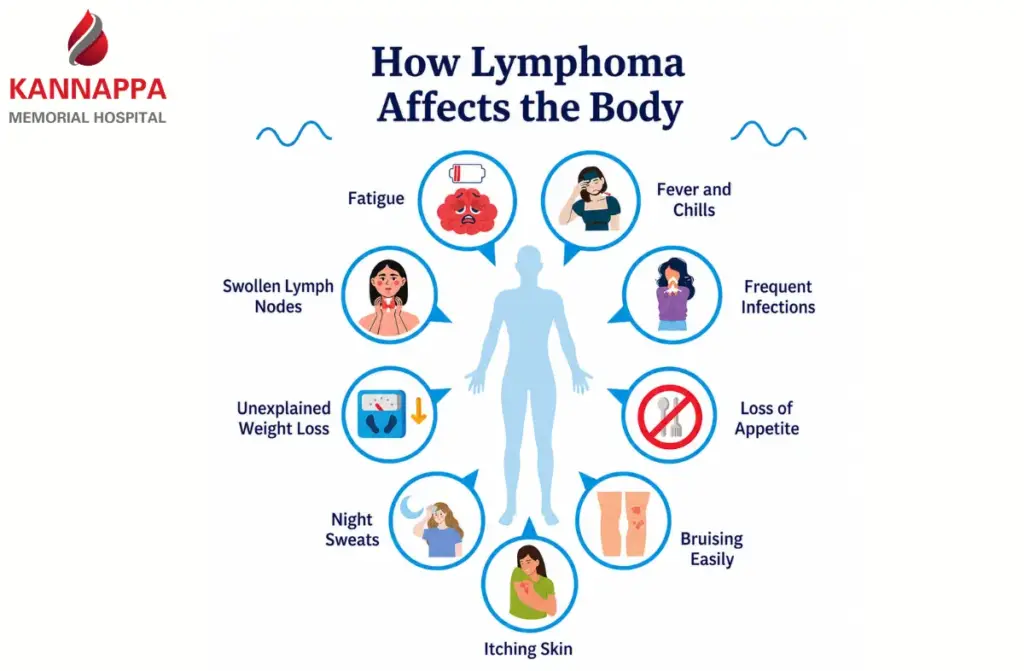
Each year, thousands of people are diagnosed with lymphoma, often without realizing that the subtle changes they experienced were early warning signs of the disease. Symptoms such as fatigue, swollen lymph nodes, and unexplained weight loss are easy to overlook, yet they may indicate a serious condition affecting the lymphatic system. Other signs can include night sweats, fever, and persistent itching.
Lymphoma is one of the most common types of blood cancer worldwide, but many cases respond well to treatment when detected early. At Kannappa Memorial Hospital, our oncology team offers advanced diagnostics and compassionate, personalized care to support patients in managing the disease and improving their quality of life. Awareness of Lymphoma Cancer Symptoms is essential for early detection and timely treatment.
What Is Lymphoma Cancer?
Understanding the Lymphatic System
To understand lymphoma, we first need to understand the lymphatic system the network of tissues, organs, and vessels that form a critical part of the body’s immune defense. This system includes lymph nodes, the spleen, thymus, bone marrow, and lymphatic vessels. Its primary role is to carry lymph fluid (containing white blood cells called lymphocytes) throughout the body to fight infections and disease.
How Lymphoma Develops
Lymphoma occurs when lymphocytes, the white blood cells responsible for immune response begin to grow and multiply abnormally. As lymphoma progresses, the cancerous cells may spread to nearby tissues and organs, making early recognition of lymphoma symptoms essential for timely diagnosis and effective treatment.
Types of Lymphoma Cancer
Lymphoma is not a single disease. It exists in many forms, broadly categorized into two main types:
- Hodgkin Lymphoma (HL): Hodgkin Lymphoma is characterized by a distinctive abnormal cell known as the Reed–Sternberg cell. It tends to follow a more predictable pattern of spreading and is considered highly treatable, especially when caught early. It most commonly affects young adults between the ages of 15 and 35, as well as adults over 55.
- Non-Hodgkin Lymphoma (NHL): Non-Hodgkin lymphoma is a broader category encompassing more than 60 subtypes. It can arise in either B-cells or T-cells and does not involve Reed-Sternberg cells.Non-Hodgkin lymphoma (NHL) is more common than Hodgkin lymphoma and can develop at any age, though the risk increases with age. Some subtypes grow slowly (indolent), while others are aggressive and fast-growing.
- Rare Types of Lymphoma: Less common forms include primary CNS lymphoma (affecting the brain and spinal cord), cutaneous lymphoma (affecting the skin), and Burkitt lymphoma an aggressive B-cell cancer that, while rare, requires immediate treatment.
Signs and Symptoms of Lymphoma
Recognizing lymphoma cancer symptoms early is one of the most powerful steps toward effective treatment. Many of these symptoms are similar to those seen in common illnesses, making awareness especially important.
Common Symptoms
The most widely reported lymphoma cancer symptoms include:
- Swollen lymph nodes painless lumps in the neck, armpits, or groin are the hallmark sign
- Persistent fatigue that doesn’t improve with rest
- Unexplained weight loss losing more than 10% of body weight over six months without trying
- Fever that comes and goes without infection
- Night sweats episodes of heavy sweating that can soak clothes and bed linens.
- Itchy skin without visible rash or allergic cause
Less Common Symptoms
Some patients experience symptoms that seem unrelated to lymphoma but warrant attention:
- Abdominal pain, bloating, or feeling full quickly (when lymphoma affects abdominal lymph nodes or the spleen)
- Chest pain or difficulty breathing (when lymphoma affects the chest)
- Persistent cough
- Skin rashes or lumps (more common in cutaneous lymphoma)
Advanced Warning Signs
In later stages, lymphoma cancer symptoms can become more severe:
- Bone pain or fractures
- Confusion or neurological changes (when the brain is involved)
- Frequent or repeated infections caused by reduced immune system function.
- Severe anaemia
When to See a Doctor
If you notice swollen lymph nodes that persist for more than two to four weeks, or if you experience unexplained fever, weight loss, and night sweats together often referred to as “B symptoms” do not delay. These lymphoma cancer symptoms require prompt medical evaluation. At Kannappa Memorial Hospital, our specialists are equipped to investigate these signs efficiently and accurately.
Causes and Risk Factors
What Causes Lymphoma?
The exact cause of lymphoma is not always identifiable. Like most cancers, it results from genetic mutations that cause abnormal lymphocyte behavior. However, several known factors can increase the risk.
Genetic and Family History
While lymphoma is not directly inherited, having a first-degree relative (parent, sibling) with lymphoma increases your risk. Certain inherited immune conditions may also raise susceptibility.
Immune System Disorders
Conditions that weaken or alter the immune system such as HIV/AIDS, rheumatoid arthritis, lupus, or celiac disease are associated with a higher incidence of lymphoma. People who have had organ transplants and are on immunosuppressive drugs also face elevated risk.
Lifestyle and Environmental Risks
- Exposure to agricultural chemicals like pesticides and herbicides, as well as some industrial substances, may increase risk.
- Infection with certain viruses, including Epstein-Barr virus (EBV), Helicobacter pylori, and Hepatitis C
- Age most types of lymphoma are more common in adults over 60
How Lymphoma Is Diagnosed
Accurate diagnosis is essential to guide the right treatment plan. At Kannappa Memorial Hospital, our oncology team follows a thorough, multi-step diagnostic process.
Physical Examination
A physician will examine lymph node areas in the neck, armpits, and groin, and assess the spleen and liver for enlargement. This is typically the first step after a patient reports lymphoma cancer symptoms.
Blood Tests
Complete blood count (CBC), lactate dehydrogenase (LDH) levels, and erythrocyte sedimentation rate (ESR) can indicate whether the immune system is under stress and help guide further testing.
Biopsy and Imaging Scans
A lymph node biopsy is the definitive test for lymphoma a sample of tissue is examined under a microscope to confirm the presence and type of cancer cells. Imaging scans including CT scans, PET scans, and MRI are used to determine the location and extent of the disease.
Staging of Lymphoma
Lymphoma is staged from I to IV:
- Stage I: Cancer confined to one lymph node region
- Stage II: Cancer is found in two or more lymph node areas located on the same side of the diaphragm.
- Stage III: Cancer has spread to lymph node regions above and below the diaphragm.
- Stage IV: Widespread disease involving organs beyond the lymphatic system
Staging determines prognosis and shapes the treatment plan.
Treatment Options for Lymphoma
The good news: lymphoma is among the more treatable cancers, especially when identified early. Treatment depends on the type, stage, and overall health of the patient.
- Chemotherapy: Chemotherapy remains the backbone of lymphoma treatment. Drug combinations such as CHOP (cyclophosphamide, doxorubicin, vincristine, and prednisone) are used to destroy rapidly dividing cancer cells. It may be given intravenously or orally depending on the protocol.
- Radiation Therapy: High-energy beams are directed at specific lymph node regions to destroy cancer cells. Radiation is often used in combination with chemotherapy or as a standalone treatment in early-stage Hodgkin lymphoma.
- Immunotherapy: Immunotherapy harnesses the patient’s own immune system to identify and destroy lymphoma cells. Monoclonal antibodies like Rituximab are widely used for certain B-cell lymphomas and have significantly improved survival rates.
- Stem Cell Transplant: For relapsed or refractory lymphoma cancer that returns or doesn’t respond to initial treatment a stem cell transplant may offer a potential cure. The procedure involves replacing damaged bone marrow with healthy stem cells, either from the patient (autologous) or a donor (allogeneic).
- Targeted Therapy: Targeted drugs specifically attack molecular pathways or proteins that lymphoma cells rely on to survive and grow, with fewer side effects than traditional chemotherapy. Examples include BTK inhibitors like ibrutinib for certain NHL subtypes.
At Kannappa Memorial Hospital, our multidisciplinary oncology board reviews every case to determine the most effective, individualized treatment plan for each patient.
Living With Lymphoma
A lymphoma diagnosis affects every dimension of life — physical, emotional, and social. With the right support, many patients lead full, active lives during and after treatment.
Managing Side Effects
Common side effects of treatment include fatigue, nausea, hair loss, and increased susceptibility to infection. Our palliative care and supportive oncology team at Kannappa Memorial Hospital works alongside treating physicians to manage side effects and maintain quality of life throughout treatment.
Emotional and Mental Health Support
The psychological impact of a cancer diagnosis should never be underestimated. Emotional challenges such as anxiety, depression, and the fear of cancer recurrence are frequently experienced. Connecting with a trained counselor, joining a cancer support group, and leaning on loved ones can make a meaningful difference. Our hospital’s psycho-oncology services offer personalized mental health support for patients and their families.
Diet and Lifestyle Tips
- Prioritize a balanced diet rich in lean proteins, whole grains, fruits, and vegetables
- Stay hydrated, especially during chemotherapy
- Engage in gentle physical activity like walking or yoga, as approved by your doctor
- Avoid tobacco and limit alcohol consumption
- Attend all follow-up appointments regular monitoring is key to catching any recurrence early
Can Lymphoma Be Prevented?
There is no guaranteed way to prevent lymphoma, since many risk factors such as genetics and immune conditions are beyond our control. However, reducing modifiable risks can lower your chances:
- Protecting yourself from viral infections through vaccination and safe practices
- Avoiding prolonged exposure to pesticides or industrial chemicals
- Maintaining a healthy immune system through balanced nutrition and exercise
- Seeking treatment for chronic infections like Hepatitis C and H. pylori
Routine check-ups are also important, especially if you have a family history of lymphoma or a known immune disorder.
Why Early Detection Matters
- The relationship between early detection and survival in lymphoma is well-established. Patients diagnosed at Stage I or II have significantly higher five-year survival rates than those diagnosed at advanced stages. Many aggressive lymphomas, if caught early, can be treated with curative intent.
- The challenge is that lymphoma cancer symptoms particularly in the early stages can mimic everyday conditions like the flu or common fatigue. This is why health literacy matters. Knowing what to look for and acting quickly when something feels wrong can genuinely save lives.
- At Kannappa Memorial Hospital, we offer rapid diagnostic pathways for patients presenting with suspicious symptoms, ensuring that no time is lost between suspicion and diagnosis. Our state-of-the-art pathology, radiology, and oncology departments work in close coordination to deliver timely, accurate results.
Conclusion
Lymphoma cancer is a complex but increasingly manageable disease. From swollen lymph nodes and night sweats to unexplained weight loss and persistent fatigue, recognizing lymphoma cancer symptoms early and seeking professional evaluation promptly can make a profound difference in outcomes. Whether you are seeking information for yourself or a loved one, understanding the disease its types, causes, warning signs, and treatment options empowers you to make informed decisions and advocate effectively for your health.
At Kannappa Memorial Hospital, we stand beside every patient on their journey. With compassionate care, cutting-edge treatment protocols, and a multidisciplinary approach, we are committed to delivering the best possible outcomes for those affected by lymphoma and other cancers.
Read also: Multiple Myeloma