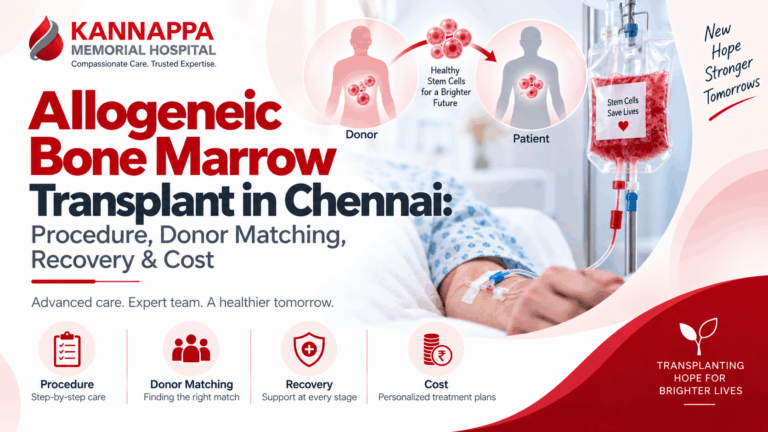

When a blood disorder reaches the point where conventional medicine can no longer restore normal function, a bone marrow transplant becomes more than a treatment — it becomes a lifeline. Choosing the right specialist for this procedure is one of the most important decisions a patient and their family will ever make. For those living in and around Tamil Nadu, finding the best bone marrow transplant doctor in Chennai means accessing world-class hematology expertise close to home, without the need to travel across the country.
At Kannappa Memorial Hospital, a dedicated team of experienced haematologists and bone marrow transplant physicians brings together advanced clinical knowledge, personalized care, and the infrastructure needed to manage one of medicine’s most complex procedures — from first consultation to long-term recovery.
What is a Bone Marrow Transplant?
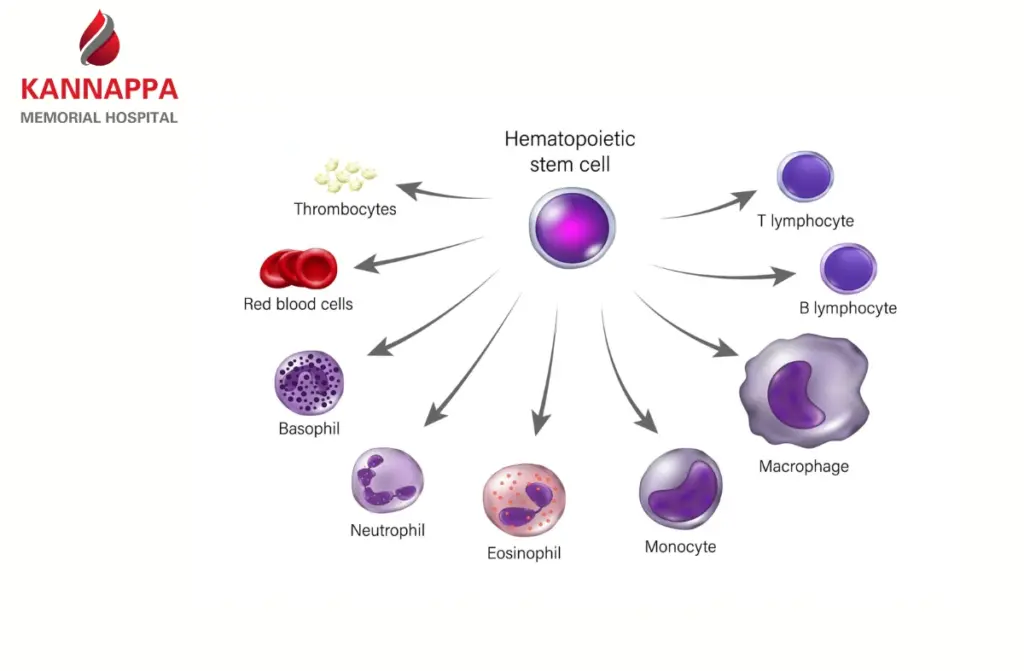
Bone marrow is the soft, spongy tissue inside bones that acts as the body’s blood cell factory. It produces:
- Red blood cells (carry oxygen)
- White blood cells (fight infections)
- Platelets (help blood clot)
When bone marrow fails due to diseases like cancer, severe infections, or genetic disorders, the body cannot make healthy blood cells. A bone marrow transplant replaces the damaged or diseased stem cells with healthy ones to restore normal blood production.
Types of Bone Marrow Transplant
1. Autologous Transplant
- Uses the patient’s own stem cells
- Cells are collected, stored, and returned after treatment
- Common in certain cancers like lymphoma and multiple myeloma
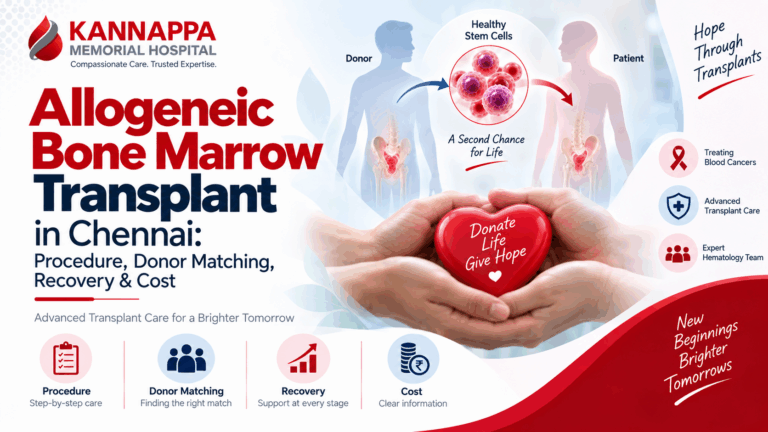
2. Allogeneic Transplant
- Uses stem cells from a donor
- Donor must be a close match based on HLA compatibility (human leukocyte antigen)
- Used when patient’s bone marrow is severely damaged or cancerous
Why Type Depends on Disease
- Cancer type and stage
- Patient’s age and health condition
- Availability of a suitable donor
- Risk of disease recurrence or relapse
Expert Transplant Team at Kannappa Memorial Hospital
Chennai is widely recognized as a major centre for haematology and bone marrow transplant care in India. In this landscape, Kannappa Memorial Hospital stands out for its dedicated transplant unit and a team of highly experienced specialists focused on comprehensive, patient-centred treatment.
Dr. Margaret Chellaraj — MD, DM
Senior Consultant Haematologist & Bone Marrow Transplant Physician
Experience: 39+ Years
Dr. Margaret Chellaraj is one of the most experienced bone marrow transplant specialists in the region, with nearly four decades of clinical practice. Her expertise covers a broad range of haematological disorders, including acute and chronic leukaemias, lymphomas, aplastic anaemia, multiple myeloma, and rare inherited blood diseases.
She is well known for her detailed pre-transplant evaluation process, careful management of high-risk cases, and structured guidance throughout the transplant journey. Her approach combines deep clinical expertise with individualized, patient-focused care, ensuring treatment plans address both medical and personal needs.
Dr. Anuragaa S — MBBS, MD (JIPMER)
Consultant Haematologist & Bone Marrow Transplant Physician
Experience: 8+ Years
Dr. Anuragaa S completed her MD at JIPMER, one of India’s premier medical institutes. She specializes in both malignant and non-malignant blood disorders, including acute leukaemias, myelodysplastic syndromes, and inherited conditions such as thalassaemia.
Her clinical approach focuses on early diagnosis, well-structured treatment planning, and careful post-transplant follow-up. She also places strong emphasis on patient and family education, ensuring they understand each stage of the treatment process and feel supported throughout the journey.
Dr. R. Jesu Pandian — MBBS, MD (Pathology), FHO
Haemato-Oncologist & Bone Marrow Transplant Physician
Experience: 14+ Years
Dr. R. Jesu Pandian brings a dual perspective to transplant medicine, combining haemato-oncology expertise with a strong background in pathology. This allows for highly precise diagnostic evaluation and careful assessment of transplant readiness.
With over 14 years of experience, he manages complex blood disorders such as leukaemias, lymphomas, bone marrow failure syndromes, and plasma cell diseases. His strengths include accurate risk assessment, patient stratification, and close monitoring during and after transplant, supporting safer outcomes and structured recovery.
Diseases Treated with Bone Marrow Transplant
Not every blood disorder requires a transplant, but for certain conditions — particularly when other treatments have failed or the disease is severe — bone marrow transplantation may offer the best chance of long-term remission or cure. Consulting the best bone marrow transplant doctor in Chennai ensures an accurate assessment of whether transplantation is appropriate for your specific situation.
Leukemia is a cancer of the blood and bone marrow that causes abnormal white blood cell production, overwhelming healthy cells and compromising immune function. In many cases, particularly with acute or relapsed forms, a bone marrow transplant is recommended following chemotherapy.
Lymphoma affects the lymphatic system and may require high-dose chemotherapy followed by stem cell transplantation, especially in cases where the disease has returned after initial treatment.
Multiple Myeloma originates in plasma cells within the bone marrow and impairs normal blood cell production. Autologous stem cell transplantation is commonly used as part of the treatment strategy for eligible patients.
Aplastic Anemia is a serious condition in which the bone marrow stops producing sufficient blood cells, leading to persistent fatigue, risk of infection, and uncontrolled bleeding. In severe cases, an allogeneic transplant from a compatible donor can be life-saving.
Inherited Blood Disorders such as thalassemia, sickle cell disease, and Fanconi anemia may also benefit from bone marrow transplantation, particularly in younger patients where the procedure can offer a functional cure.
Choosing a Bone Marrow Transplant Specialist
Selecting the right doctor for a bone marrow transplant is not simply about credentials — it is about finding a specialist whose clinical experience, institutional support, and personal approach align with the seriousness of your condition.
Depth of Haematological Experience: The best bone marrow transplant doctors in Chennai have years of dedicated practice managing blood cancers and complex haematological disorders, not just general oncology experience.
Expertise in Multiple Transplant Types: A competent transplant physician should be equally skilled in autologous, allogeneic, and haploidentical transplant approaches, allowing for truly individualized treatment planning based on the patient’s diagnosis, age, and donor availability.
Access to Advanced Infrastructure: High-quality BMT outcomes depend on more than the doctor alone. HEPA-filtered transplant units, on-site HLA typing, dedicated transplant ICUs, and robust infection control systems all contribute meaningfully to patient safety.
Multidisciplinary Collaboration: Bone marrow transplant care involves haematologists, oncologists, pathologists, transplant nurses, nutritionists, and psychosocial support specialists working as a coordinated team. Doctors who lead or participate in such teams deliver more comprehensive care.
Patient-Centred Communication: A good transplant specialist takes time to explain the diagnosis, the treatment plan, likely outcomes, and potential complications — ensuring that patients feel respected and informed at every stage.
These are the qualities that define top bone marrow transplant specialists in Chennai, and the standards that Kannappa Memorial Hospital’s transplant team consistently upholds.
Process of Bone Marrow Transplant
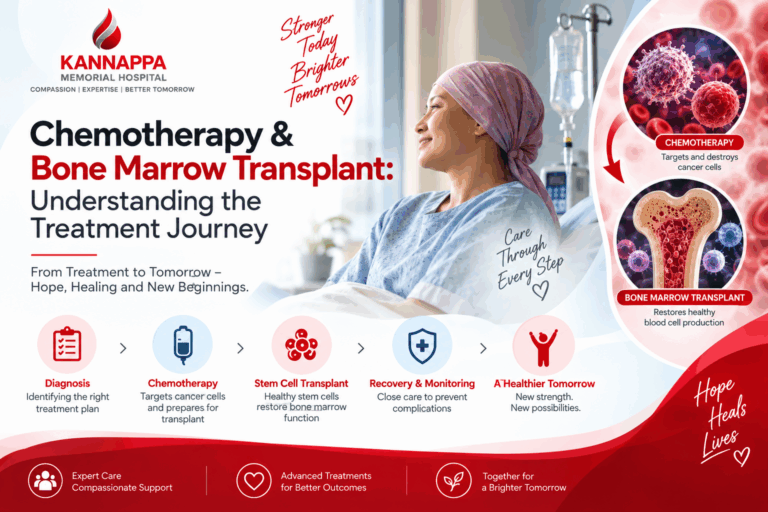
Understanding what happens during a bone marrow transplant helps patients prepare mentally and physically for what lies ahead. While individual protocols vary depending on the type of transplant and the patient’s condition, the general process follows a consistent sequence.
Initial Evaluation: The transplant team assesses the patient’s overall health, disease stage, organ function, and psychological readiness for the procedure. This evaluation also includes discussions with family members who may serve as potential donors.
Donor Matching and Stem Cell Collection: For allogeneic transplants, HLA typing is performed to identify a compatible sibling, unrelated donor, or haploidentical family member. Stem cells are then collected from peripheral blood or bone marrow. For autologous transplants, the patient’s own stem cells are harvested and stored before conditioning therapy begins.
Conditioning Therapy: High-dose chemotherapy, sometimes combined with radiation therapy, is administered to destroy remaining diseased cells and suppress the immune system to reduce the risk of rejection. This phase typically lasts five to ten days.
Stem Cell Infusion: Healthy stem cells are infused through a central venous catheter in a procedure that closely resembles a blood transfusion. The infusion itself is painless and may take between one and several hours.
Engraftment and Early Recovery: Over the following weeks, the infused stem cells migrate to the bone marrow and begin producing new blood cells — a process called engraftment. Patients are monitored closely during this period, as the immune system is at its most vulnerable.
Long-Term Follow-Up: Recovery after a bone marrow transplant is gradual. Regular blood counts, immunological testing, nutritional support, and outpatient reviews continue for months to years following discharge. The best bone marrow transplant doctor in Chennai will establish a structured follow-up plan to support each patient through this extended recovery phase.
When to See a Transplant Specialist
A transplant specialist (usually a hematologist trained in stem cell/bone marrow transplantation) is typically involved when blood or bone marrow conditions are severe, complex, or not responding to standard care. Your list is on the right track—here’s what it means in practical terms:
Persistent abnormal blood reports: If blood tests (like CBC, differential counts, or smear) remain abnormal over time without a clear cause, it may indicate an underlying bone marrow or blood-forming disorder. When routine evaluation doesn’t explain it, specialist assessment becomes important.
Blood cancers diagnosis: Conditions such as leukemia, lymphoma, or multiple myeloma often require advanced therapies. In some cases, a stem cell transplant is considered as part of curative or long-term treatment planning.
Severe anemia or bone marrow failure: When anemia is severe, recurrent, or linked to bone marrow failure syndromes (like aplastic anemia), the bone marrow may not be producing enough healthy blood cells. Transplant specialists evaluate whether bone marrow or stem cell transplant is needed.
Genetic blood disorders: Inherited conditions such as thalassemia major or sickle cell disease can damage blood function over time. In selected cases, a transplant may offer a potential cure rather than lifelong supportive treatment.
Poor response to standard treatments: If medications, chemotherapy, or supportive care are not controlling the disease effectively, escalation to advanced therapies including transplant options may be considered.
Advanced BMT Care in Chennai
- Kannappa Memorial Hospital has established itself as a trusted centre for advanced bone marrow transplant (BMT) and haematology care in Chennai. The hospital integrates state-of-the-art transplant infrastructure including sterile HEPA-filtered units, dedicated transplant ICUs, and fully equipped on-site diagnostic laboratories with a highly experienced transplant team whose combined expertise spans over six decades.
- With a strong patient-first approach, the hospital not only focuses on clinical excellence but also addresses financial accessibility through structured support programs.
- For those seeking the best bone marrow transplant doctor in Chennai, Kannappa Memorial Hospital delivers a balanced blend of advanced medical capability, skilled specialists, and compassionate, patient-centric care essential for complex treatments like BMT.
Conclusion
Bone marrow transplantation has transformed the prognosis for many patients living with serious blood disorders. Advances in donor matching, conditioning protocols, and post-transplant care have made outcomes more predictable and recovery more manageable but only when treatment is delivered by specialists with the knowledge and infrastructure to do it well.
For patients and families in Tamil Nadu, access to the best bone marrow transplant doctor in Chennai does not require travelling far. At Kannappa Memorial Hospital, an experienced team of haematologists and transplant physicians stands ready to evaluate your condition, guide your treatment decisions, and support your recovery every step of the way. Choosing the right specialist and the right institution is the first and most important step toward a better health outcome.