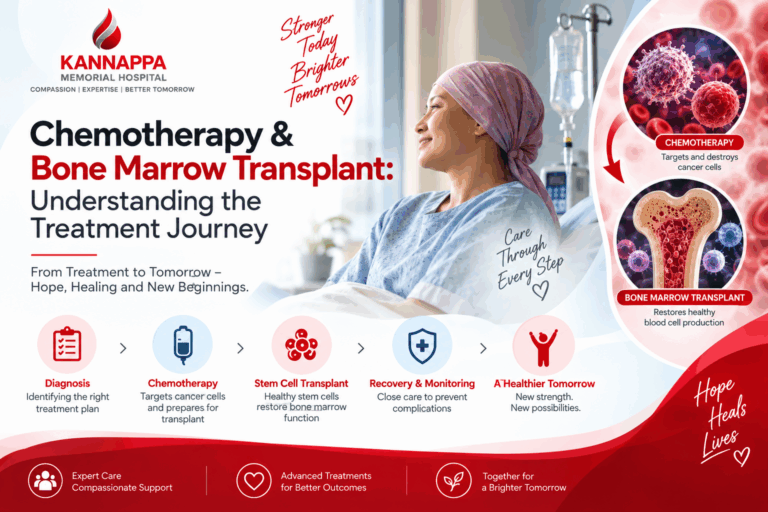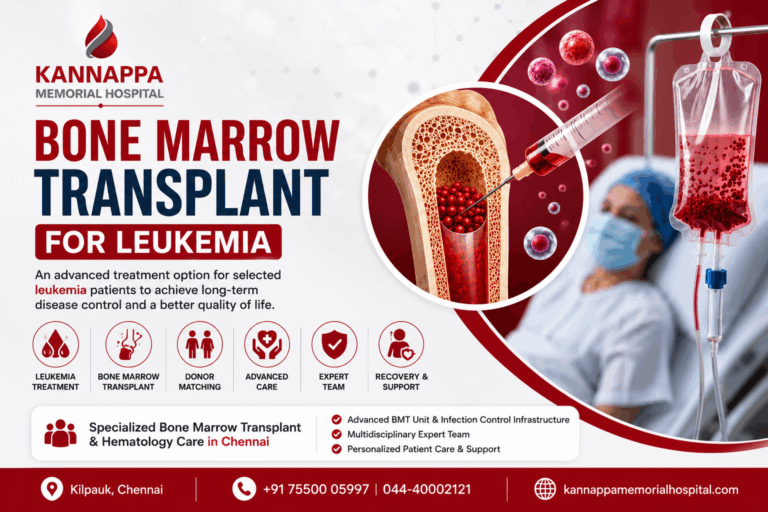
Leukemia is a type of blood cancer that affects the blood-forming tissues of the body, including the bone marrow. Depending on the type and stage of leukemia, patients may require chemotherapy, targeted therapy, immunotherapy, or a bone marrow transplant for leukemia.
A leukemia bone marrow transplant in Chennai may be considered for selected patients when intensive treatment or transplantation offers an appropriate strategy for achieving long-term disease control. Also known as hematopoietic stem cell transplantation (HSCT), the procedure replaces diseased or damaged blood-forming cells with healthy stem cells.
Kannappa Memorial Hospital provides specialized bone marrow transplant and hematology care in Chennai, with a dedicated BMT service and multidisciplinary medical support. The hospital’s website describes its BMT unit as providing specialized transplant care and infection-control infrastructure.
If you or a family member has been diagnosed with leukemia and advised to consider a bone marrow transplant, understanding the procedure, transplant types, donor matching, recovery, risks, and cost can help you prepare for a discussion with your medical team.
What Is Leukemia?
Leukemia is a cancer of the blood-forming tissues. It develops when abnormal blood-forming cells grow uncontrollably and interfere with the production of normal blood cells.
The major types of leukemia include:
- Acute lymphoblastic leukemia (ALL)
- Acute myeloid leukemia (AML)
- Chronic lymphocytic leukemia (CLL)
- Chronic myeloid leukemia (CML)
The treatment approach depends on the specific type of leukemia, genetic and molecular characteristics, disease status, age, general health, previous treatments, and other individual factors.
Not every person diagnosed with leukemia requires a bone marrow transplant. A hematologist or transplant specialist evaluates the disease and determines whether transplantation should be considered.
What Is a Bone Marrow Transplant for Leukemia?
A bone marrow transplant replaces diseased or damaged blood-forming stem cells with healthy hematopoietic stem cells.
In leukemia, transplantation may be considered after achieving an appropriate response to initial treatment or when the disease has characteristics that make transplantation beneficial.
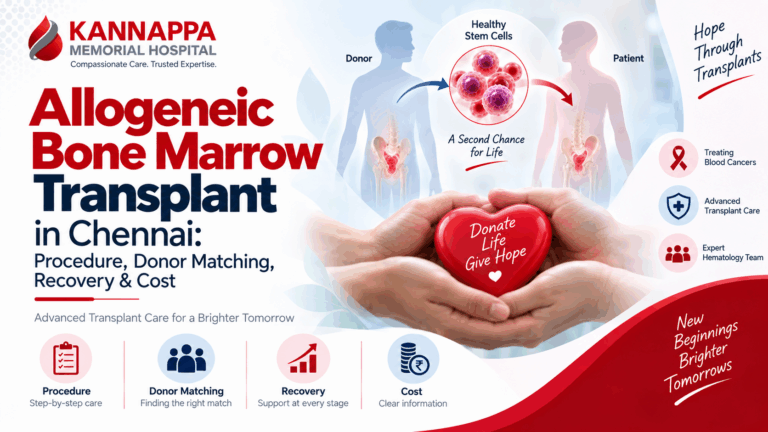
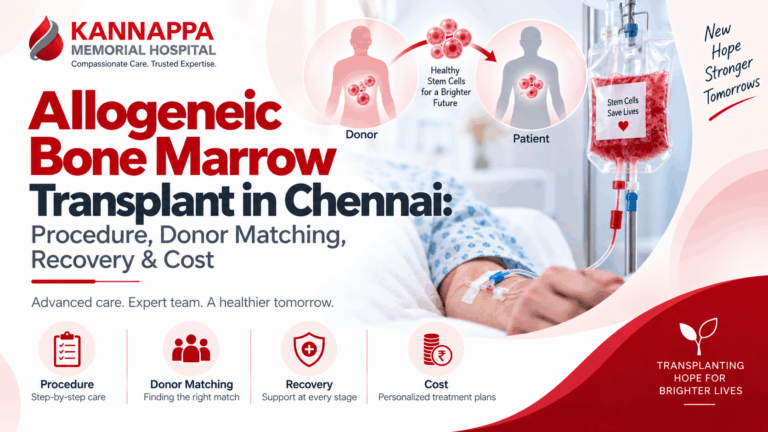
For selected leukemia patients, an allogeneic stem cell transplant may be recommended. In this procedure, stem cells are obtained from a suitable donor.
The donor’s immune system can provide an additional anti-leukemia effect known as the graft-versus-leukemia (GVL) effect.
You can learn more about the treatment through Kannappa Memorial Hospital’s Bone Marrow Transplant service.
When Is Bone Marrow Transplant Considered for Leukemia?
A bone marrow transplant is not automatically required for every leukemia patient.
leukemia
Recovery varies considerably. Blood-count recovery may begin within weeks, while immune recovery and overall rehabilitation can take months or longer. The transplant team monitors each patient’s progress individually.

Proudly powered by DIGNIRA
The transplant team may consider factors such as:
- Type of leukemia
- Disease risk category
- Genetic and molecular findings
- Response to initial treatment
- Whether the disease is in remission
- Risk of relapse
- Previous treatment history
- Patient’s age and overall health
- Availability of a suitable donor
For some patients with high-risk or relapsed leukemia, an allogeneic transplant may provide an important treatment option.
The decision is complex and should be made by a qualified hematology and transplant team after evaluating the individual patient’s circumstances.
Types of Bone Marrow Transplant for Leukemia
There are several approaches to hematopoietic stem cell transplantation.
1. Allogeneic Stem Cell Transplant
An allogeneic transplant uses stem cells from another individual.
For leukemia, this is an important type of transplant because donor immune cells can contribute to the graft-versus-leukemia effect.
The donor may be:
- A matched sibling
- A matched unrelated donor
- A partially matched family donor
- Another appropriate donor identified through donor-matching systems
HLA testing is an important part of donor selection.
Kannappa Memorial Hospital provides information about different types of bone marrow transplantation, including allogeneic transplantation and donor-related considerations.
2. Haploidentical Transplant
A haploidentical transplant uses stem cells from a partially matched family donor.
This approach can expand donor options for patients who do not have a fully matched sibling donor. The suitability of haploidentical transplantation depends on the patient’s leukemia, donor characteristics, treatment plan, and transplant team’s assessment.
3. Autologous Stem Cell Transplant
In an autologous transplant, the patient’s own stem cells are collected, stored, and later returned after intensive treatment.
Autologous transplantation is widely used for certain blood cancers such as lymphoma and multiple myeloma. It is not the standard transplant approach for most cases of leukemia, although specific clinical situations may differ.
The transplant type should always be determined by the treating hematology team.
How Does a Leukemia Bone Marrow Transplant Work?
A leukemia bone marrow transplant generally involves several stages.
Step 1: Pre-Transplant Evaluation
Before transplantation, the patient undergoes a detailed assessment.
This may include:
- Blood tests
- Bone marrow examination
- Imaging studies when required
- Heart and lung evaluation
- Kidney and liver function tests
- Infection screening
- Assessment of previous treatments
- HLA and donor compatibility testing
The purpose is to determine whether the patient is medically suitable for transplantation and to identify potential risks.
Kannappa Memorial Hospital’s Bone Marrow Transplant Procedure page describes pre-transplant evaluation as an important stage of the transplant process.
Step 2: Donor Matching
For an allogeneic transplant, the medical team searches for a suitable donor.
HLA matching helps determine compatibility between the donor and recipient. A matched sibling may be an option, but other donor sources can be considered when a sibling match is unavailable.
Donor selection is individualized according to the patient’s clinical situation and available donor options.
Step 3: Conditioning Therapy
Before the stem cells are infused, the patient receives conditioning therapy.
This may involve chemotherapy, radiation therapy, or a combination, depending on the transplant protocol.
Conditioning has several purposes, including reducing remaining leukemia cells and preparing the body to accept the transplanted stem cells.
Step 4: Stem Cell Infusion
After conditioning, the donor stem cells are infused through an intravenous line or central venous catheter.
The infusion generally resembles a blood transfusion rather than a major surgical operation.
The transplanted stem cells then travel to the bone marrow and begin the process of producing new blood cells.
Step 5: Engraftment
Engraftment occurs when the transplanted stem cells begin producing new blood cells.
During this period, blood counts are monitored frequently. Patients may require transfusions, antibiotics, antiviral or antifungal medicines, and other supportive treatments depending on their condition.
Step 6: Post-Transplant Monitoring
After transplantation, close monitoring continues.
The medical team watches for:
- Infection
- Graft-versus-host disease
- Graft failure
- Bleeding
- Organ complications
- Disease relapse
- Other transplant-related complications
Long-term follow-up is an important part of leukemia transplant care.
Recovery After Leukemia Bone Marrow Transplant
Recovery from a bone marrow transplant for leukemia can take time and varies between individuals.
During the early recovery period, the immune system is weakened and blood counts may be low. Patients therefore require close medical supervision and infection-prevention precautions.
After discharge, follow-up appointments remain important.
Recovery may include:
- Regular blood tests
- Medication management
- Infection prevention
- Nutritional support
- Physical rehabilitation
- Monitoring for GVHD
- Disease-response monitoring
- Emotional and psychological support
For more information about ongoing care, see Kannappa Memorial Hospital’s Post-Transplant Care and Survivorship resources.
Risks and Complications of Leukemia Bone Marrow Transplant
Bone marrow transplantation is an intensive treatment and can have significant risks.
Potential complications include:
- Infections
- Low blood cell counts
- Bleeding
- Nausea and fatigue
- Organ toxicity
- Graft failure
- Graft-versus-host disease (GVHD)
- Disease relapse
- Long-term complications
GVHD is particularly associated with allogeneic transplantation. It occurs when donor immune cells recognize the patient’s tissues as foreign and attack them.
Kannappa Memorial Hospital provides detailed information about bone marrow transplant risks and complications, including infection, GVHD, graft failure, organ complications, and long-term effects.
The actual risk varies depending on the patient’s disease, transplant type, donor compatibility, conditioning regimen, age, general health, and other factors.
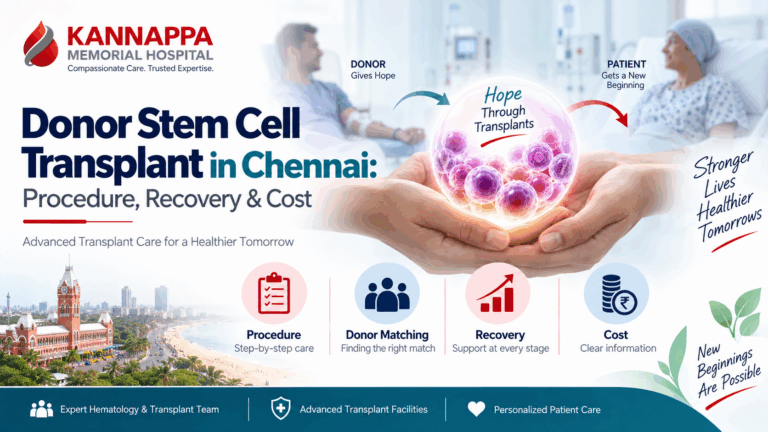
Bone Marrow Transplant Cost for Leukemia in Chennai
The bone marrow transplant cost in Chennai varies from patient to patient.
Factors that may affect the total treatment cost include:
- Type of transplant
- Leukemia diagnosis and treatment status
- Pre-transplant investigations
- Donor evaluation
- Stem cell collection
- Conditioning treatment
- Hospitalisation
- Medicines
- Blood and platelet transfusions
- Infection management
- Treatment of complications
- Follow-up care
For an overview of factors affecting BMT expenses, patients can visit Bone Marrow Transplant Cost in Chennai.
Patients should obtain an individualized estimate from the hospital because the final cost depends on the treatment plan and clinical requirements.
Why Choose a Specialized BMT Hospital in Chennai?
Bone marrow transplantation requires specialized medical expertise and infrastructure.
When selecting a bone marrow transplant hospital in Chennai, patients and families may consider:
- Experience of the transplant team
- Hematology and oncology support
- Dedicated BMT facilities
- Infection-control measures
- Blood bank and laboratory support
- Availability of critical care
- Donor-matching services
- Post-transplant monitoring
- Emergency support
- Long-term follow-up
Kannappa Memorial Hospital states that its Chennai facility includes an advanced BMT unit with HEPA filtration and critical-care monitoring. The hospital also states that it is registered under the Human Organ Transplantation Act for performing bone marrow transplants.
Leukemia Bone Marrow Transplant at Kannappa Memorial Hospital
Kannappa Memorial Hospital provides bone marrow transplant and hematology services in Chennai for patients requiring specialized evaluation and treatment.
The hospital’s BMT service covers the transplant journey from evaluation and donor assessment through transplantation, monitoring, and follow-up. Its website provides dedicated resources covering transplant procedures, transplant types, complications, and post-transplant care.
Patients diagnosed with leukemia who have been advised to consider transplantation can consult the hospital’s hematology and BMT team to understand their treatment options.
The treatment approach should be individualized according to the leukemia subtype, disease status, previous treatment, donor availability, and overall health.
When Should a Leukemia Patient Consult a BMT Specialist?
A patient with leukemia may benefit from consultation with a BMT specialist when transplantation is being considered as part of the treatment plan.
A specialist consultation can help answer questions such as:
- Is bone marrow transplantation appropriate for my leukemia?
- Which type of transplant is suitable?
- Do I need a donor?
- What donor matches are available?
- What tests are required before transplantation?
- What are the potential risks?
- How long could recovery take?
- What factors affect the treatment cost?
Early evaluation can allow the medical team to assess the disease and, when appropriate, begin donor-matching and transplant planning.
Conclusion
A leukemia bone marrow transplant in Chennai can be an important treatment option for selected patients with leukemia, particularly when the disease has a high risk of relapse or when transplantation is recommended based on the patient’s response and overall risk profile.
The transplant process involves detailed evaluation, donor matching, conditioning therapy, stem cell infusion, engraftment, and long-term follow-up.
Because leukemia and transplant treatment are complex, the decision to undergo transplantation should be made with a qualified hematologist and BMT specialist after a detailed evaluation.
Kannappa Memorial Hospital provides specialized BMT and hematology care in Chennai, with dedicated resources for transplant procedures, transplant types, complications, and post-transplant care.
Patients and families seeking information about bone marrow transplant for leukemia in Chennai can consult the hospital’s transplant team to understand whether transplantation may be appropriate for their individual situation.
-

Breast Cancer Awareness Month: Early Detection, Awareness and Hope
Breast Cancer Awareness Month, observed every October, highlights the importance of breast health, early detection, timely diagnosis, and advances in cancer treatment. It encourages individuals and families to recognize potential warning signs, understand their risk factors, and seek appropriate medical advice when necessary. At Kannappa Memorial Hospital, this awareness initiative is an opportunity to spread…
-

Childhood Cancer Awareness Month 2026: Early Signs, Diagnosis & Treatment
Childhood Cancer Awareness Month is observed every September to raise awareness about cancers affecting children, encourage timely medical evaluation, and highlight the importance of appropriate cancer care and support for young patients and their families.
-

A Proud Moment for Kannappa Memorial Hospital: Dr. S. P. Ganesan Honoured with the Golden Doctor Award
Kannappa Memorial Hospital proudly celebrates Dr. S. P. Ganesan, Founder & Director, on receiving the prestigious Golden Doctor Award for his contribution to Hematology and patient care.