
When the Pain Feels Deeper Than a Simple Injury
You twist your knee during exercise, overwork your ankle after weeks of running, or wake up with unexplained joint pain that simply refuses to improve.
At first, it seems minor.
Maybe you assume it is just soreness, a sprain, overtraining, aging, or temporary inflammation. You try resting for a few days. You ice the area. You stretch carefully and hope the discomfort fades.
But something feels different.
The pain feels unusually deep.
Walking becomes uncomfortable.
Standing too long starts to hurt.
The joint feels “heavy” or weak from the inside.
Then comes the confusing part:
The X-ray looks normal.
There’s no visible fracture.
No dramatic swelling.
No obvious explanation.
Yet the pain continues — sometimes for weeks or even months.
For many people, the hidden explanation is Bone Marrow Edema (BME), a condition that develops inside the bone itself and is often only visible on MRI scans.
Bone marrow edema is not technically a disease on its own. Instead, it is a warning signal that the bone is experiencing abnormal stress, inflammation, microscopic injury, arthritis-related damage, or impaired blood supply.
In simple terms, the bone is under pressure from the inside.
Because standard X-rays frequently miss these internal bone changes, many patients are initially told that “everything looks normal,” even while they continue experiencing severe pain.
This delay in diagnosis is one reason bone marrow edema can become frustrating, emotionally exhausting, and physically limiting.
Understanding what bone marrow edema really means — and why it develops — can make recovery far less confusing and may help prevent long-term joint damage.
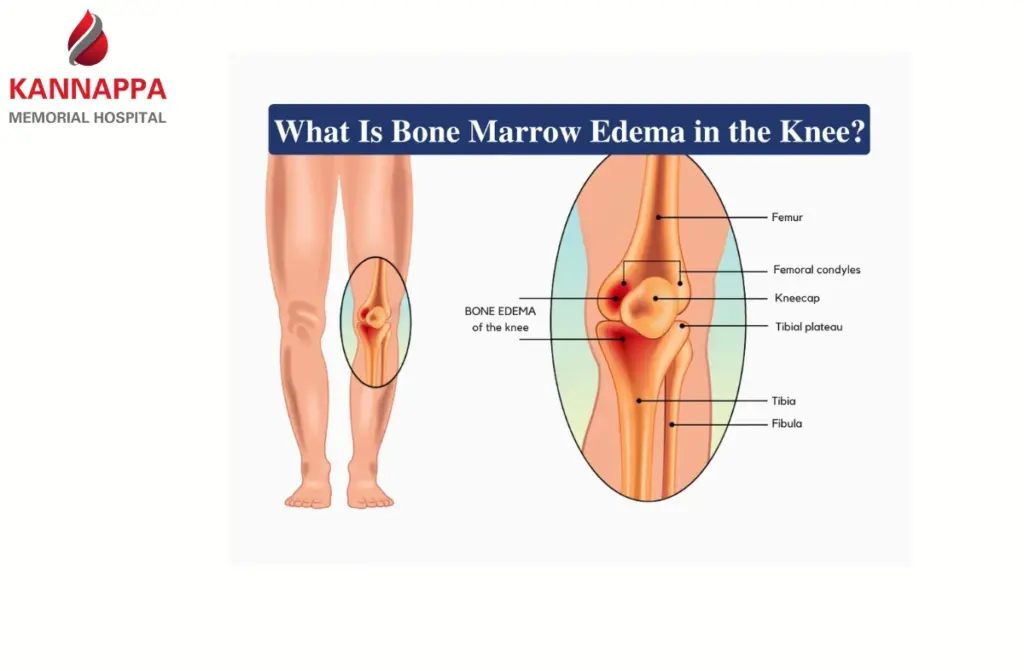
What Is Bone Marrow Edema?
Bone marrow edema refers to an abnormal accumulation of fluid within the bone marrow.
Bone marrow is the soft internal tissue located inside bones. It contains:
• Blood vessels that supply nutrients and oxygen to bone tissue
• Fat cells that support bone structure and energy storage
• Stem cells involved in blood cell production
• Connective tissue that helps maintain bone health
When the bone experiences stress, injury, inflammation, or reduced circulation, fluid begins building up inside this marrow space.
This buildup increases internal pressure within the rigid outer shell of the bone.
Unlike muscles or soft tissues that can expand more easily, bones have very limited room for swelling. As pressure rises inside the bone, pain-sensitive nerve endings become irritated.
This is why bone marrow edema often causes pain that feels unusually deep and intense.
Doctors sometimes describe bone marrow edema as an internal “bone bruise,” but the condition can actually involve far more than simple bruising.
Bone marrow edema may develop because of:
• Repetitive stress from running, jumping, or overtraining that overloads the bone faster than it can repair itself
• Trauma or impact injuries that damage microscopic internal bone structures even without a visible fracture
• Arthritis-related inflammation that spreads from the joint into nearby bone tissue
• Stress fractures that create tiny cracks and inflammatory changes inside the bone
• Reduced blood circulation that weakens bone tissue and interferes with healing
• Osteonecrosis, where reduced blood supply begins damaging living bone cells
• Infection that triggers severe inflammation inside the bone marrow
• Osteoporosis-related insufficiency fractures caused by weakened bones
Bone marrow edema is most commonly detected through MRI scans because regular X-rays usually cannot visualize microscopic inflammation or internal bone swelling.
Why Bone Marrow Edema Causes So Much Pain
Bone pain feels very different from muscle soreness.
Many people struggling with bone marrow edema describe the sensation as:
• Deep aching pain that feels like it is coming from inside the joint rather than the surface
• Constant discomfort that continues even during rest or sleep
• Sharp pain during walking, climbing stairs, squatting, or standing for long periods
• Pain that feels difficult to pinpoint because it radiates through the entire joint area
• Weight-bearing pain that worsens with pressure on the affected bone
• A throbbing sensation that persists long after physical activity stops
Imagine inflammation building inside a hard shell with almost nowhere to expand.
That internal pressure becomes trapped inside the bone.
As pressure rises:
• Blood circulation inside the bone may become disrupted
• Nerves surrounding the bone become irritated
• Inflammatory chemicals accumulate within the marrow
• Bone tissue becomes increasingly sensitive to movement and impact
This explains why even simple activities such as walking across a room can become surprisingly painful.
Why Bone Pain Feels Different From Muscle Pain
Muscle soreness often improves relatively quickly because muscles have rich blood flow and greater flexibility.
Bone tissue heals much more slowly.
Bones contain specialized nerve endings that respond strongly to pressure changes, microscopic damage, and inflammation.
Additionally:
• Bones remain under constant mechanical stress during standing and walking
• Internal bone swelling cannot easily expand outward
• Bone circulation is more limited compared to muscle tissue
• Weight-bearing continuously irritates the injured area
This is why bone marrow edema can linger for months if not properly managed.
A Real-World Example Many Patients Experience
A runner increases training intensity before a marathon.
At first, the knee feels mildly sore after long runs.
Then the pain becomes more persistent.
Eventually, walking downstairs hurts.
The X-ray shows nothing abnormal.
The athlete keeps training because there is “no fracture.”
Weeks later, the pain becomes severe enough to require an MRI — which finally reveals bone marrow edema caused by repetitive stress inside the knee joint.
This pattern is extremely common.
Many people continue damaging the bone because early MRI evaluation was delayed.
Who Is Most at Risk for Bone Marrow Edema?
Although bone marrow edema can affect anyone, some groups face significantly higher risk.
Athletes and Runners
High-impact sports place repeated mechanical stress on bones and joints.
Activities commonly associated with bone marrow edema include:
• Long-distance running that repeatedly overloads the knees, hips, ankles, and feet
• Basketball and volleyball because of repetitive jumping and landing forces
• Soccer due to twisting movements, sprinting, and impact injuries
• Tennis because of sudden directional changes and repetitive stress
• Weightlifting involving excessive joint loading under heavy pressure
• Gymnastics and dance because of repetitive impact and extreme joint stress
Athletes often ignore early symptoms because they assume the pain is “normal soreness.”
Unfortunately, continuing intense activity may worsen microscopic bone damage.
Older Adults
As bones age, they naturally lose some resilience and shock-absorbing capacity.
Older adults face increased risk because of:
• Degenerative joint wear and tear
• Osteoarthritis-related inflammation
• Reduced bone density
• Slower healing capacity
• Greater risk of insufficiency fractures
Even relatively small injuries can trigger significant internal bone stress.
People With Osteoporosis
Osteoporosis weakens bone structure and increases vulnerability to microscopic fractures.
This is especially common in:
• Postmenopausal women due to hormonal changes affecting bone density
• Individuals using long-term corticosteroids that weaken bone tissue over time
• Older adults with calcium or vitamin D deficiency
• People with chronic inflammatory disease affecting bone health
Individuals Recovering From Joint Injuries
Bone marrow edema frequently develops after injuries involving:
• ACL tears
• Meniscus injuries
• Severe ankle sprains
• Hip injuries
• Cartilage damage
Even when ligaments begin healing, the underlying bone may still remain inflamed.
People With Circulation Problems
Reduced blood supply interferes with bone survival and repair.
This may occur in:
• Osteonecrosis
• Chronic steroid use
• Heavy alcohol consumption
• Blood vessel disorders
• Certain autoimmune diseases
The condition most commonly affects the:
• Knee
• Hip
• Ankle
• Foot
• Spine
• Wrist
• Shoulder
Types of Bone Marrow Edema
Traumatic Bone Marrow Edema
This form develops after direct injury or excessive mechanical stress.
Common causes include:
• Falls that compress or twist the joint suddenly
• Sports injuries involving impact or rapid direction changes
• Car accidents that create internal bone trauma
• Sudden twisting movements that overload joint surfaces
• Stress fractures caused by repetitive overuse
Traumatic edema often appears beneath joint cartilage where impact forces are greatest.
Bone Marrow Edema Syndrome (BMES)
Bone Marrow Edema Syndrome is a temporary but painful condition where edema develops without major trauma.
It commonly affects:
• Hip
• Knee
• Foot
• Ankle
Doctors do not fully understand why BMES develops, although temporary circulation abnormalities may contribute.
Symptoms may become severe enough to limit daily activities and walking.
The good news is that BMES often improves gradually over several months with proper management.
Arthritis-Related Bone Marrow Edema
Inflammatory joint diseases may spread beyond cartilage and affect surrounding bone tissue.
Common associated conditions include:
• Osteoarthritis
• Rheumatoid arthritis
• Psoriatic arthritis
• Ankylosing spondylitis
In arthritis patients, bone marrow edema is often linked to:
• Increased pain severity
• Faster cartilage deterioration
• Active inflammation inside the joint
• Progressive joint degeneration
• Reduced mobility over time
Some MRI studies suggest that subchondral bone marrow edema may predict worsening arthritis progression.
Ischemic Bone Marrow Edema
This type develops when blood supply to the bone becomes reduced.
Poor circulation may lead to:
• Cellular stress inside the bone
• Structural weakening
• Osteonecrosis
• Bone collapse in advanced stages
Because living bone tissue depends heavily on blood flow, ischemic bone marrow edema requires careful medical evaluation.
Myth vs Fact: Common Misunderstandings About Bone Marrow Edema
Myth: “If the X-ray is normal, the bone must be fine.”
Fact: Bone marrow edema often remains completely invisible on standard X-rays. MRI scans are far more sensitive for detecting internal bone stress and inflammation.
Myth: “It’s just soreness from exercise.”
Fact: Persistent deep pain lasting weeks may indicate internal bone injury rather than normal muscle soreness.
Myth: “If the pain improves, the bone is healed.”
Fact: Symptoms sometimes improve before complete bone recovery occurs. Returning to sports too early may worsen damage.
Myth: “Bone marrow edema only affects athletes.”
Fact: It can also affect older adults, arthritis patients, people with osteoporosis, and individuals with circulation disorders.
Common Symptoms of Bone Marrow Edema
Persistent Deep Bone Pain
This is usually the primary symptom.
The pain often:
• Lasts for weeks or months instead of improving quickly
• Worsens during standing, walking, or exercise
• Improves temporarily with rest but returns with activity
• Feels deep inside the joint rather than on the surface
• Creates discomfort even during relatively simple movement
Swelling Around the Joint
Some people notice:
• Mild puffiness around the affected joint
• Warmth or tenderness
• Local inflammation
• Stiffness after activity
Interestingly, external swelling may appear surprisingly mild despite severe internal pain.
Difficulty Walking or Bearing Weight
This is especially common with bone marrow edema in the:
• Knee
• Hip
• Foot
• Ankle
Many individuals unconsciously shift weight away from the painful side to reduce discomfort.
Reduced Range of Motion
Pain and inflammation can interfere with:
• Climbing stairs
• Running
• Squatting
• Rotating the hip
• Bending the knee
• Jumping or pivoting movements
Night Pain and Resting Pain
More advanced cases may continue hurting even during rest.
Pain severe enough to interrupt sleep deserves medical evaluation.
Common Causes of Bone Marrow Edema
Sports Overuse and Repetitive Impact
Repeated stress from activities such as:
• Running long distances without adequate recovery
• Sudden increases in training intensity
• High-impact jumping sports
• Excessive repetitive loading on joints
can overwhelm the bone’s ability to repair microscopic damage.
Trauma and Bone Bruising
Even without a visible fracture, impact injuries may damage tiny internal bone structures.
This leads to:
• Internal bleeding
• Inflammation
• Marrow swelling
• Increased bone pressure
Arthritis and Chronic Joint Inflammation
Chronic inflammatory diseases may extend into surrounding bone tissue and accelerate degeneration.
Osteonecrosis
Reduced blood supply may damage living bone tissue.
Bone marrow edema is sometimes one of the earliest MRI warning signs.
Infection
Bone infections may trigger:
• Severe inflammation
• Fever
• Swelling
• Intense pain
• Rapid worsening symptoms
This condition requires urgent medical treatment.
Osteoporosis and Insufficiency Fractures
Weakened bones may develop tiny fractures from ordinary daily activities.
This is especially common in:
• Older adults
• Postmenopausal women
• Long-term steroid users
• People with nutritional deficiencies
How Doctors Diagnose Bone Marrow Edema
MRI Is the Gold Standard
MRI scans are the best tool for detecting bone marrow edema because they can reveal:
• Internal bone swelling
• Stress reactions
• Hidden fractures
• Bone bruising
• Early osteonecrosis
• Subchondral bone marrow edema
• Inflammatory bone changes
In many patients:
• X-rays appear normal
• MRI reveals the true underlying problem
This is why persistent unexplained joint pain sometimes requires advanced imaging even when initial scans look “fine.”
What Bone Marrow Edema Looks Like on MRI
Radiologists may describe MRI findings using terms such as:
• Increased signal intensity
• Bone marrow changes
• Bone bruising
• Stress reaction
• Subchondral edema
The MRI pattern often helps doctors identify the underlying cause.
Is Bone Marrow Edema Serious?
Sometimes bone marrow edema heals completely with rest and proper care.
In other situations, however, it may signal:
• Progressive arthritis
• Stress fractures
• Osteonecrosis
• Joint degeneration
• Blood supply disorders
• Structural bone weakening
The seriousness depends on:
• Severity of the edema
• Underlying cause
• Duration of symptoms
• Joint involvement
• Bone quality
Persistent or worsening symptoms should never be ignored.
What Happens If Bone Marrow Edema Is Left Untreated?
Ignoring persistent bone pain may increase the risk of:
• Chronic inflammation inside the bone
• Stress fracture progression
• Cartilage damage
• Long-term joint instability
• Reduced mobility
• Accelerated arthritis progression
• Bone collapse in severe osteonecrosis
Early diagnosis usually improves recovery outcomes significantly.
Bone Marrow Edema Treatment
Rest and Activity Modification
Reducing stress on the affected bone is often the first step.
This may involve:
• Temporarily stopping high-impact exercise to reduce internal bone stress
• Using crutches to decrease weight-bearing pressure
• Wearing supportive braces for stabilization
• Modifying movement patterns that overload the joint
• Avoiding repetitive impact during recovery
Returning to intense activity too early is one of the biggest reasons healing becomes prolonged.
Physical Therapy and Rehabilitation
Physical therapy helps:
• Restore normal joint movement gradually
• Improve muscle support surrounding the affected area
• Reduce stress placed on injured bone tissue
• Improve walking mechanics and balance
• Prevent stiffness caused by inactivity
Rehabilitation should progress carefully because overloaded bones recover slowly.
Medications
Depending on the underlying cause, treatment may include:
• Anti-inflammatory medications to reduce swelling and pain
• Pain relievers for symptom control
• Osteoporosis medications to strengthen weakened bone
• Vitamin D or calcium supplementation if deficiencies are present
Treating the Underlying Cause
This is the most important part of treatment.
For example:
• Arthritis requires inflammation control
• Stress injuries require unloading and gradual rehabilitation
• Osteonecrosis may require advanced orthopedic treatment
• Infection requires antibiotics and urgent care
Bone marrow edema itself is not the final diagnosis — it is a sign that something deeper is affecting the bone.
Surgery
Surgery is less common but may become necessary if:
• Structural bone damage develops
• Osteonecrosis progresses
• Joint collapse occurs
• Conservative treatment fails
Possible procedures include:
• Core decompression
• Bone grafting
• Joint-preserving surgery
• Joint replacement in severe cases
How Long Does Bone Marrow Edema Take to Heal?
Recovery time varies widely.
Mild Cases
• Several weeks with proper rest and activity modification
Moderate Cases
• Approximately 2–6 months depending on severity and location
Severe Cases
• Longer recovery periods, especially if arthritis or osteonecrosis is involved
Healing depends heavily on:
• Early diagnosis
• Adequate rest
• Proper rehabilitation
• Avoiding repeated stress
• Good nutrition
• Treating the root cause
Bones heal more slowly than muscles because internal bone circulation is relatively limited.
Mistakes That Can Make Bone Marrow Edema Worse
- Ignoring Persistent Pain: Continuing activity despite deep bone pain may worsen microscopic injury.
- Returning to Sports Too Early: Pain improvement does not always mean complete bone healing.
- Delaying MRI Evaluation: Persistent pain with normal X-rays deserves further investigation.
- Overusing Painkillers: Masking pain while continuing damaging activity may delay recovery.
- Poor Nutrition During Recovery: Bones require adequate nutrients and calories to heal effectively.
Foods and Nutrients That Support Bone Healing
While nutrition alone cannot cure bone marrow edema, proper nutrients support bone repair.
Protein
Protein helps rebuild damaged tissues and maintain bone strength.
Helpful sources include:
• Eggs rich in high-quality amino acids needed for tissue repair
• Fish providing both protein and anti-inflammatory omega-3 fats
• Greek yogurt containing calcium and protein for bone support
• Lentils and beans offering plant-based protein and minerals
Calcium
Calcium supports structural bone integrity.
Good sources include:
• Dairy products such as milk and yogurt
• Sardines containing highly absorbable calcium
• Leafy green vegetables like kale and bok choy
• Fortified foods and beverages
Vitamin D
Vitamin D improves calcium absorption and bone metabolism.
Helpful sources include:
• Safe sunlight exposure
• Fatty fish such as salmon
• Egg yolks
• Fortified dairy products
Magnesium
Magnesium contributes to bone structure and muscle function.
Good sources include:
• Almonds and cashews
• Pumpkin seeds
• Whole grains
• Spinach
Omega-3 Fatty Acids
Omega-3s may help reduce inflammation associated with bone stress.
Helpful sources include:
• Salmon
• Chia seeds
• Flaxseeds
• Walnuts
When to See a Doctor Immediately
Seek medical attention if you experience:
• Severe worsening pain that limits normal movement
• Inability to bear weight on the affected limb
• Fever combined with bone pain
• Sudden swelling or redness
• Night pain interrupting sleep repeatedly
• Symptoms lasting several weeks despite rest
• Increasing joint instability or weakness
Can Bone Marrow Edema Be Prevented?
While not all cases are preventable, many forms of bone marrow edema — especially those related to stress and overuse — can be reduced through proper joint and bone care.
Key prevention strategies include:
• Increasing training intensity gradually to avoid excessive bone stress
• Allowing adequate recovery time between high-impact activities
• Wearing supportive footwear to reduce joint loading
• Avoiding repetitive exercise through persistent deep bone pain
• Maintaining strong bone density with adequate calcium, vitamin D, protein, and strength training
• Improving muscle strength and joint stability to distribute impact forces more effectively
• Addressing arthritis, instability, or gait problems early before they worsen bone stress
• Avoiding smoking and excessive alcohol use, which may impair bone circulation and healing
Persistent pain that feels deep inside a joint should never be ignored, especially when it worsens with walking, running, or weight-bearing activity.
Early recognition and activity modification are often the most effective ways to prevent worsening bone injury and long-term joint damage.
Final Thoughts
Bone marrow edema is often invisible from the outside but intensely painful within the bone itself.
It represents the body’s warning signal that the bone is stressed, inflamed, injured, overloaded, or struggling with reduced blood flow.
The condition may initially appear confusing because:
• X-rays can look normal
• Symptoms may resemble ordinary soreness
• Pain may fluctuate over time
• The true injury remains hidden deep inside the bone
The good news is that many cases improve successfully with:
• Accurate diagnosis
• MRI evaluation when necessary
• Proper activity modification
• Gradual rehabilitation
• Good nutrition and bone support
• Treatment of the underlying condition
Persistent deep bone pain should never be dismissed simply because an X-ray appears normal.
Sometimes the real injury is hidden much deeper inside the bone — and identifying it early may make all the difference in protecting long-term joint health, mobility, and quality of life.
“Pain that feels deep inside the bone is often the body’s earliest warning sign that something beneath the surface is struggling to heal. Listening to that warning early may prevent months — or even years — of joint damage later.”