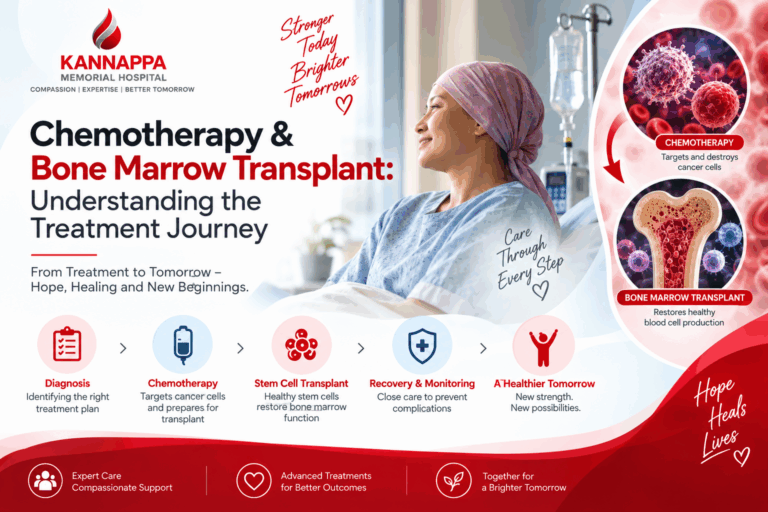
Chronic Myeloid Leukemia (CML) is a type of blood cancer that affects the blood-forming cells in the bone marrow. With advances in targeted medicines, many people with CML can manage the disease effectively for long periods. However, in selected situations, transplantation may be considered when the disease does not respond adequately to available therapies or progresses to an advanced phase.
CML bone marrow transplant in Chennai is also known as hematopoietic stem cell transplantation (HSCT). The procedure replaces diseased blood-forming cells with healthy stem cells, usually obtained from a suitable donor. Kannappa Memorial Hospital provides specialized bone marrow transplant and hematology services in Chennai, including evaluation, transplant procedures, monitoring and post-transplant care.
For patients researching bone marrow transplant for CML, understanding the disease, transplant options, donor matching, procedure, recovery, risks and cost can help prepare them for consultation with a specialist.
What Is Chronic Myeloid Leukemia?
Chronic Myeloid Leukemia is a blood cancer that originates in the bone marrow and causes the production of abnormal myeloid cells. CML is strongly associated with the Philadelphia chromosome and the BCR-ABL1 fusion gene, which promotes uncontrolled growth of leukemia cells.
CML is generally divided into:
- Chronic phase
- Accelerated phase
- Blast phase
Most patients are diagnosed during the chronic phase. Modern targeted medicines called tyrosine kinase inhibitors (TKIs) have significantly changed CML treatment. However, some patients may develop resistance or intolerance to multiple TKIs, or the disease may progress to an advanced phase.
For patients seeking CML treatment in Chennai, a hematologist can evaluate the disease phase, molecular response and previous treatment before recommending the next step.
What Is a Bone Marrow Transplant for CML?
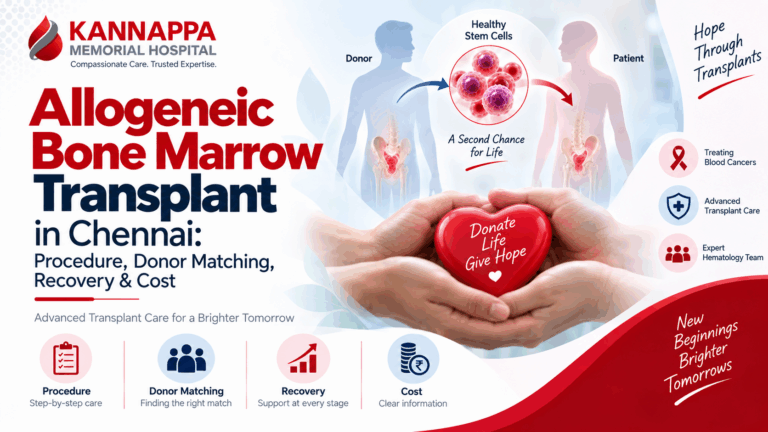
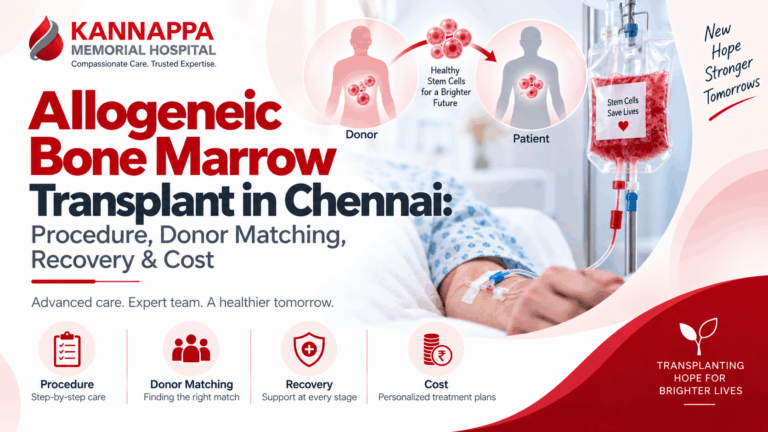
A bone marrow transplant for CML replaces diseased or damaged blood-forming stem cells with healthy hematopoietic stem cells. The transplant approach generally considered for CML is an allogeneic stem cell transplant, where stem cells are obtained from another individual.
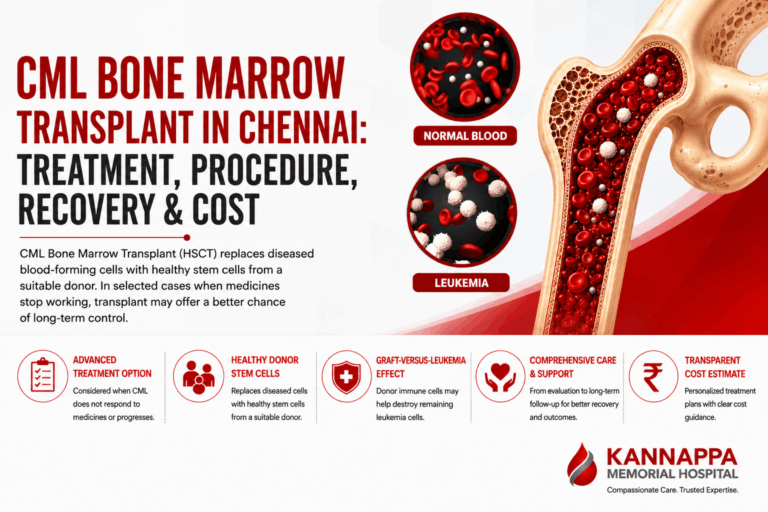
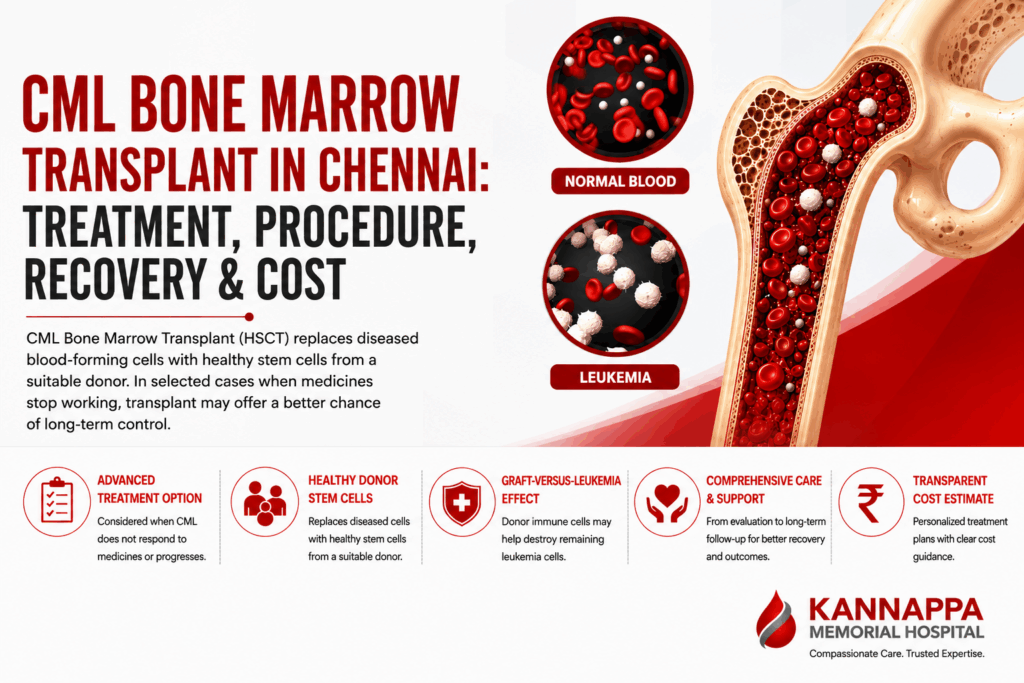
The donor immune system can potentially recognize and destroy remaining leukemia cells. This immune response is called the graft-versus-leukemia (GVL) effect.
However, transplantation is not usually the first treatment for CML because targeted medicines are effective for many patients. The decision depends on disease phase, response to TKI therapy, resistance or intolerance to medicines, overall health and donor availability.
Patients considering a bone marrow transplant hospital in Chennai should discuss all available treatment options with an experienced hematologist and BMT specialist.
When Is Bone Marrow Transplant Considered for CML?
CML bone marrow transplant in Chennai may be considered when standard treatment options are no longer providing adequate disease control.
Situations that may lead to transplant evaluation include:
- Resistance to multiple TKIs
- Intolerance to available TKI therapies
- Progression to accelerated or blast phase
- High-risk disease features
- Relapsed or advanced CML
- Failure to achieve an appropriate treatment response
- Other individual clinical circumstances
Because newer medicines have improved CML management, transplant decisions are highly individualized. A hematologist considers the potential benefits and risks of transplantation compared with other available options.
For people exploring CML treatment in Chennai, early specialist assessment can help identify the most appropriate treatment pathway.
Types of Bone Marrow Transplant for CML
Allogeneic Stem Cell Transplant
An allogeneic transplant uses healthy blood-forming stem cells obtained from a donor. Potential donors can include:
- Matched sibling
- Matched unrelated donor
- Partially matched family donor
- Other suitable donor sources
HLA testing is performed to assess donor-recipient compatibility.
Haploidentical Stem Cell Transplant
A haploidentical transplant uses stem cells from a partially matched family donor. This may provide another donor option when a fully matched donor is unavailable. Suitability depends on disease status, donor characteristics, overall health and the transplant team’s assessment.
Reduced-Intensity Conditioning
Some patients may not be suitable for highly intensive conditioning. In selected cases, reduced-intensity conditioning may be considered according to age, general health, disease characteristics and transplant plan.
How Does a CML Bone Marrow Transplant Work?
An CML bone marrow transplant in Chennai generally involves several stages.
1. Pre-Transplant Evaluation
Before transplantation, a comprehensive medical evaluation is performed. Tests may include:
- Complete blood tests
- Bone marrow examination
- BCR-ABL1 and molecular testing
- Heart evaluation
- Lung-function assessment
- Kidney and liver function tests
- Infection screening
- Imaging when required
- HLA testing
- Donor evaluation
These assessments help determine transplant suitability and identify potential risks.
2. Donor Matching
For an allogeneic transplant, the medical team identifies a suitable donor. HLA compatibility is an important consideration. A matched sibling may be preferred when available, although other donor options can also be evaluated.
3. Conditioning Therapy
Before stem cell infusion, the patient receives conditioning treatment. This may involve chemotherapy, radiation therapy or a combination, depending on the transplant protocol.
The goals include reducing remaining leukemia cells and preparing the body for donor stem-cell engraftment.
4. Stem Cell Infusion
After conditioning, healthy stem cells are infused through an intravenous line or central venous catheter. It is generally not a conventional surgical operation. The stem cells travel through the bloodstream to the bone marrow, where they begin producing new blood cells.
5. Engraftment
Engraftment occurs when the transplanted stem cells begin producing new blood cells. During this stage, blood counts are closely monitored. Blood or platelet transfusions, infection-prevention medicines and other supportive care may be required.
6. Post-Transplant Monitoring
Following transplantation, the team monitors blood-count recovery, infections, graft function, GVHD, organ function, medication effects and CML disease status. Long-term follow-up remains an important part of transplant care.
A specialized BMT hospital in Chennai should provide coordinated care throughout transplantation and recovery.
Recovery After CML Bone Marrow Transplant
Recovery after an CML bone marrow transplant in Chennai varies from person to person. During the early recovery period, blood counts may remain low and the immune system may be weakened, making infection prevention and medical monitoring particularly important.
Post-transplant care may include:
- Regular blood tests
- Molecular monitoring
- Medication management
- Infection prevention
- Nutritional support
- Physical rehabilitation
- Monitoring for GVHD
- Monitoring of CML response
- Long-term follow-up
The recovery period depends on the transplant approach, conditioning regimen, patient’s health, complications and disease status.
Patients receiving CML treatment in Chennai should follow their transplant team’s instructions and attend scheduled follow-up appointments.
Risks and Complications
A bone marrow transplant for CML is an intensive treatment and can involve potential complications, including:
- Infections
- Low blood-cell counts
- Bleeding
- Fatigue
- Nausea and vomiting
- Organ complications
- Graft failure
- Graft-versus-host disease (GVHD)
- CML relapse
- Long-term treatment-related complications
GVHD can occur after allogeneic transplantation when donor immune cells recognize the patient’s tissues as foreign. Risk varies depending on age, donor compatibility, conditioning regimen, disease status and general health.
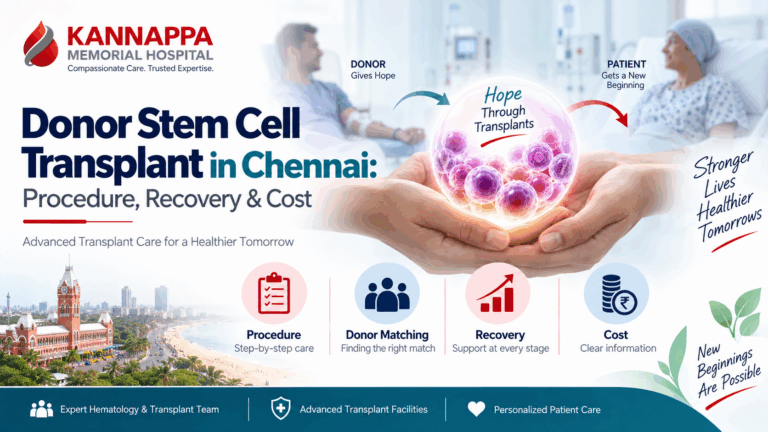
CML Bone Marrow Transplant Cost in Chennai
The CML bone marrow transplant cost in Chennai can vary significantly between patients. Factors that may influence the total expense include:
- Type of transplant
- Pre-transplant investigations
- HLA and donor testing
- Conditioning treatment
- Stem cell collection
- Hospitalisation
- Medicines
- Blood and platelet transfusions
- Infection management
- Treatment of complications
- Follow-up care
There is no single cost applicable to every CML transplant because treatment requirements differ from patient to patient.
Patients should discuss their individual treatment plan and obtain an estimate from the hospital.
Why Choose a BMT Hospital in Chennai?
Choosing the right BMT hospital in Chennai is an important decision. Patients and families may consider:
- Experience of the hematology and transplant team
- Dedicated BMT infrastructure
- Infection-control facilities
- Blood bank and laboratory support
- Critical-care availability
- Donor-matching support
- Monitoring facilities
- Emergency medical support
- Post-transplant follow-up
Bone marrow transplantation requires coordinated care involving hematologists, transplant specialists, nurses, laboratory teams, pharmacists and other healthcare professionals.
CML Bone Marrow Transplant at Kannappa Memorial Hospital
Kannappa Memorial Hospital provides specialized bone marrow transplant and hematology care in Chennai for patients requiring hematopoietic stem cell transplantation.
For patients looking for a bone marrow transplant hospital in Chennai, the hospital provides resources covering transplant evaluation, transplantation, potential complications and post-transplant care. Treatment is individualized according to the CML phase, previous treatment response, molecular disease status, overall health and donor availability.
Patients exploring CML treatment in Chennai can consult the BMT and hematology team to understand whether transplantation may be appropriate.
What Happens After a CML Bone Marrow Transplant?
After CML bone marrow transplant in Chennai, regular monitoring is important. Blood tests and molecular testing, including BCR-ABL1 monitoring, may be used to assess treatment response and monitor for remaining or returning disease.
Follow-up can include:
- Regular blood counts
- Molecular testing
- GVHD monitoring
- Infection surveillance
- Medication review
- Organ-function monitoring
- Assessment of overall recovery
The monitoring schedule is determined by the transplant team according to the patient’s clinical condition.
Conclusion
CML bone marrow transplant in Chennai may be an important treatment option for selected patients when CML becomes resistant or intolerant to available targeted therapies or progresses to an advanced phase.
Unlike some other blood cancers, transplantation is generally not the first-line treatment for most CML patients because targeted therapies have transformed disease management. However, allogeneic stem cell transplantation remains an important option for selected patients.
The transplant journey involves evaluation, donor matching, conditioning, stem cell infusion, engraftment, supportive care and long-term molecular monitoring.
Kannappa Memorial Hospital provides specialized BMT and hematology services in Chennai. Patients who have been advised to consider transplantation should consult a qualified BMT specialist for an individualized assessment.