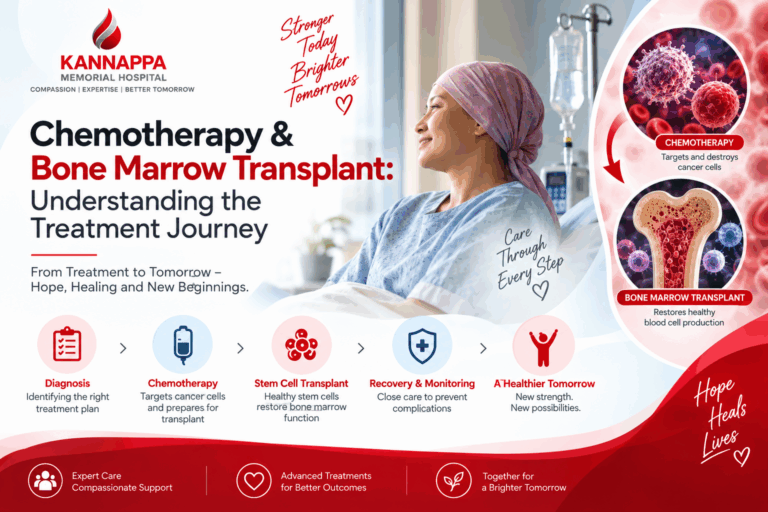
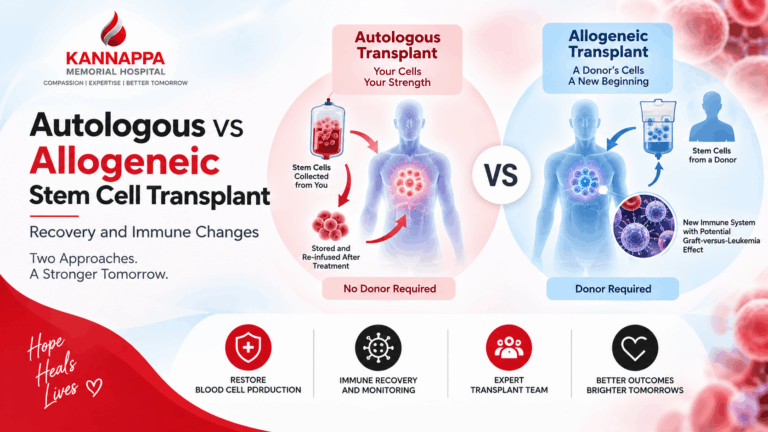
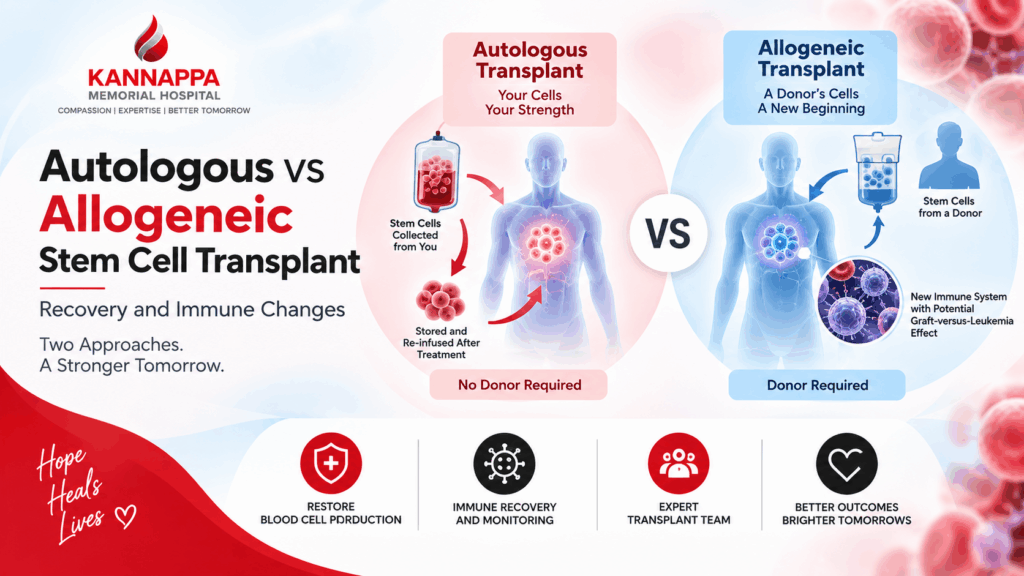
A stem cell transplant, also known as a bone marrow transplant in many clinical settings, can be an important treatment for selected blood cancers, bone marrow disorders, and other serious conditions. While the transplant procedure itself is an important milestone, what happens after transplantation is equally significant.
Following a transplant, the body must restore healthy blood-cell production and rebuild its immune defences. The recovery process can differ considerably depending on whether a patient receives their own previously collected stem cells or stem cells from a donor.
An autologous stem cell transplant uses the patient’s own blood-forming stem cells, whereas an allogeneic stem cell transplant uses stem cells from another person. These approaches have important differences in immune recovery, complications, follow-up, and treatment effects.
Understanding autologous vs allogeneic transplant can help patients and families have more informed discussions with their transplant team.
What Is a Stem Cell Transplant?
Blood-forming stem cells are specialized cells that can develop into red blood cells, white blood cells, and platelets. They are primarily found in the bone marrow and are essential for maintaining healthy blood-cell production.
A stem cell transplant involves giving healthy blood-forming stem cells to a patient after intensive treatment. Depending on the disease and treatment plan, the stem cells may come from the patient or a suitable donor.
Stem cell transplantation may be considered for selected patients with conditions such as:
- Certain leukemias
- Lymphomas
- Multiple myeloma
- Myelodysplastic syndromes
- Other blood and bone marrow disorders
The decision to recommend transplantation depends on the disease, previous treatment response, age, overall health, relapse risk, and availability of an appropriate donor.
Patients seeking specialized evaluation can explore Hematology Treatment at Kannappa Memorial Hospital.
What Is an Autologous Stem Cell Transplant?
An autologous stem cell transplant uses the patient’s own blood-forming stem cells.
The patient’s stem cells are collected before intensive chemotherapy or conditioning treatment. They are then processed and stored until they are needed.
The general process involves:
- Collecting the patient’s stem cells
- Processing and storing the collected cells
- Giving high-dose chemotherapy or conditioning treatment
- Infusing the stored stem cells back into the patient
- Waiting for the cells to engraft
- Monitoring blood counts and recovery
The purpose is to allow intensive treatment while providing the patient’s previously collected stem cells to help restore blood-cell production.
In an autologous vs allogeneic transplant comparison, the most obvious difference is that an autologous transplant does not require a donor.
What Happens After an Autologous Transplant?
Following high-dose treatment, the body’s blood-cell production is temporarily suppressed. This can result in low levels of white blood cells, red blood cells, and platelets.
After the stored stem cells are infused, they travel to the bone marrow and begin producing new blood cells.
This process is called engraftment.
As engraftment progresses:
- White blood cell counts begin to recover
- Platelet production gradually improves
- Red blood cell production resumes
- The need for transfusions may decrease
- The immune system gradually begins rebuilding
Because the patient’s own stem cells are used, there is no donor immune system involved.
Immune Recovery After Autologous Transplant
High-dose chemotherapy can significantly weaken the immune system. After an autologous transplant, immune recovery occurs as the blood-forming stem cells produce new immune cells.
Recovery does not happen immediately. Different components of the immune system recover at different rates, meaning patients may remain vulnerable to infections for some time.
An important difference in autologous vs allogeneic transplant is that an autologous transplant does not introduce donor immune cells into the body.
Therefore, graft-versus-host disease (GVHD) is not an expected complication of an autologous transplant.
Recovery primarily focuses on:
- Restoring blood-cell production
- Rebuilding immunity
- Managing treatment-related side effects
- Monitoring disease response
- Monitoring for disease recurrence
What Is an Allogeneic Stem Cell Transplant?
An allogeneic stem cell transplant uses blood-forming stem cells from another person.
The donor may be:
- A suitable family member
- An unrelated donor
- Another appropriately matched donor
Before transplantation, the patient generally receives conditioning therapy. Depending on the disease and transplant protocol, conditioning may involve chemotherapy, radiation therapy, or a combination.
The donor stem cells are then infused into the patient’s bloodstream. The goal is for the cells to engraft in the bone marrow and establish new blood-cell production.
In an autologous vs allogeneic transplant, the involvement of donor stem cells is one of the fundamental differences.
What Happens After an Allogeneic Transplant?
After successful engraftment, donor-derived stem cells begin producing blood cells.
Over time, a significant proportion of the patient’s blood cells may become derived from the donor’s stem cells. This creates an important biological difference compared with autologous transplantation.
The donor stem cells can also produce donor-derived immune cells.
This donor immune system may have both beneficial and potentially harmful effects.
Patients may therefore require more extensive immune monitoring following an allogeneic transplant.
Development of a New Immune System
One of the important features of an allogeneic transplant is the gradual development of a donor-derived immune system.
Donor stem cells produce new white blood cells and other blood-cell types as engraftment progresses.
However, achieving engraftment does not mean that complete immune recovery has occurred.
Immune recovery can take considerably longer. During this period, patients may remain vulnerable to infections and may require medicines to prevent or treat infections.
The transplant team also monitors for complications associated with donor immune-system activity.
Graft-Versus-Leukemia and Graft-Versus-Tumor Effects
A major potential benefit of an allogeneic transplant is the activity of donor immune cells against abnormal cells.
Donor immune cells can sometimes recognize remaining abnormal cells in the patient’s body and attack them. This is known as the graft-versus-leukemia (GVL) or graft-versus-tumor effect.
This immune-mediated effect can help control certain blood cancers and is an important reason allogeneic transplantation may benefit selected patients.
However, donor immune activity needs careful monitoring because the same immune cells may recognize healthy tissues as foreign.
This can result in graft-versus-host disease.
What Is Graft-Versus-Host Disease?
Graft-versus-host disease, commonly called GVHD, is a potential complication of allogeneic stem cell transplantation.
GVHD occurs when donor immune cells recognize tissues in the recipient’s body as foreign and mount an immune response.
GVHD can affect different parts of the body, including:
- Skin
- Liver
- Gastrointestinal tract
- Mouth
- Eyes
- Other tissues and organs
Not every patient develops GVHD, and severity can vary.
Doctors use preventive medicines and regular monitoring to reduce risks and identify complications early.
Patients requiring broader haematology support can also explore Hemostasis and Thrombosis Care at Kannappa Memorial Hospital.
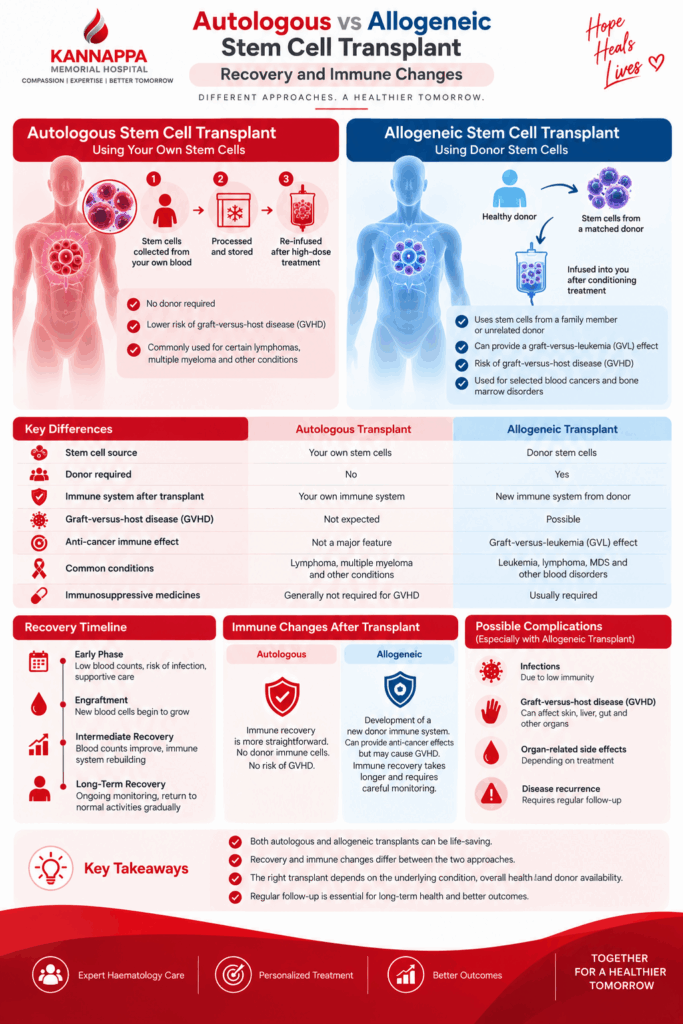
Autologous vs Allogeneic Transplant: Key Differences
Understanding the differences between the two approaches can help patients understand why transplant recommendations vary.
| Feature | Autologous Transplant | Allogeneic Transplant |
|---|---|---|
| Stem cell source | Patient’s own cells | Donor cells |
| Donor required | No | Yes |
| Blood-cell recovery | Patient’s collected cells | Donor-derived cells |
| Donor immune system | No | Yes |
| GVHD risk | Not expected | Possible |
| Immune-mediated anti-cancer effect | Not a major feature | Can occur |
| Immunosuppressive medicines | Generally not required for GVHD prevention | Commonly required |
| Immune recovery | Generally more straightforward | Usually more complex and prolonged |
The appropriate transplant depends on the patient’s diagnosis, treatment history, disease status, overall health, and other clinical considerations.
Stem Cell Transplant Recovery Timeline
Recovery varies considerably between individuals. However, it can generally be considered in several stages.
Early Recovery
Immediately after conditioning and stem cell infusion, blood-cell counts may become very low.
Patients may require:
- Blood transfusions
- Platelet transfusions
- Infection prevention
- Medicines when clinically indicated
- Nutritional support
- Close blood-count monitoring
The immune system is particularly vulnerable during this period.
Engraftment
Engraftment is an important milestone in autologous vs allogeneic transplant recovery.
During engraftment, transplanted stem cells become established in the bone marrow and begin producing new blood cells.
White blood cell recovery is particularly important because it improves the body’s ability to fight infections.
Platelet and red blood cell recovery may occur at different rates.
Intermediate Recovery
After initial engraftment, blood counts generally continue to improve. However, immune recovery is still ongoing.
Patients may need continued:
- Medical monitoring
- Infection precautions
- Medicines
- Blood tests
- Follow-up appointments
Long-Term Recovery
Long-term recovery depends on the transplant type and underlying disease.
After an autologous transplant, immune recovery is generally more straightforward, although it can still take time.
After an allogeneic transplant, immune recovery may continue for many months or longer. Patients may require ongoing monitoring for infections, GVHD, medication-related complications, and disease recurrence.
Why Is Immune Recovery Different?
The major difference comes from the source of the stem cells.
In an autologous transplant, the patient’s own stem cells are collected and returned after intensive treatment. There is no donor immune system to establish itself in the body.
In an allogeneic transplant, donor stem cells produce new blood and immune cells. This creates the possibility of beneficial immune effects against the disease as well as complications such as GVHD.
Therefore, allogeneic transplant recipients generally require more extensive immune monitoring and may need immunosuppressive medication.
This is one of the most important aspects of autologous vs allogeneic transplant recovery.
Why Are Follow-Up Appointments Important?
Recovery does not end when a patient leaves the hospital.
Regular follow-up allows the transplant team to monitor:
- Blood-cell counts
- Immune recovery
- Infection risk
- Medication effects
- Disease response
- Disease recurrence
- GVHD after allogeneic transplantation
- Organ function
- Long-term complications
The frequency of follow-up depends on the transplant type, underlying disease, treatment protocol, and individual recovery.
How Can Patients Support Recovery?
Patients should follow the personalized instructions provided by their transplant team.
Depending on their stage of recovery, recommendations may include:
- Taking prescribed medicines as directed
- Following infection-prevention precautions
- Maintaining appropriate nutrition
- Staying adequately hydrated
- Gradually increasing physical activity as advised
- Attending follow-up appointments
- Reporting fever or concerning symptoms promptly
- Avoiding exposure to contagious infections when advised
Patients should not begin supplements, medicines, or complementary treatments without discussing them with their medical team.
When Should Patients Seek Medical Attention?
After transplantation, patients should follow the emergency instructions provided by their transplant team.
Symptoms that may require prompt medical assessment include:
- Fever
- Chills
- Shortness of breath
- Persistent vomiting or diarrhoea
- New skin rash
- Unusual bleeding
- Severe weakness
- Confusion
- Sudden changes in vision
- Other rapidly developing or concerning symptoms
Allogeneic transplant recipients should also report symptoms that may indicate GVHD or infection.
Why Choose the Right Transplant Team?
Stem cell transplantation requires specialized expertise because treatment does not end with the stem cell infusion.
Patients require coordinated care involving:
- Pre-transplant evaluation
- Stem cell collection or donor selection
- Conditioning treatment
- Stem cell transplantation
- Engraftment monitoring
- Infection management
- Immune monitoring
- Long-term follow-up
A multidisciplinary haematology and transplant team can coordinate these different aspects of treatment.
Patients and families can explore Haematology Services at Kannappa Memorial Hospital to learn more about blood and bone marrow disorder care.
Conclusion
Both autologous and allogeneic stem cell transplantation aim to restore healthy blood-cell production, but their effects on the immune system are different.
An autologous transplant uses the patient’s own previously collected stem cells. Recovery focuses on restoring blood-cell production, rebuilding immunity, managing treatment-related effects, and monitoring disease response.
An allogeneic transplant uses stem cells from a donor. These cells establish donor-derived blood formation and gradually contribute to a new immune system. This may provide an important graft-versus-leukemia or graft-versus-tumor effect, but it can also lead to complications such as GVHD.
Understanding autologous vs allogeneic transplant can help patients and families understand why different transplant approaches may be recommended.
For professional guidance regarding stem cell transplantation, blood cancers, and bone marrow disorders, patients can consult the specialists at Kannappa Memorial Hospital.