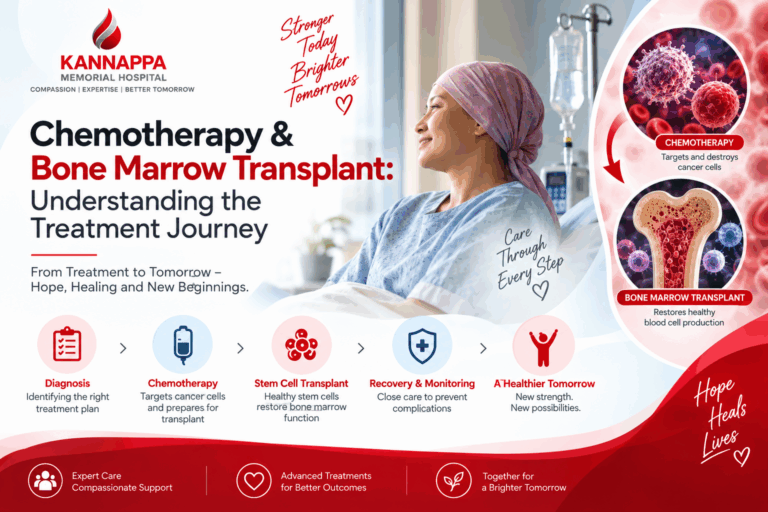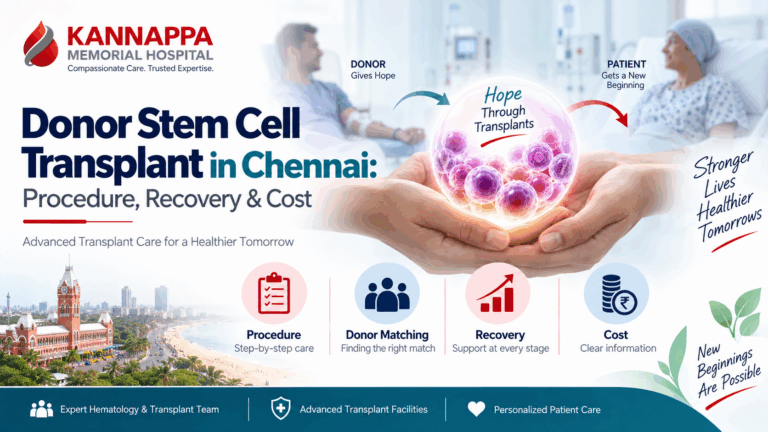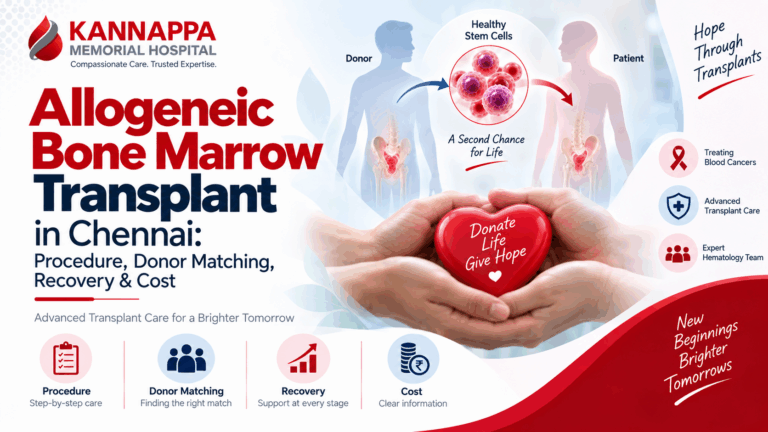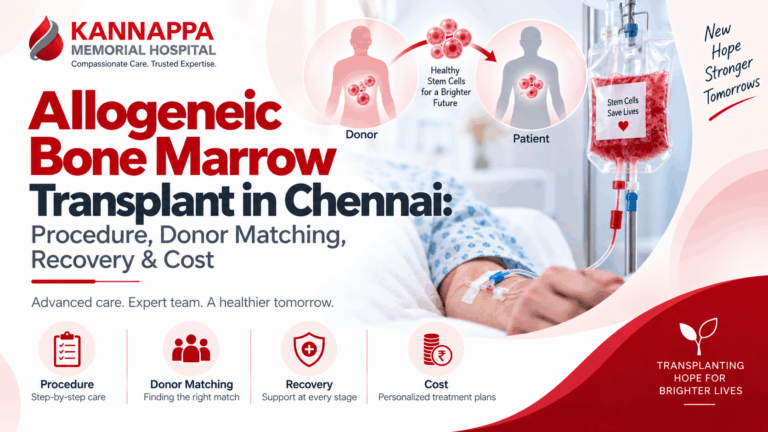
Acute Myeloid Leukemia (AML) is a fast-growing cancer of the blood and bone marrow that affects the production of normal blood cells. Because AML can progress quickly, timely diagnosis and appropriate treatment are important. Depending on age, overall health, genetic characteristics, disease risk and response to initial treatment, transplantation may be considered for selected patients.
AML bone marrow transplant in Chennai is also known as hematopoietic stem cell transplantation (HSCT). It involves replacing diseased or damaged blood-forming cells with healthy stem cells. For selected patients, particularly those with higher-risk AML or certain disease characteristics, an allogeneic stem cell transplant may be recommended.
Kannappa Memorial Hospital provides specialized bone marrow transplant and hematology care in Chennai, supporting patients through evaluation, transplantation, monitoring and post-transplant care.
What Is Acute Myeloid Leukemia?
Acute Myeloid Leukemia is a type of blood cancer that begins in the bone marrow and affects immature myeloid cells. These abnormal cells can multiply rapidly and interfere with the production of healthy blood cells.
Common symptoms may include:
- Persistent tiredness or weakness
- Frequent or prolonged infections
- Fever
- Easy bruising
- Unusual bleeding
- Pale skin
- Shortness of breath
- Unexplained weight loss
These symptoms can occur with several other conditions and do not by themselves confirm AML. Diagnosis generally involves blood tests, bone marrow examination and additional laboratory, molecular or genetic investigations.
Understanding the type and characteristics of AML helps doctors develop an appropriate treatment strategy. AML treatment in Chennai may involve chemotherapy, targeted therapies or transplantation depending on individual disease characteristics.
What Is a Bone Marrow Transplant for AML?
A bone marrow transplant for AML replaces diseased or damaged blood-forming stem cells with healthy hematopoietic stem cells. In selected patients, an allogeneic transplant uses healthy stem cells obtained from another person.
The donor immune system may provide an additional anti-leukemia effect known as the graft-versus-leukemia (GVL) effect. However, transplantation is not required for every AML patient.
The decision to proceed with a bone marrow transplant for AML depends on disease risk, genetic findings, response to treatment, remission status, relapse risk, age, general health and donor availability.
Patients considering a bone marrow transplant hospital in Chennai should discuss their individual diagnosis and treatment options with a qualified hematologist or transplant specialist.
When Is Bone Marrow Transplant Considered for AML?
The decision to recommend transplantation is individualized. A transplant specialist considers whether the potential benefits of transplantation outweigh its possible risks.
Important factors may include:
- AML subtype
- Cytogenetic and molecular findings
- Disease-risk classification
- Response to initial chemotherapy
- Minimal residual disease (MRD), when applicable
- Risk of relapse
- Previous treatment
- Age
- General health and organ function
- Availability of a suitable donor
Some patients may undergo transplantation after achieving remission, while transplantation may also be considered in selected patients with relapsed or refractory AML.
For patients seeking AML treatment in Chennai, early consultation can help determine whether transplantation should be considered as part of the treatment strategy.
Types of Bone Marrow Transplant for AML
Allogeneic Stem Cell Transplant
An allogeneic transplant uses healthy stem cells from another individual. Possible donor sources include:
- Matched sibling donors
- Matched unrelated donors
- Partially matched family donors
- Other appropriate donor sources
HLA testing is used to assess donor and recipient compatibility.
Haploidentical Transplant
A haploidentical transplant uses a partially matched family donor. This can expand donor options when a fully matched donor is not available. Whether it is appropriate depends on the patient’s disease, donor availability, clinical condition and transplant protocol.
Reduced-Intensity Conditioning
Some patients may not be suitable for highly intensive conditioning because of age or other health considerations. In selected cases, reduced-intensity conditioning may be considered.
Autologous Transplant
An autologous transplant uses the patient’s own stem cells. It is commonly used for certain other blood cancers. It is generally not the standard transplant approach for AML because the patient’s own stem cells may contain or be affected by the underlying disease.
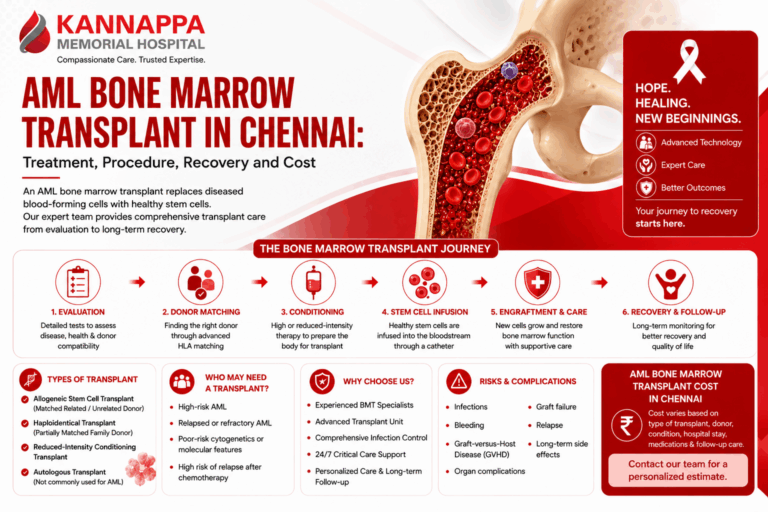
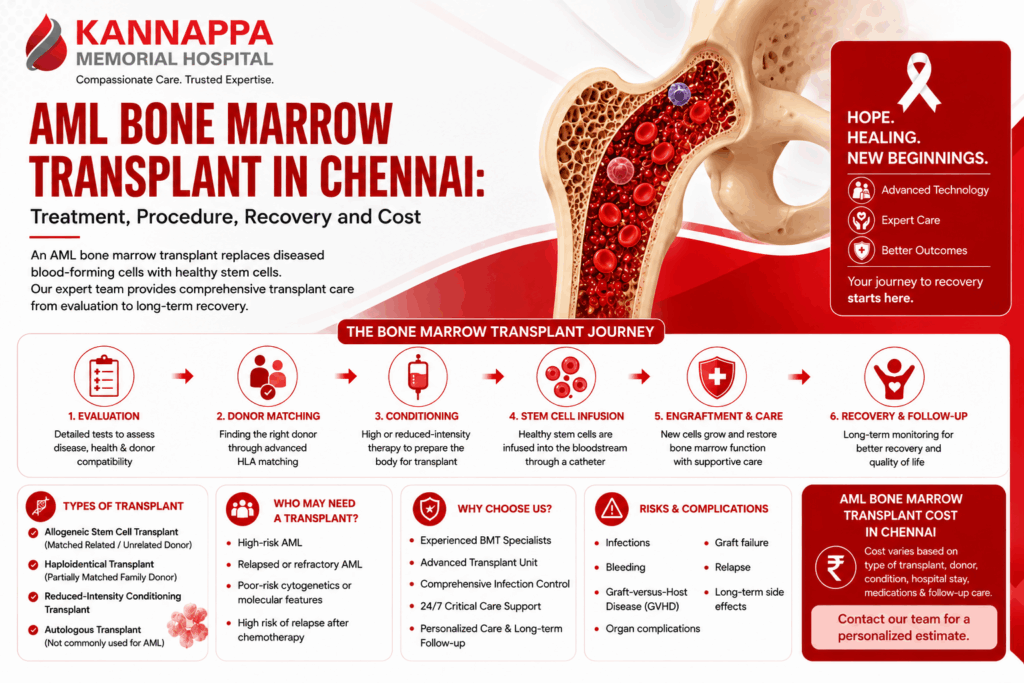
How Does an AML Bone Marrow Transplant Work?
An AML bone marrow transplant in Chennai generally involves several important stages.
Step 1: Pre-Transplant Evaluation
Before transplantation, the patient undergoes a detailed medical evaluation. This may include blood tests, bone marrow examination, molecular and genetic testing, heart evaluation, lung-function assessment, kidney and liver tests, infection screening, imaging and donor compatibility testing.
The purpose is to assess suitability for transplantation and identify potential risks.
Step 2: Donor Matching
For an allogeneic transplant, doctors identify a suitable donor. HLA matching plays an important role in donor selection. A matched sibling may be considered when available, while matched unrelated or partially matched family donors may also be options.
Step 3: Conditioning Therapy
Before receiving donor stem cells, the patient receives conditioning treatment. This may involve chemotherapy, radiation therapy or a combination depending on the transplant protocol.
Conditioning is designed to reduce leukemia cells, suppress the immune system and prepare the bone marrow environment for donor-cell engraftment.
Step 4: Stem Cell Infusion
After conditioning, healthy stem cells are infused into the patient’s bloodstream through an intravenous line or central venous catheter. It is generally not performed as conventional surgery.
Step 5: Engraftment
Engraftment occurs when transplanted stem cells begin producing new blood cells. During this period, blood counts are closely monitored. Patients may require transfusions, infection-prevention medicines, nutritional support and other supportive care.
Step 6: Monitoring
After transplantation, doctors closely monitor blood-cell recovery, infections, graft-versus-host disease (GVHD), organ function, graft function, medication effects and AML disease status.
A specialized BMT hospital in Chennai should have appropriate transplant infrastructure, infection-control facilities, laboratory support and post-transplant monitoring.
Recovery After AML Bone Marrow Transplant
Recovery after an AML bone marrow transplant in Chennai varies between patients. During the early recovery period, the immune system is weakened and blood counts may be low. This can increase the risk of infections and bleeding.
Recovery may include:
- Regular blood tests
- Medication management
- Infection prevention
- Nutritional guidance
- Physical rehabilitation
- Monitoring for GVHD
- Disease monitoring
- Psychological and emotional support
Regular follow-up remains important after discharge because some complications can develop later.
Patients undergoing AML treatment in Chennai should follow their transplant team’s instructions regarding medicines, infection prevention, nutrition and follow-up appointments.
Bone marrow transplantation is an intensive treatment and carries potential risks. Possible complications include:
- Infections
- Low blood-cell counts
- Bleeding
- Fatigue
- Nausea and vomiting
- Organ complications
- Graft failure
- Graft-versus-host disease
- Disease relapse
- Long-term treatment-related complications
GVHD is particularly associated with allogeneic transplantation. It occurs when donor immune cells recognize the patient’s tissues as foreign and attack them.
The likelihood and severity of complications vary according to donor compatibility, transplant type, conditioning regimen, age, general health and disease status.
A bone marrow transplant for AML therefore requires careful evaluation and close monitoring by an experienced transplant team.
AML Bone Marrow Transplant Cost in Chennai
The AML bone marrow transplant cost in Chennai can vary considerably depending on the patient’s individual treatment requirements.
Factors that may affect the overall cost include:
- Type of transplant
- Pre-transplant investigations
- Donor evaluation
- HLA testing
- Conditioning therapy
- Stem cell collection
- Hospitalisation
- Medicines
- Blood and platelet transfusions
- Infection treatment
- Management of complications
- Follow-up care
Because each patient has a different treatment plan, there is no single cost applicable to everyone. Patients should discuss their individual requirements and request an estimated treatment cost from their hospital.
Patients comparing a bone marrow transplant hospital in Chennai should consider both medical expertise and the availability of comprehensive transplant and supportive-care services.
Choosing a BMT Hospital in Chennai
Choosing the right BMT hospital in Chennai is an important decision for patients and families. Consider factors such as:
- Experience of the hematology and transplant team
- Dedicated BMT infrastructure
- Infection-control facilities
- Blood bank and laboratory support
- Critical-care availability
- Donor-matching support
- Post-transplant monitoring
- Emergency medical support
- Long-term follow-up services
A BMT hospital in Chennai should provide coordinated care throughout evaluation, transplantation, recovery and follow-up.
AML Bone Marrow Transplant at Kannappa Memorial Hospital
Kannappa Memorial Hospital provides specialized bone marrow transplant services in Chennai for patients with blood cancers and other conditions requiring hematopoietic stem cell transplantation.
The hospital’s BMT services cover transplant evaluation, transplant procedures, different transplantation approaches, risks and complications, and post-transplant care.
For patients exploring AML treatment in Chennai, consultation with a qualified BMT specialist can help determine whether transplantation is appropriate based on AML subtype, genetic and molecular characteristics, disease status, previous treatment, donor availability, age and overall health.
Patients looking for a bone marrow transplant hospital in Chennai can consult the Kannappa Memorial Hospital BMT team for individualized assessment and treatment planning.
Conclusion
AML bone marrow transplant in Chennai may be an important treatment option for selected patients with acute myeloid leukemia. The decision depends on disease characteristics, treatment response, relapse risk, patient health and donor availability.
The process involves detailed evaluation, donor matching, conditioning therapy, stem cell infusion, engraftment, supportive care and long-term monitoring. Since transplantation carries significant risks, treatment decisions should be made with an experienced hematology and BMT team.
Kannappa Memorial Hospital provides specialized BMT and hematology care in Chennai, with resources for transplant evaluation, procedures, complications and post-transplant care.
If you or your family member has been diagnosed with AML and advised to consider transplantation, consult a qualified BMT specialist to understand the available treatment options.