
Cancer is a serious health problem that affects millions of people around the world.Traditional treatments such as surgery, chemotherapy, and radiotherapy have improved survival but often damage healthy cells and vary in effectiveness. Recently, Immunotherapy for Cancer in India has emerged as a revolutionary approach that enables the immune system to target cancer cells more precisely. It strengthens the body’s natural defenses to detect and destroy malignant cells.
Immunotherapy for cancer in India is transforming oncology care and offering hope for advanced cases. Specialized centers like Kannappa Memorial Hospital are making treatment more accessible. Immunotherapy for Cancer in India is advancing modern cancer treatment options today globally.
What is Immunotherapy?
Immunotherapy is a type of cancer treatment that enhances or modifies the body’s immune system to fight cancer. Instead of directly targeting cancer cells like chemotherapy or radiation, immunotherapy strengthens the immune response.
Key Differences:
- Chemotherapy: Uses drugs to kill rapidly dividing cells (including healthy cells)
- Radiotherapy: Uses radiation to destroy cancer cells locally
- Immunotherapy: Boosts the immune system to identify and attack cancer cells naturally
The basic concept of immunotherapy is simple yet powerful: enable the immune system to recognize cancer as a threat and respond effectively.
How Immunotherapy Works
Cancer cells often evade immune detection by disguising themselves or suppressing immune responses. Immunotherapy works in several ways:
- Boosting Immune Response: Activates immune cells to attack cancer more aggressively
- Enhancing Recognition: Helps immune cells identify cancer-specific markers
- Overcoming Immune Evasion: Blocks signals that cancer cells use to hide
This multi-dimensional approach makes immunotherapy highly effective, particularly in cancers that do not respond well to conventional treatments.
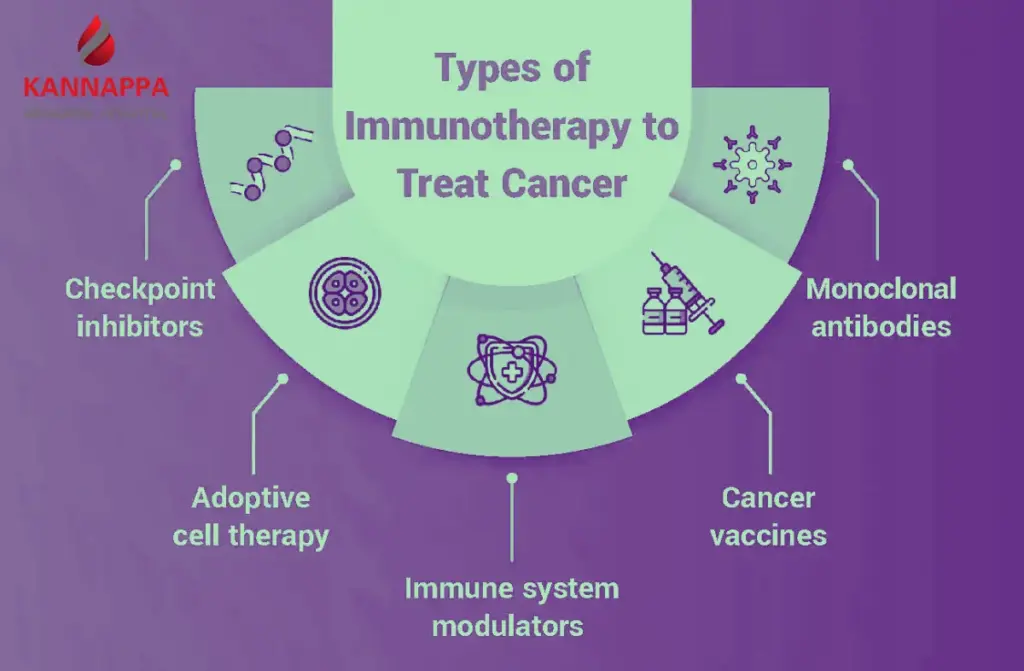
Types of Immunotherapy
There are several types of immunotherapy used in clinical practice:
- Immune Checkpoint Inhibitors: These drugs block proteins that prevent immune cells from attacking cancer, allowing the immune system to mount a stronger response against tumor cells.
- Monoclonal Antibodies:These are laboratory-made antibodies designed to specifically target proteins on cancer cells, helping the immune system recognize and destroy them.
- CAR T-Cell Therapy: A highly advanced treatment in which a patient’s T-cells are collected, genetically modified to better recognize cancer cells, and then infused back into the body to attack the cancer.
- Cancer Vaccines: These vaccines stimulate the immune system to recognize and target cancer cells more effectively.
- Cytokine Therapy: This approach uses immune-signaling proteins such as interferons and interleukins to boost the activity of immune cells.
- Oncolytic Virus Therapy:This therapy uses genetically modified viruses that selectively infect and destroy cancer cells while stimulating an immune response.
Cancers Treated with Immunotherapy
Immunotherapy has shown promising results in treating various cancers, including:
- Lung cancer: Cancer that starts in the lungs, often caused by smoking or pollution.
- Breast cancer: Cancer that begins in breast tissue, usually in milk ducts or glands.
- Melanoma: A serious skin cancer that starts in pigment-producing cells (melanocytes).
- Blood cancers (leukemia and lymphoma): Cancers that affect blood, bone marrow, or lymph nodes.
- Colorectal cancer: It is a type of cancer that starts in the colon or rectum, which are parts of the large intestine.
- Liver cancer: Cancer that begins in the liver, often linked to hepatitis or cirrhosis.
- Stomach cancer: Cancer that develops in the stomach lining.
- Head and neck cancers: Cancers that occur in the mouth, throat, nose, or voice box.
The availability of Immunotherapy for Cancer in India has expanded treatment options for patients across these cancer types.
When Is Immunotherapy Recommended?
Immunotherapy is not suitable for all patients, but it may be recommended in the following situations:
- Advanced or metastatic cancers
- Recurrent cancer after initial treatment
- When standard treatments such as chemotherapy or radiation are not effective
- When specific biomarkers are present, such as PD-L1 expression or MSI (microsatellite instability)
Oncologists carefully assess each patient’s condition, cancer type, and test results before recommending immunotherapy.
Diagnosis & Pre-Treatment Evaluation
Before starting immunotherapy, a comprehensive evaluation is required:
- Blood Tests: To assess overall health and organ function
- Imaging: CT scans, MRI, or PET scans to determine cancer stage
- Biomarker Testing: Identifies eligibility for targeted immunotherapy
- Patient Assessment: Includes medical history and physical condition
Accurate diagnosis ensures that immunotherapy is both safe and effective.
How Immunotherapy is Administered
Immunotherapy can be delivered in different ways depending on the treatment type:
- Intravenous (IV) Infusion: Most common method
- Injections: Administered under the skin or into muscles
- Oral Medications: Less common but available in certain cases
Treatment is usually given in cycles, typically every 2–4 weeks, and often as a daycare procedure, allowing patients to return home the same day.
Benefits of Immunotherapy
Immunotherapy offers several advantages over traditional treatments:
- Targeted Approach: Focuses on cancer cells with minimal harm to healthy tissue
- Improved Survival Rates: Especially in advanced cancers
- Long-Term Control: Some patients experience durable remission
- Better Quality of Life: Fewer severe side effects compared to chemotherapy
These benefits make Immunotherapy for Cancer in India a preferred option for many patients.
Side Effects of Immunotherapy
While generally well-tolerated, immunotherapy can cause side effects due to increased immune activity:
- Fatigue and fever: You may feel very tired and sometimes have a mild or high body temperature.
- Skin rashes and itching: Redness, irritation, or itching can appear on the skin.
- Diarrhea and inflammation: You may have loose motions and swelling or irritation in the body, especially in the gut.
- Lung, liver, or intestinal issues: In rare cases, these organs can get inflamed and may not work properly for a short time.
- Immune-related adverse effects: These are side effects that happen because the immune system becomes too active and may start affecting healthy tissues.
Most side effects can be effectively managed with prompt medical care and appropriate intervention.
What to Expect During Treatment
Patients undergoing immunotherapy should be prepared for the following:
- Treatment is given in several sessions over a period of weeks or months.
- Regular monitoring and follow-up visits with oncologists
- A gradual response to treatment rather than immediate improvement
Consistency in attending sessions and ongoing follow-up care are essential for achieving the best possible treatment outcomes.
Preparation for Immunotherapy
Proper preparation improves treatment effectiveness:
- Follow medical instructions carefully: Take medicines and follow the doctor’s advice exactly as told.
- Maintain good nutrition and hydration: Eat healthy food and drink enough water to stay strong.
- Plan hospital visits in advance: Schedule check-ups and treatments properly so there are no delays.
- Arrange for emotional and family support: Stay close to family and friends for mental strength and encouragement.
Being well-prepared helps patients cope better during treatment.
Tracking Progress
Monitoring progress is essential during immunotherapy:
- Regular clinical check-ups: Visiting the doctor regularly to monitor your health.
- Imaging scans to evaluate tumor response: Using scans (like CT or MRI) to see if the tumor is shrinking or growing.
- Blood tests to assess immune activity: Checking blood to understand how the immune system is working.
- Symptom tracking: Noting down any changes in how you feel, such as pain, fever, or fatigue.
Doctors adjust treatment plans based on these results.
Common Immunotherapy Drugs
Some widely used immunotherapy drugs include:
- Pembrolizumab: A medicine that helps the immune system find and attack cancer cells.
- Nivolumab: An immunotherapy drug that boosts the body’s defense system to fight cancer.
- Ipilimumab: A treatment that activates immune cells so they can better destroy cancer cells.
- Atezolizumab: A drug that helps the immune system recognize and block cancer growth signals.
Additionally, CAR-T therapies are gaining popularity for treating certain blood cancers.
Cost of Immunotherapy for Cancer in India
The cost of immunotherapy varies depending on several factors:
- Type of therapy: The cost depends on the kind of immunotherapy used. Some treatments are basic, while others like advanced cell therapies are more expensive.
- Duration of treatment: Longer treatment means higher cost because immunotherapy is given over many weeks or months.
- Hospital infrastructure: Well-equipped hospitals with advanced technology and specialist doctors may charge more, but they provide better care.
- Geographic location: Treatment cost changes based on the city or region. Big cities are usually more expensive than smaller towns.
In India, immunotherapy is becoming more accessible, with leading hospitals offering cost-effective treatment options compared to global standards.
Why Choose a Specialized Cancer Center
Choosing the right hospital plays an important role in the success of cancer treatment, especially for advanced therapies like immunotherapy.
Specialized centers such as Kannappa Memorial Hospital provide comprehensive cancer care with a focus on accuracy, safety, and better treatment outcomes.
- Advanced diagnostic and treatment technologies: Help in accurate cancer detection and effective treatment planning.
- Experienced oncologists and specialists: Ensure expert guidance throughout the treatment journey.
- Multidisciplinary cancer care: A team of different specialists work together to design the best treatment approach.
- Personalized treatment plans: Treatment is tailored based on each patient’s condition, cancer type, and overall health.
These factors ensure that patients receive high-quality care that follows modern medical standards and improves the effectiveness of treatments like Immunotherapy for Cancer in India.
Prognosis & Effectiveness
The effectiveness of immunotherapy depends on multiple factors:
- Type and stage of cancer: The specific kind of cancer and how far it has spread in the body.
- Presence of biomarkers: Special biological signs in the body that help doctors choose the best treatment and predict response.
- Patient’s overall health: The person’s general health condition, including strength, immunity, age, and other illnesses.
In many cases, immunotherapy offers long-term disease control rather than a complete cure. However, ongoing advancements continue to improve outcomes.
Conclusion
Immunotherapy represents a major breakthrough in cancer treatment, offering new hope to patients worldwide. Its ability to harness the body’s natural defense system makes it a powerful and innovative approach in oncology.With the growing availability of Immunotherapy for Cancer in India, patients now have access to advanced, personalized treatments closer to home.
Trusted healthcare providers like Kannappa Memorial Hospital are playing a vital role in delivering cutting-edge cancer care.As research continues to evolve, immunotherapy is expected to become even more effective, further strengthening its role in modern cancer treatment and improving patient outcomes.