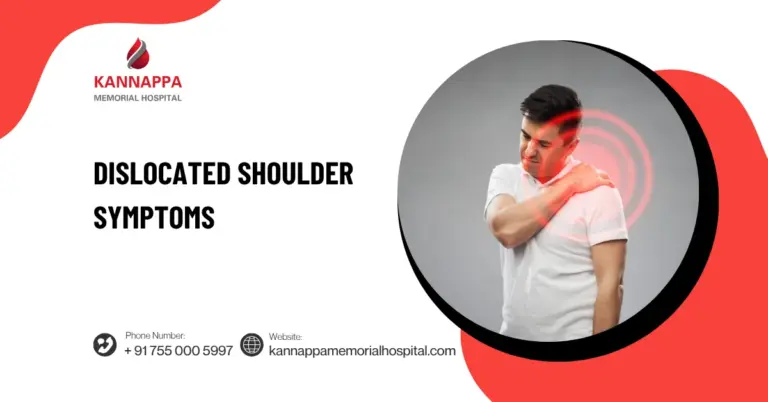
The shoulder is one of the most remarkable joints in the human body. Its wide range of motion allows you to perform everyday activities with ease—from reaching for a shelf and carrying groceries to playing sports and enjoying hobbies. However, this incredible flexibility comes at a cost. Because the shoulder joint is highly mobile, it is also the joint most likely to become dislocated.
A dislocated shoulder is more than just a painful injury. It can happen in an instant during a fall, sporting event, road accident, or even a simple misstep, leaving you unable to move your arm and worried about what comes next. While some people immediately recognize that something is seriously wrong, others mistake the injury for a muscle strain or sprain, delaying the treatment they need.
Recognizing the symptoms of a dislocated shoulder early is essential. Prompt medical care not only relieves pain but also reduces the risk of complications such as nerve injuries, recurrent dislocations, joint instability, and long-term damage to the shoulder.
In this comprehensive guide, we’ll explain everything you need to know about dislocated shoulder symptoms, why they occur, how doctors diagnose the injury, available treatment options, and what you can expect during recovery.
Did You Know?
A first-time shoulder dislocation in younger adults has a higher chance of recurring because the supporting ligaments may become permanently stretched. Completing rehabilitation significantly reduces the risk of future instability.
What is a Dislocated Shoulder?
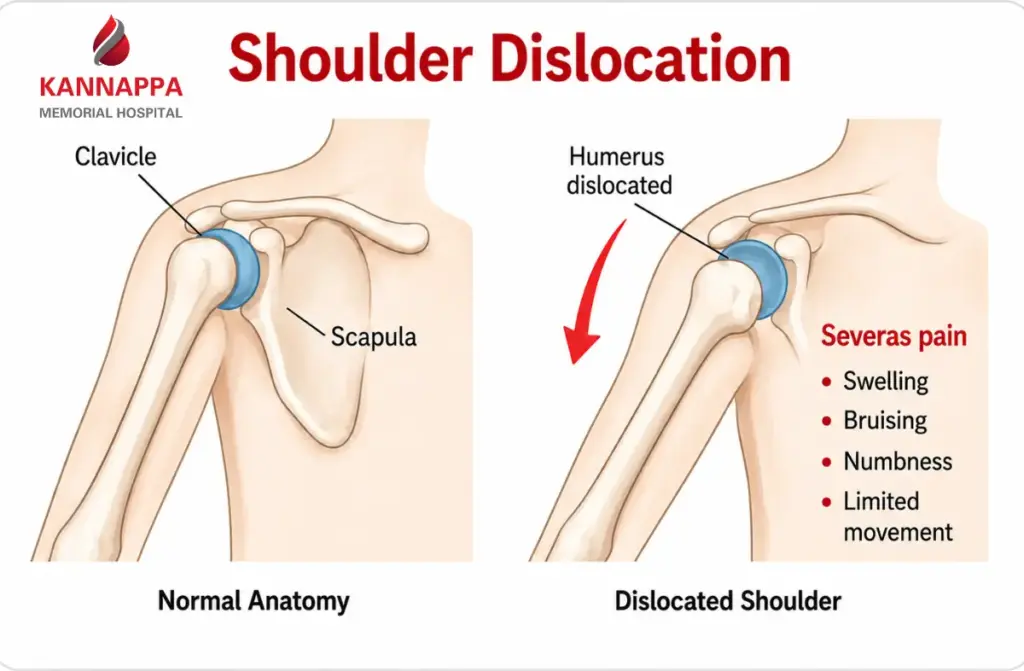
A dislocated shoulder occurs when the rounded upper end of the arm bone (humerus) is forced out of its normal position within the shoulder socket (glenoid). Since the shoulder socket is relatively shallow, it allows exceptional movement but provides less natural stability than many other joints in the body.
When the shoulder dislocates, the supporting structures—including ligaments, muscles, tendons, cartilage, and the joint capsule—are often stretched or torn. In more severe injuries, nearby nerves, blood vessels, or bones may also be affected.
A shoulder dislocation is considered an orthopedic emergency because the joint should be repositioned as soon as possible by a qualified medical professional to minimize further damage.
A shoulder may dislocate in different ways:
- Completely dislocated (luxation): The head of the humerus is entirely displaced from the socket, resulting in severe pain, obvious deformity, and significant loss of movement.
- Partially dislocated (subluxation): The ball slips only partially out of the socket before returning or remaining partially displaced. Although symptoms may be less dramatic, subluxation can still damage the stabilizing tissues and increase the risk of future instability.
Without appropriate treatment and rehabilitation, even a first-time dislocation can make the shoulder more vulnerable to repeated injuries in the future.
What Are the Symptoms of a Dislocated Shoulder?
The symptoms of a dislocated shoulder usually appear immediately after the injury and are often difficult to ignore. While the severity may vary depending on the type of dislocation and associated injuries, most people experience a combination of the following signs.
Severe, Sudden Shoulder Pain
One of the earliest and most noticeable symptoms is intense shoulder pain that begins immediately after the injury. The pain is often sharp and severe, making even the smallest movement extremely uncomfortable. It usually worsens when attempting to lift, rotate, or move the affected arm.
A Shoulder That Looks Out of Place
A dislocated shoulder often causes a visible change in the shape of the joint. Compared to the uninjured side, the shoulder may appear flattened, squared off, or visibly deformed. In some cases, a noticeable bulge can be seen where the arm bone has shifted out of its normal position.
This visible deformity is one of the hallmark signs that distinguishes a dislocation from many other shoulder injuries.
Inability to Move the Arm Normally
Most people find it nearly impossible to raise, rotate, or extend the injured arm. Any attempt at movement causes severe pain, and many instinctively support the affected arm with their opposite hand to reduce discomfort.
Restricted movement occurs because the joint is no longer properly aligned, preventing normal shoulder function.
Swelling and Bruising
Inflammation begins almost immediately after the injury. Swelling around the shoulder develops as the body’s natural healing response, while bruising may become more noticeable over the next 24 to 48 hours as small blood vessels damaged during the injury leak beneath the skin.
Muscle Spasms Around the Shoulder
The muscles surrounding the shoulder often tighten reflexively in an attempt to stabilize the injured joint. These muscle spasms can significantly increase discomfort and sometimes make it more challenging for healthcare professionals to reposition the shoulder.
Numbness or Tingling
A dislocated shoulder may temporarily compress or stretch nearby nerves, resulting in numbness, tingling, or a “pins and needles” sensation that travels down the arm into the hand or fingers.
Although these symptoms often improve after the shoulder is relocated, persistent numbness should always be evaluated promptly, as it may indicate nerve involvement.
Weakness in the Arm
Even after the initial pain subsides, the injured arm may feel unusually weak. Damage to the muscles, ligaments, or nerves surrounding the shoulder can make gripping objects, lifting weight, or performing overhead activities difficult until proper healing occurs.
A Feeling That the Shoulder Is Unstable
Some individuals, particularly those who have experienced previous shoulder dislocations, describe the sensation that the shoulder is “slipping,” “giving way,” or feels as though it could pop out again during certain movements. This instability often indicates that the supporting ligaments have been stretched or damaged.
Important: If you experience severe shoulder pain, visible deformity, inability to move your arm, or numbness following an injury, seek immediate medical attention. Do not attempt to push the shoulder back into place yourself, as improper manipulation can worsen tissue damage or injure nearby nerves and blood vessels.
How Does a Shoulder Get Dislocated?
The shoulder is a ball-and-socket joint, where the rounded head of the humerus fits into the shallow socket of the shoulder blade. Unlike the hip, which has a deep socket for greater stability, the shoulder sacrifices stability to provide exceptional mobility.
This unique anatomy allows you to perform movements in almost every direction, but it also means that a strong external force can push the humeral head out of its socket.
- Falls onto an Outstretched Arm: Falling on an extended hand or directly onto the shoulder is one of the most common causes of shoulder dislocation. The force generated during the impact is transmitted through the arm to the shoulder joint, potentially forcing it out of place.
- Sports-Related Injuries: Athletes participating in football, rugby, wrestling, hockey, basketball, volleyball, gymnastics, and martial arts are at increased risk because sudden collisions, tackles, awkward landings, or forceful overhead movements place tremendous stress on the shoulder.
- Road Traffic Accidents: Motor vehicle collisions frequently involve high-energy trauma that can dislocate the shoulder while simultaneously causing fractures or soft tissue injuries.
- Direct Trauma: A forceful blow to the shoulder during physical activities, workplace accidents, or falls from a height may directly displace the joint.
- Sudden Twisting Movements: Although less common, an abrupt twisting motion while lifting heavy objects or participating in strenuous physical activity can occasionally cause the shoulder to dislocate, particularly in individuals with pre-existing instability.
Types of Shoulder Dislocation
Shoulder dislocations are classified according to the direction in which the upper arm bone moves out of the socket.
| Type | What Happens? | Common Causes |
| Anterior Dislocation | The humeral head moves forward out of the socket. This is the most common type, accounting for more than 90% of shoulder dislocations. | Falls, sports injuries, direct trauma |
Posterior Dislocation | The humeral head moves backward behind the socket. | Seizures, electric shock, severe trauma |
Inferior Dislocation | The arm bone moves downward below the socket. This is rare and usually associated with high-impact injuries. | Major accidents or significant trauma |
Each type requires prompt medical evaluation because the treatment approach may vary depending on the direction of the dislocation and any associated injuries.
Causes of Shoulder Dislocation
A shoulder dislocation occurs whenever the force applied to the joint exceeds the strength of the structures responsible for keeping it stable.
- Falls: Falls remain the leading cause across nearly all age groups. Older adults may experience falls due to balance problems, while younger individuals are more likely to sustain injuries during recreational activities or sports.
- Contact Sports: Football, rugby, wrestling, hockey, martial arts, and similar sports frequently expose athletes to high-impact collisions capable of forcing the shoulder out of alignment.
- Road Traffic Accidents: High-speed collisions generate tremendous force that may dislocate the shoulder while also damaging bones, ligaments, tendons, or nerves.
- Workplace or Occupational Injuries: Construction workers, manual laborers, and individuals working at heights are more susceptible to traumatic shoulder injuries due to falls or heavy equipment accidents.
- Previous Shoulder Dislocation: Once the shoulder has dislocated, the supporting ligaments and joint capsule may remain stretched or weakened. Without proper rehabilitation, the risk of another dislocation increases substantially.
Risk Factors
Although anyone can experience shoulder dislocation, certain factors make the injury more likely.
- Young Age: Teenagers and adults under the age of 30 have the highest incidence of shoulder dislocations because they tend to participate in physically demanding activities and contact sports.
- Participation in Contact or Overhead Sports: Sports that involve frequent collisions, throwing, tackling, or repetitive overhead movements place considerable stress on the shoulder joint and increase the risk of instability.
- Joint Hypermobility: Some people naturally have looser ligaments, allowing greater flexibility but providing less support for the shoulder joint. This condition makes dislocation more likely even after relatively minor trauma.
- Weak Shoulder Muscles: The rotator cuff and surrounding muscles play a critical role in stabilizing the shoulder. Weakness or poor muscle control reduces the joint’s ability to remain properly aligned during movement.
- Previous Shoulder Injury: A history of shoulder dislocation, ligament injury, or labral tear is one of the strongest predictors of recurrent shoulder instability.
- High-Risk Occupations: Jobs involving heavy lifting, climbing, repetitive overhead work, or physically demanding labor increase the likelihood of shoulder injuries over time.
How is a Dislocated Shoulder Diagnosed?
Diagnosing a dislocated shoulder involves much more than confirming that the joint has slipped out of place. Healthcare professionals also assess the extent of damage to the surrounding bones, ligaments, muscles, cartilage, nerves, and blood vessels to develop the most appropriate treatment plan.
An accurate diagnosis helps ensure that the shoulder is safely repositioned, associated injuries are identified early, and long-term complications are minimized.
Medical History
The evaluation begins with a detailed discussion about how the injury occurred. Understanding the mechanism of injury often provides valuable clues about the type and severity of the dislocation.
Your doctor may ask questions such as:
- How did the injury happen?
- Did you fall, collide with someone, or experience a direct blow?
- Did you hear or feel a “pop” at the time of injury?
- Have you dislocated this shoulder before?
- Are you experiencing numbness, tingling, or weakness in your arm or hand?
This information helps determine whether additional injuries, such as ligament tears or fractures, are likely to be present.
Physical Examination
A careful physical examination allows the physician to evaluate the shoulder while avoiding unnecessary pain or further injury.
During the examination, your doctor will assess:
- The overall shape and position of the shoulder to identify visible deformity.
- Areas of swelling, bruising, or tenderness.
- Whether the arm can be moved safely without causing additional injury.
- The strength of muscles surrounding the shoulder, when appropriate.
- Sensation in the arm, hand, and fingers to detect possible nerve involvement.
- Blood circulation by checking the pulse and skin temperature, ensuring nearby blood vessels have not been compromised.
Because certain fractures can resemble a shoulder dislocation, healthcare providers avoid forcefully moving the joint until imaging studies are completed.
X-rays
X-rays are the first and most important imaging test used to diagnose a dislocated shoulder.
They help doctors:
- Confirm whether the shoulder is truly dislocated.
- Identify the direction of the dislocation (anterior, posterior, or inferior).
- Detect associated fractures of the humerus, clavicle, or shoulder blade.
- Guide treatment planning before attempting to reposition the joint.
- Confirm that the shoulder has returned to its normal position after reduction.
X-rays are typically performed both before and after the shoulder is relocated.
MRI Scan
An MRI (Magnetic Resonance Imaging) provides detailed images of the soft tissues surrounding the shoulder.
Your doctor may recommend an MRI if they suspect injuries such as:
- Torn ligaments
- Labral tears (including Bankart lesions)
- Rotator cuff tears
- Joint capsule injuries
- Cartilage damage
- Recurrent shoulder instability
MRI is particularly valuable for athletes, younger patients, and individuals whose shoulder continues to feel unstable after treatment.
Neurovascular Assessment
One of the most important parts of diagnosing a dislocated shoulder is checking for injuries to nearby nerves and blood vessels.
The physician carefully evaluates:
- Sensation over the shoulder and upper arm.
- Muscle function in the arm and hand.
- Strength of hand grip.
- Pulse at the wrist.
- Skin color and temperature.
Although nerve and vascular injuries are relatively uncommon, identifying them early is essential because they may require urgent treatment.
Why Early Diagnosis Matters
Prompt diagnosis allows treatment to begin before complications develop. Delaying medical care may increase the risk of prolonged pain, recurrent dislocations, chronic instability, cartilage damage, nerve injuries, and early arthritis.
Seeking immediate medical attention after a suspected shoulder dislocation gives you the best chance of restoring normal shoulder function and achieving a full recovery.
Treatment Options for a Dislocated Shoulder
Treating a dislocated shoulder involves much more than simply putting the joint back into place. The primary goals are to restore the shoulder’s normal alignment, relieve pain, protect damaged tissues, prevent complications, and help the patient regain full strength and mobility.
The treatment plan depends on several factors, including the type of dislocation, the severity of the injury, whether it is a first-time or recurrent dislocation, the patient’s age and activity level, and the presence of associated injuries such as fractures, ligament tears, or nerve damage.
Immediate First Aid Before Medical Care
The first few minutes after a shoulder dislocation are crucial. Taking the right steps can reduce pain and prevent further injury until medical help is available.
- Keep the Arm Still: Avoid attempting to move or straighten the injured shoulder. Supporting the arm against the body using a sling, folded towel, or the opposite hand can help minimize movement and reduce pain.
- Apply a Cold Compress: Applying an ice pack wrapped in a cloth for 15–20 minutes at a time helps reduce swelling, inflammation, and discomfort. Ice should never be placed directly on the skin, as it can cause cold-related skin injury.
- Seek Emergency Medical Care: A dislocated shoulder should always be evaluated by a healthcare professional as soon as possible. Prompt treatment reduces muscle spasms, makes repositioning easier, and lowers the risk of long-term joint damage.
Important: Never attempt to push or “pop” the shoulder back into place yourself. Improper manipulation can damage nerves, blood vessels, cartilage, muscles, or cause additional fractures.
Closed Reduction (Repositioning the Shoulder)
- The first step in medical treatment is usually closed reduction, a procedure in which a trained healthcare professional gently guides the displaced arm bone back into its normal position without surgery.
- Before the procedure, pain-relieving medication, muscle relaxants, or mild sedation may be administered to reduce discomfort and relax the muscles surrounding the shoulder.
- Once the shoulder returns to its normal position, many patients experience immediate relief from the intense pain caused by the dislocation. However, the surrounding soft tissues still require time to heal.
- After the reduction, X-rays are performed again to confirm that the shoulder has been properly aligned and to ensure that no additional injuries are present.
Immobilization
After the shoulder has been successfully relocated, the arm is typically placed in a sling or shoulder immobilizer for a period recommended by the treating physician.
Immobilization serves several important purposes:
- Allows injured ligaments and the joint capsule to begin healing by limiting unnecessary movement.
- Reduces pain and muscle spasms, making the early healing phase more comfortable.
- Protects the shoulder from accidental movements that could cause another dislocation before healing has occurred.
- Provides a stable environment for damaged tissues to recover.
The duration of sling use varies depending on the individual’s age, activity level, and the severity of the injury. Your doctor will determine how long immobilization is appropriate while balancing healing with the need to prevent joint stiffness.
Pain Management
Pain and inflammation are common after a shoulder dislocation, even once the joint has been repositioned.
Your doctor may recommend a combination of measures to improve comfort during recovery.
Ice Therapy
Applying ice several times a day during the first 48 hours can help reduce swelling and ease discomfort.
Medications
Depending on the severity of the pain, treatment may include:
- Over-the-counter pain relievers.
- Non-steroidal anti-inflammatory drugs (NSAIDs) to reduce pain and inflammation.
- Short-term prescription pain medication for severe discomfort when necessary.
Medications should always be taken exactly as directed by your healthcare provider.
Activity Modification
Resting the injured shoulder and avoiding heavy lifting, overhead movements, or strenuous activities during the early stages of recovery allows healing to progress while minimizing unnecessary stress on the joint.
Physical Therapy and Rehabilitation
Rehabilitation is one of the most important parts of treatment. While relocating the shoulder restores its position, physiotherapy restores its function.
Without a structured rehabilitation program, the shoulder remains weaker and is significantly more likely to dislocate again.
A physical therapist develops an individualized program that progresses through several stages.
Phase 1: Restoring Gentle Movement
Once the initial pain and swelling begin to improve, gentle exercises are introduced to gradually restore shoulder mobility while protecting healing tissues.
The goal is to prevent stiffness without overstressing the recovering ligaments.
Phase 2: Strengthening the Shoulder
As healing progresses, strengthening exercises focus on the muscles responsible for stabilizing the shoulder.
Special attention is given to:
- The rotator cuff muscles.
- The muscles surrounding the shoulder blade (scapula).
- Upper back and postural muscles that improve shoulder mechanics.
Improved muscle strength helps keep the shoulder securely centered within the socket during movement.
Phase 3: Restoring Stability and Coordination
Once basic strength has returned, rehabilitation shifts toward improving balance, coordination, and joint control.
Patients perform progressively challenging exercises that prepare the shoulder for everyday tasks, work-related activities, and recreational sports.
Phase 4: Return to Normal Activities
The final stage focuses on restoring full function.
Depending on the individual’s lifestyle, rehabilitation may include:
- Functional exercises for daily activities.
- Sport-specific training for athletes.
- Job-specific exercises for physically demanding occupations.
- Gradual return to overhead lifting and resistance training.
Completing the full rehabilitation program is essential, even if the shoulder begins to feel better early in recovery.
Surgical Treatment
Although many first-time shoulder dislocations can be managed successfully without surgery, some patients benefit from surgical stabilization.
Your orthopedic surgeon may recommend surgery if you have:
- Recurrent shoulder dislocations.
- Significant ligament or labral tears.
- Rotator cuff injuries.
- Associated fractures requiring repair.
- Persistent shoulder instability despite rehabilitation.
- Bone loss around the shoulder joint.
- High athletic demands involving repetitive overhead or contact sports.
Arthroscopic Shoulder Stabilization
Many shoulder stabilization procedures are now performed using arthroscopy, a minimally invasive surgical technique involving small incisions and a tiny camera.
Benefits often include:
- Smaller surgical incisions.
- Less damage to surrounding tissues.
- Reduced postoperative discomfort.
- Faster rehabilitation.
- Lower infection risk.
- Excellent cosmetic results.
Open Shoulder Surgery
In more complex injuries involving major bone loss, severe fractures, or extensive ligament damage, traditional open surgery may provide better long-term stability.
The choice of procedure depends on the specific injury pattern, patient age, activity level, and surgeon’s assessment.
Recovery and Rehabilitation
Recovery from a dislocated shoulder is a gradual process that extends well beyond the day the joint is repositioned. While pain often improves quickly after treatment, the injured ligaments, capsule, and surrounding muscles require time to heal completely.
The length of recovery varies depending on several factors, including:
- The severity of the injury.
- Whether it is a first-time or recurrent dislocation.
- The patient’s age and overall health.
- Associated fractures or soft tissue injuries.
- Commitment to rehabilitation.
Early Recovery
During the first few weeks, the focus is on:
- Protecting the healing tissues.
- Managing pain and swelling.
- Wearing the sling as instructed.
- Performing only approved gentle movements.
Avoiding premature shoulder movement during this stage helps reduce the risk of another dislocation.
Regaining Mobility
As healing progresses, supervised stretching exercises gradually restore flexibility and range of motion.
The objective is to regain normal shoulder movement without placing excessive stress on healing ligaments.
Rebuilding Strength
Strengthening exercises become increasingly important as pain decreases.
Building strength in the rotator cuff, shoulder blade muscles, and upper back improves joint stability and helps prevent future injuries.
Returning to Daily Activities
Most patients can gradually resume routine daily activities once approved by their physician.
However, activities involving:
- Heavy lifting.
- Overhead reaching.
- Repetitive shoulder movements.
- Contact sports.
should only be resumed after adequate healing and medical clearance.
Returning to Sports
Athletes should return to competition only after demonstrating:
- Full pain-free range of motion.
- Normal shoulder strength.
- Excellent joint stability.
- Completion of sport-specific rehabilitation.
- Clearance from their orthopedic specialist or physiotherapist.
Returning too soon greatly increases the risk of another dislocation.
Possible Complications if Left Untreated
Ignoring a dislocated shoulder or delaying medical care can lead to long-term problems that may permanently affect shoulder function.
Potential complications include:
- Recurrent Shoulder Dislocations: Once the supporting ligaments become stretched or torn, the shoulder may continue slipping out of place during everyday activities or sports.
- Chronic Shoulder Instability: Some individuals develop persistent looseness within the joint, causing discomfort, weakness, and a constant feeling that the shoulder may “give way.”
- Rotator Cuff Tears: The muscles and tendons responsible for shoulder movement may become damaged, particularly in older adults.
- Labral Injuries: Damage to the cartilage rim surrounding the shoulder socket can reduce joint stability and contribute to repeated dislocations.
- Nerve or Blood Vessel Injury: Although uncommon, nearby nerves and blood vessels can be stretched or compressed during the injury, leading to weakness, numbness, or circulation problems.
- Early Shoulder Arthritis: Repeated dislocations and ongoing instability may accelerate cartilage wear, increasing the likelihood of arthritis later in life.
Early diagnosis and proper treatment significantly reduce the risk of these complications.
When to See a Doctor
Seek immediate medical attention if you experience any of the following after a shoulder injury:
- Sudden, severe shoulder pain that begins immediately after a fall, collision, or accident.
- A shoulder that appears visibly deformed, uneven, or out of place.
- Difficulty or inability to move the arm, especially if movement causes intense pain.
- Swelling or bruising that develops rapidly around the shoulder.
- Numbness, tingling, weakness, or loss of sensation in the arm, hand, or fingers.
- A shoulder that repeatedly slips out of place, even during simple daily activities.
- Persistent pain or instability despite previous treatment.
Prompt medical evaluation allows the shoulder to be repositioned safely and reduces the risk of permanent damage.
Tips to Prevent Future Shoulder Dislocations
Although not every shoulder injury can be prevented, adopting healthy habits can significantly reduce the likelihood of another dislocation.
- Strengthen the shoulder muscles through regular exercises that target the rotator cuff and shoulder blade stabilizers.
- Warm up properly before sports or exercise to improve flexibility and prepare the muscles for activity.
- Practice correct lifting and throwing techniques to minimize unnecessary stress on the joint.
- Wear appropriate protective equipment during contact sports and high-risk recreational activities.
- Complete your full physiotherapy program, even if the shoulder begins to feel normal early in recovery.
- Avoid returning to sports too soon, as premature activity increases the risk of recurrent instability.
- Maintain good posture, which supports healthy shoulder mechanics and muscle balance.
Preventive measures play a vital role in maintaining long-term shoulder stability and reducing the chance of future injuries.
Conclusion
A dislocated shoulder is a painful injury that can significantly affect your ability to perform even the simplest daily activities. Fortunately, with early diagnosis, prompt treatment, and a structured rehabilitation program, most people recover well and regain excellent shoulder function.
Recognizing the symptoms early, avoiding self-treatment, and seeking immediate medical attention are essential for protecting the joint and preventing long-term complications. Whether your injury results from a fall, sports activity, or an accident, following your healthcare provider’s treatment plan and completing rehabilitation gives your shoulder the best opportunity to heal properly.
Your shoulder is designed to give you the freedom to move, work, exercise, and enjoy everyday life. Although a dislocation can be painful and alarming, it doesn’t have to define your future. With prompt medical care, proper rehabilitation, and patience, most people regain strength, confidence, and return to the activities they love. The sooner you seek treatment, the better your chances of achieving a complete and lasting recovery.
Read Also: Orthopedic Hospitals in Chennai