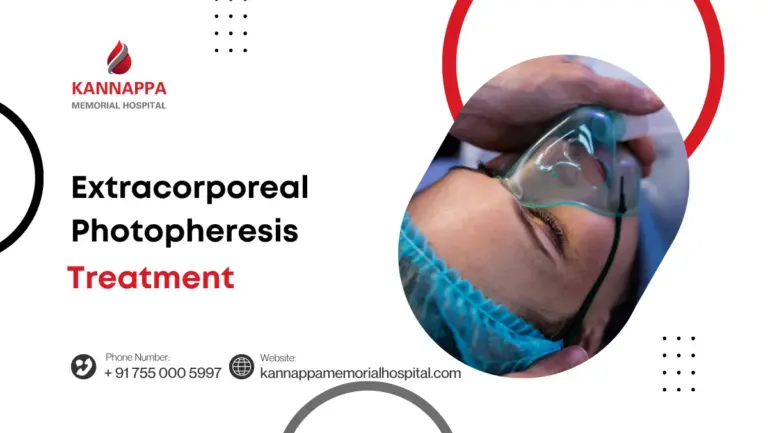
Extracorporeal Photopheresis (ECP) is a specialized medical procedure that involves collecting a patient’s white blood cells, treating them with a light-sensitive medication, exposing them to ultraviolet (UV) light, and then reinfusing them back into the body. This process helps regulate abnormal immune responses in a controlled and effective way.
At Kannappa Memorial Hospital, this therapy is approached with precision, patient safety, and long-term outcomes in mind. With expertise in advanced hematology and immunotherapy, the hospital focuses on delivering evidence-based care for patients who need more than conventional treatments.
How Does Extracorporeal Photopheresis Work?
To understand how this therapy works, think of it as “resetting” your immune system without shutting it down completely.
The Extracorporeal photopheresis procedure follows a step-by-step process:
- Blood Collection: Blood is drawn from the patient using a specialized machine.
- Cell Separation: The machine separates white blood cells (immune cells) from the rest of the blood.
- Photosensitizing Agent: These cells are treated with a medication that makes them sensitive to UV light.
- UV Exposure: The treated cells are exposed to ultraviolet A (UVA) light, which alters their behavior.
- Reinfusion: The modified cells are returned to the patient’s bloodstream.
Once reintroduced, these treated cells help “educate” the immune system. Instead of attacking the body (as seen in autoimmune conditions or transplant rejection), the immune response becomes more balanced and controlled.
Conditions Treated with ECP
The use of Extracorporeal photopheresis has expanded over the years due to its ability to manage immune-related disorders effectively. It is commonly recommended in conditions where the immune system behaves abnormally.
Common conditions include:
- Graft-versus-Host Disease (GVHD): A serious complication after bone marrow or stem cell transplant where donor cells attack the patient’s body.
- Cutaneous T-cell Lymphoma (CTCL): A rare type of cancer affecting the skin, where ECP helps control abnormal lymphocytes.
- Organ Transplant Rejection: Helps reduce the risk of rejection in heart, lung, or kidney transplant patients.
- Autoimmune Disorders: Conditions like lupus or scleroderma where immune regulation is needed.
- Severe Atopic Dermatitis and Psoriasis (in select cases): When standard treatments fail.
Who is Eligible for ECP Treatment?
Not every patient requires this therapy. Doctors carefully evaluate whether Extracorporeal photopheresis treatment is the right choice based on the condition, severity, and previous treatment response.
You may be considered eligible if:
- You have steroid-resistant or steroid-dependent GVHD
- You are diagnosed with CTCL and not responding to standard therapy
- You have undergone an organ transplant and show signs of rejection
- You have chronic autoimmune conditions not controlled with medication
- You can tolerate extracorporeal procedures (blood circulation outside the body)
Not suitable for:
- Patients with severe anemia or low blood volume
- Individuals who cannot tolerate anticoagulants
- Patients with active infections that need immediate management
A detailed medical evaluation ensures that the therapy is both safe and beneficial.
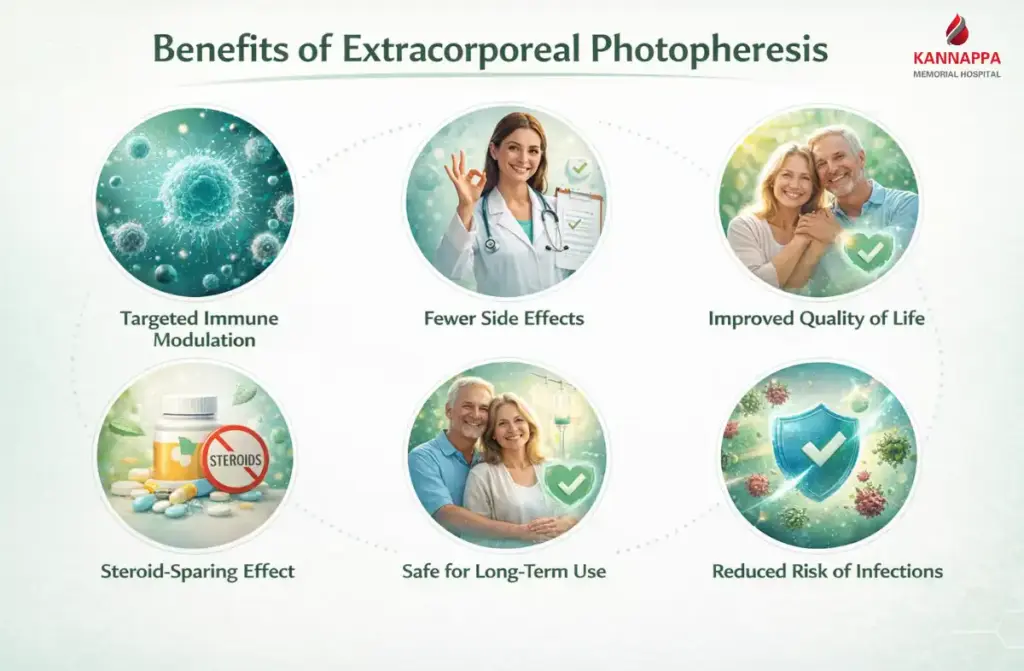
Benefits of Extracorporeal Photopheresis
What makes Extracorporeal photopheresis treatment stand out is its balance between effectiveness and safety.
Key benefits:
- Targeted Immune Modulation: Works by correcting immune response rather than suppressing it completely.
- Fewer Side Effects: Compared to long-term steroid use or chemotherapy, side effects are minimal.
- Steroid-Sparing Effect: Reduces dependency on steroids, which can cause complications over time.
- Improved Quality of Life: Patients often experience better symptom control and fewer flare-ups.
- Safe for Long-Term Use: Can be continued over months without major toxicity.
- Reduced Risk of Infections: Since immunity is not fully suppressed, infection risk is lower compared to other therapies.
Preparation Before the Procedure
Good preparation helps make the procedure safer, smoother, and more effective.
Before undergoing ECP:
- Medical Evaluation: Blood tests and clinical assessment are done to confirm eligibility.
- Hydration: Patients are advised to stay well-hydrated for better blood flow.
- Medication Review: Some medications may need adjustment before the procedure.
- Light Sensitivity Precautions: Since a photosensitizing agent is used, patients may be advised to avoid direct sunlight after treatment.
- Comfortable Clothing: Loose clothing helps during the procedure, especially for easy access to veins.
Doctors also explain the treatment patterns of Extracorporeal photopheresis, which usually involve multiple sessions over weeks or months depending on the condition.
Recovery After ECP Treatment
One of the biggest advantages of this therapy is that recovery is usually quick and uncomplicated.
What to expect after the session:
- Mild fatigue for a few hours
- Temporary light sensitivity (avoid sunlight for 24–48 hours)
- Minimal discomfort at the needle insertion site
Post-procedure care:
- Wear sunglasses and protective clothing when outdoors
- Stay hydrated
- Follow your doctor’s schedule for repeat sessions
- Report any unusual symptoms, though complications are rare
Most patients can resume normal daily activities on the same day or the next day, making it a convenient treatment option.
Why Choose Kannappa Memorial Hospital?
At Kannappa Memorial Hospital, advanced infrastructure plays a key role in delivering safe and precise care. The facility is equipped with modern technology specifically designed for procedures like Extracorporeal Photopheresis. From high-quality cell separation systems to controlled UV exposure units, every component is maintained to meet clinical standards. This ensures accuracy during treatment and reduces the risk of complications, giving patients confidence in every session.
Multidisciplinary Expertise
The hospital follows a team-based approach to treatment. Specialists in hematology, oncology, and critical care collaborate closely to evaluate each case. This ensures that patients receive a well-rounded treatment plan tailored to their specific condition. Regular case discussions and coordinated care help in achieving better clinical outcomes, especially in complex immune-related disorders.
Patient-Centric Care
Patient comfort and clarity are always prioritized. From the first consultation to post-treatment follow-ups, the care team focuses on clear communication and emotional support. Patients are guided at every step, helping them understand their treatment journey and feel more in control of their health decisions.
Strict Safety Protocols
Safety is non-negotiable at Kannappa Memorial Hospital. The hospital follows strict infection control measures and continuous monitoring throughout the procedure. Every protocol is designed to minimize risks and ensure a secure environment for patients undergoing advanced therapies.
Experience in Complex Cases
With experience in handling challenging immune-related conditions, the hospital is well-prepared for cases that require advanced care. The team’s clinical expertise allows them to manage complications effectively and deliver consistent, reliable results.
Conclusion
When dealing with complex immune disorders or post-transplant complications, finding the right treatment can be overwhelming. Extracorporeal photopheresis treatment offers a smarter, more targeted approach—helping the body heal without compromising overall immunity. With its proven effectiveness, minimal side effects, and ability to improve long-term outcomes, ECP is becoming an important option in modern medicine.
At Kannappa Memorial Hospital, this therapy is delivered with a strong focus on patient safety, clinical excellence, and personalized care. For patients seeking advanced, reliable treatment options, the hospital stands as a trusted destination for comprehensive healthcare solutions.